Clients ask us this on almost every call, usually with a bit of frustration: we rank fine on Google, so why does ChatGPT never name us?
It’s a fair question. Ranking on Google and getting named by ChatGPT are two different jobs. Most brands only do the first one.
People call this second job Answer Engine Optimization, or AEO. Some call it Generative Engine Optimization, or GEO. Both target the exact same goal: getting your brand cited inside AI answers.
Here’s what we did on two campaigns where it worked, including the parts that took some time.
How to Appear in ChatGPT: The Short Answer
You appear in ChatGPT when three things are true:
- ➜ ChatGPT can find your brand in the sources it reads.
- ➜ Those sources all describe you the same way.
- ➜ Your own pages answer the question in plain words a model can quote.
There is no form to fill out, no schema tag to enable it and no way to buy placements. AI visibility builds up over time. So expect this to take months rather than weeks.
How ChatGPT Picks Which Brands to Name
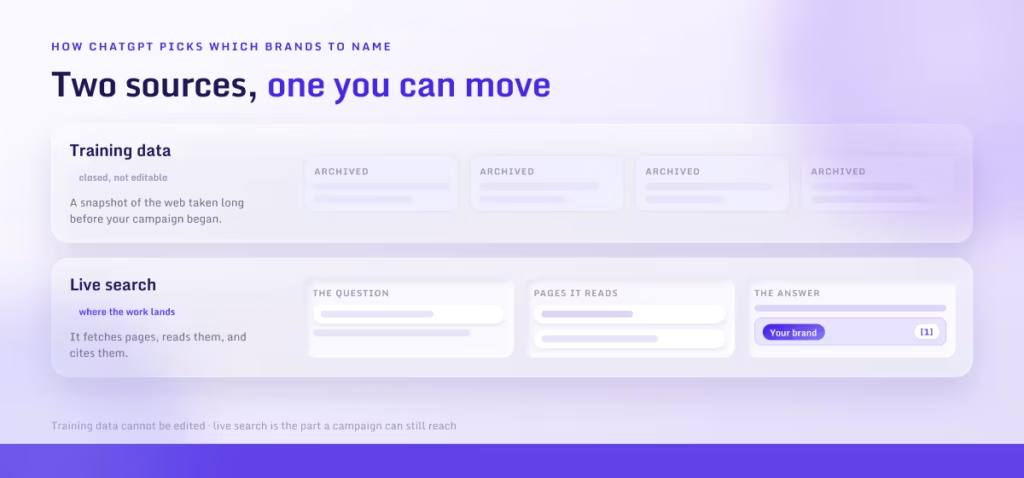
ChatGPT gets brand names from two sources.
The first is its training data. It’s a snapshot of the web captured long before your campaign began. You cannot edit this data.
The second is live search. When ChatGPT searches, it fetches pages, reads them, and cites them. This is the part you have some control right now.
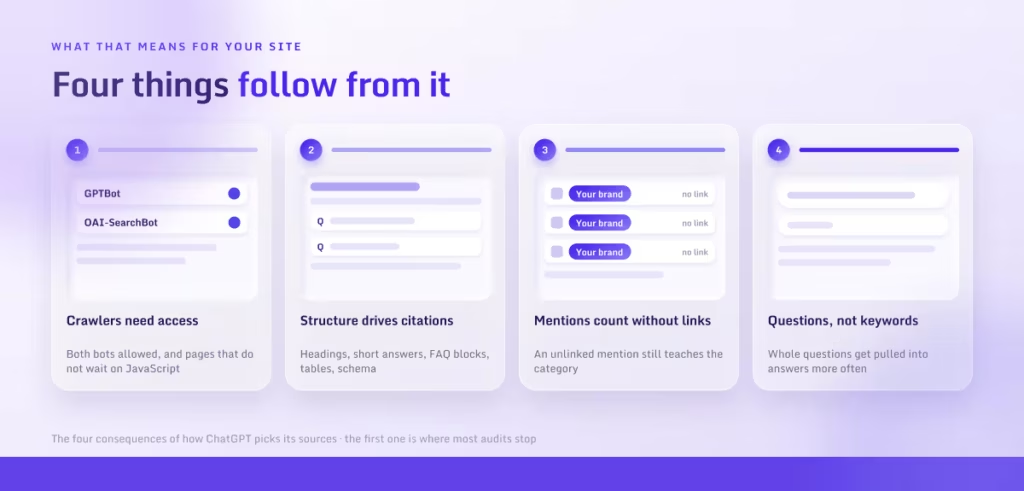
Four things happen because of this:
- ➜ Crawlers need access: OpenAI uses two main crawlers, GPTBot for training and OAI-SearchBot for search. If your robots.txt file blocks them, ChatGPT cannot read your siteThe same issue occurs when key pages depend on JavaScript. We audit this step first because this is a frequently occurring issue. Happens more often than you expect.
- ➜ Structure drives citations: ChatGPT quotes pages it can parse quickly. Clear headings help, alongside short answers, FAQ blocks, structured tables, and schema markup. This optimization work also earns placements in Google AI Overview, so we treat both as one project.
- ➜ Brand mentions count, even without links: An unlinked brand mention still teaches the model that you belong in a specific category. This is a real break from traditional link building as it changes which placements are more valuable.
- ➜ People type questions, not keywords: Users ask “best agency to buy an ad account for Meta ads” instead of “ad account provider.” Pages built around real questions get pulled into AI answers more frequently.
ChatGPT SEO vs Google SEO: Why Ranking Is Not Enough
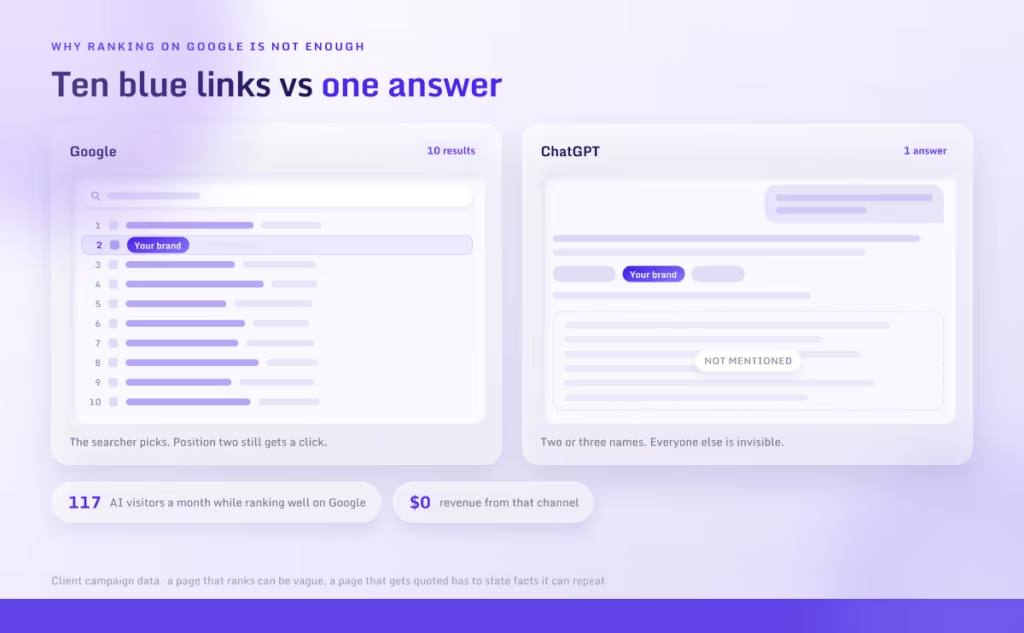
Google returns ten links and lets the searcher pick. ChatGPT delivers a single concise answer citing two or three brands. Everyone else is invisible, even the site at second position.
Your page now has a higher standard to meet. A page that ranks well can be vague and promotional. A page that gets quoted must state exact, verifiable facts. The AI model wants precise statements it can repeat with confidence.
Our jewelry client ranked well on Google before we took over the campaign. Even so, they still gathered 117 AI visitors in a month and zero revenue from that channel.
Case Study 1: From 117 to 1,399 Monthly AI Visitors
This campaign involved a high ticket jewelry store throughout 2025. The work broke down into three phases.
We identified key sources first: We asked ChatGPT, Perplexity, Gemini and Copilot the same questions buyers ask. Then we traced where those answers came from. Most citations came from Reddit threads, buying guides on major publications, and expert review sites. Almost none came from the brand’s own product pages.
We created content built for citation: We published definitive answers instead of vague statements, detailed comparisons with real numbers, and guides authoritative enough for a model to select as a reference point. That is a very different brief for a writer, and it took us a few rounds to get right.
We expanded brand footprint across targeted publications: We placed real editorial posts on retail and lifestyle sites, which is what our e-commerce guest post service is built for. We also secured placements on top review and comparison platforms. The goal was not link equity. We made sure several reliable sites all described our brand the same way.
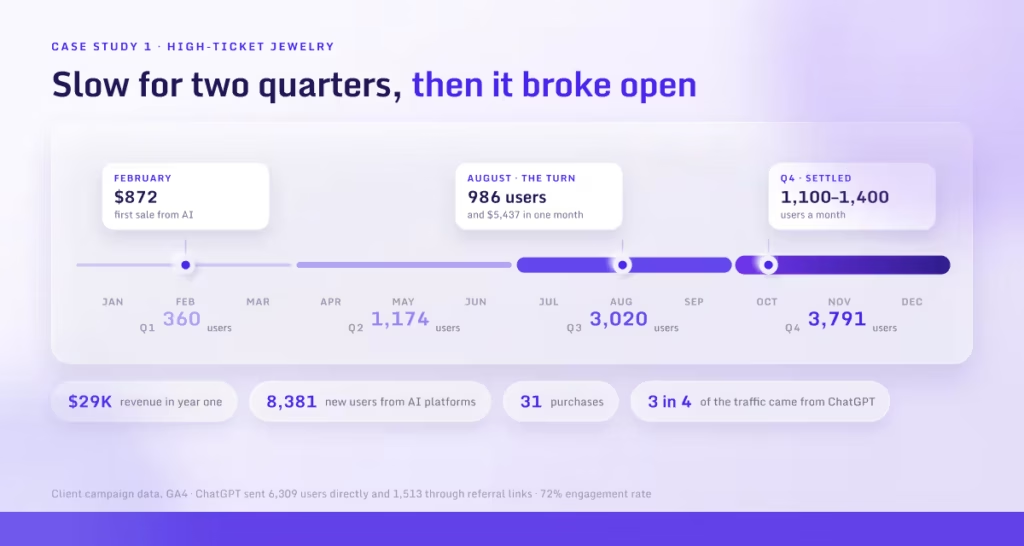
The growth trajectory was moving slow at first, then it moved upwards fast:
| Quarter | New AI users | What happened |
|---|---|---|
| Q1 (Jan-Mar) | 360 | Setup work. First sale in February, $872. |
| Q2 (Apr-Jun) | 1,174 | Content from Q1 started getting cited. |
| Q3 (Jul-Sep) | 3,020 | August broke it open: 986 users, $5,437 revenue. |
| Q4 (Oct-Dec) | 3,791 | Settled at 1,100 to 1,400 users a month. |
Swipe sideways to see every column.
Across the full year, the campaign generated 8,381 new users from AI platforms and 31 purchases. About $29K in revenue from a channel that made nothing in January. ChatGPT accounted for 6,309 direct visitors and 1,513 referral visitors. That is roughly about three quarters of total traffic generated.
Traffic engagement rate reached 72%, outperforming standard search traffic from Google. Visitors arriving from AI engines already trust the recommendation, making them far more qualified buyers upon arrival.
Case Study 2: How uproas.io Became the Top ChatGPT Recommendation
uproas.io sells agency ad accounts to media buyers who evaluate providers carefully. More of these buyers now skip Google entirely and ask AI engines: “best agency to buy an ad account” for direct recommendations.
We have managed this site for two years since launch. We established a strong foundation in these years. Three primary strategies drove this outcome.
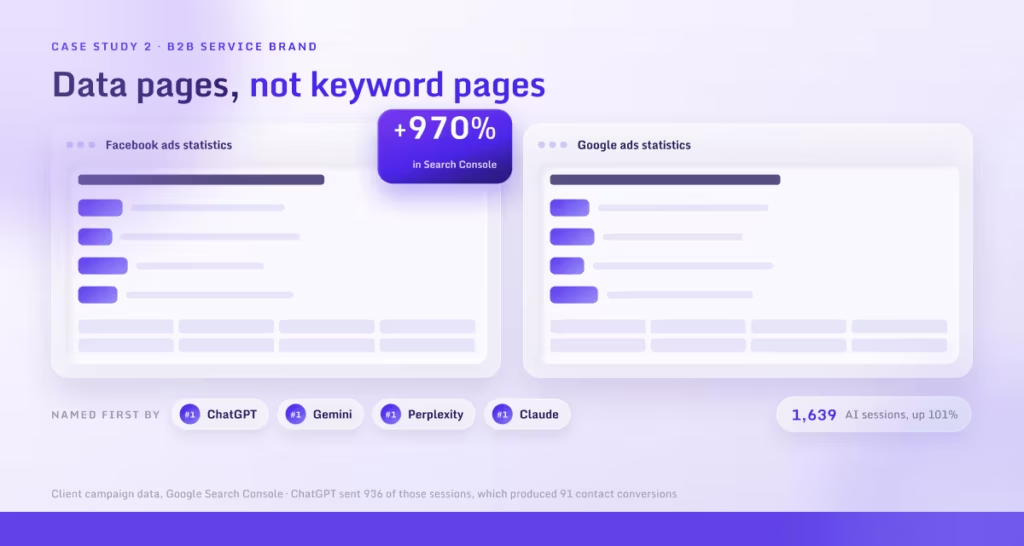
Data pages instead of keyword pages: We built pages packed with stats and figures, including Facebook ads statistics, Google ads statistics, and ad benchmarks. Each page provides important metrics media buyers need. These were structured properly so both human readers and AI models can get clean answers. Those pages now generate most of the AI traffic. The Facebook ads statistics page alone grew 970% in Search Console.
One consistent description used everywhere: Directories, company profiles, and third party reviews all describe the brand the same way. They state clearly what the company is, what it does, and which platforms it covers. SEO strategists call this entity consistency, and it is the most underrated part of AI search. AI models build brand identity from multiple mentions across the web. When these mentioned information clash, the model hedges instead of naming you.
Mentions on sources AI models read: AI tools check the live web before giving answers. That makes your offsite presence super important. That is the job of digital PR link building. Traditional SEO often skips offsite mentions because they do not quickly change rank trackers.
The result: ChatGPT now names uproas.io as the top recommendation in this category. So do Gemini, Perplexity and Claude. Total AI sessions reached 1,639 for the period, up 101% over the previous six months. ChatGPT generated 936 of those visits, which produced 91 contact conversions.
How to Get Cited by ChatGPT: Where to Start
Order matters more than volume here.
Fix Your Pages First
A model that finds your site and reads a vague product page will not quote you. Provide clear answers, real numbers, simple structure, and FAQ schema on key pages. This step is crucial, and everything else depends on it.
Get Mentioned Where the Model Looks
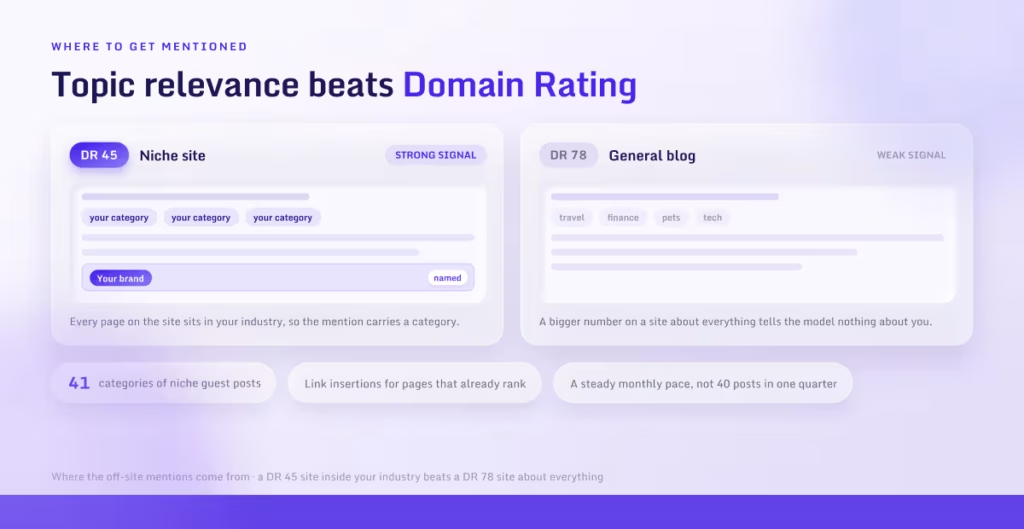
Target real publications in your niche rather than generic blogs. We place these through niche guest posting across 41 categories. Topic relevance beats Domain Rating by a wide margin. A DR 45 site focused entirely on your industry provides a strong category signal, while a DR 78 general blog does not.
Use Pages That Already Rank for Faster Results
New guest posts take time to get indexed. Link insertions place your brand inside articles that already hold search rankings. This helps when you want to influence AI answers before a launch or peak season.
Maintain a Steady Pace
AI visibility rewards a steady drip over massive bursts of activity. Most of our clients established a monthly rhythm with link building packages instead of buying 40 posts in one quarter and then stopping.
Repeat the exact same brand message for a year. Consistency might feel repetitive, but it ultimately determines your success.
Our Strategy: At a Glance
The table below outlines the complete ChatGPT SEO process in the order we ran it.
| Phase | What we do | Why it matters for AI search | Timeline |
|---|---|---|---|
| 1. Source audit | Ask AI tools the actual questions buyers ask, then identify which sites supply those answers | Highlights target sites directly so strategy relies on data instead of guesswork | Week 1-2 |
| 2. Technical access | Allow GPTBot and OAI SearchBot to crawl pages while resolving rendering issues, canonical tags, and schema | Ensures models can access and read site content without technical barriers | Week 2-4 |
| 3. Citable content | Rebuild key pages using direct statements, verified numbers, tables, and FAQ blocks | Helps models easily extract clean, quotable facts from your pages | Month 1-3 |
| 4. Data assets | Create statistics pages, industry benchmarks, and detailed buying guides | Earns Google backlinks and AI citations simultaneously | Month 2-6 |
| 5. Off-site mentions | Secure niche guest posts, digital PR coverage, and placements on review sites | Provides third party validation that turns hesitation into a direct recommendation | Month 2 on |
| 6. Entity consistency | Maintain a unified brand description across every directory, profile, and article | Prevents clashing details, which represent the main reason models fail to name brands | Ongoing |
| 7. Measurement | Track AI traffic in GA4 and test same prompts monthly | Provides reliable performance insights since referral data often underreports actual traffic | Monthly |
Swipe sideways to see every column.
Keep two factors in mind regarding this process:
- ➜ First, AI answers are dynamic. Asking the same question in slightly different ways can alter brand rankings, so continuous prompt testing is essential to reveal clear patterns.
- ➜ Second, analytics tools frequently underreport referral traffic because many AI platforms hide referrer details. Actual AI traffic is typically higher than standard reports indicate.
Why Starting Early Wins in AI Search
The brands winning right now are the ones that started before it was obvious. Our jewelry client earned citations in AI answers before most competitors knew the channel existed. That head start lets us grow every month. Once a model trusts your brand for one question, it starts recommending your brand for related queries too.
Want to review the complete data? Find the full numbers in our link building case studies. Want to know which publishers you need? The Linkscope marketplace lets you filter by niche, traffic and DR to purchase placements directly.
FAQs
How long does it take to appear in ChatGPT?
In an easy category, the first citations show up in three to four months. Our jewelry client generated its first AI driven sale in the 2nd month and hit full speed in the 8th month.
In a competitive category with picky buyers, plan for a year or more. uproas.io took about two years to lead every major AI tool.
Can you guarantee ChatGPT will recommend my brand?
No, and nobody else can either. Ask the same question two ways and the order of brands can change, because these responses get written fresh each time.
What we can do is build the signals that raise your odds, then test and report what we see.
Do backlinks help you appear in ChatGPT?
Yes, but the reason is a bit different. A link still passes authority the way it always did. In AI search, the brand itself performs major work by establishing category association for the model.
That explains why topical relevance beats Domain Rating and why unlinked mentions provide real value.
What is the difference between SEO, AEO and GEO?
SEO wins you a spot on a results page. AEO, or answer engine optimization, gets your content quoted inside an AI answer. GEO, or generative engine optimization, is another name for the same idea.
In practice the work overlaps a lot. The authoritative pages that earn links are the same pages AI models extract.
Does schema markup help with ChatGPT visibility?
Yes, in an indirect way. Schema makes a page easy for a machine to parse. This raises the chance a model can pull a clean answer from it.
On another campaign, we added FAQPage, Product and BreadcrumbList schema to 16 pages. 9 of 20 tracked keywords appeared in Google AI Overview, without adding any backlinks.
How do I track ChatGPT traffic in GA4?
Look for chatgpt.com and openai.com in your GA4 referral report. Monitor corresponding direct traffic spikes as well, since many AI sessions arrive with no referrer.
Treat the number as a baseline minimum. Manual prompt testing remains essential because it tracks brand visibility that does not produce direct site clicks.