Five years ago, online visibility meant one thing. You had to rank on page one of Google.
That’s no longer enough. Your buyer now asks ChatGPT for shortlists. They read Google AI Overviews without scrolling. They ask Perplexity to compare brands and accept the answer at face value.
In every case, the brand named in the answer wins. Everyone else disappears.
So how do we become visible in AI search? We tried some approaches on three different sites: a B2B service brand, a high ticket store, and a niche manufacturer. Here’s what moved the needle on each project and what we need to do.
What Is AI Search Visibility?
AI search visibility means your brand is named or quoted inside an AI generated answer rather than listed below it. You either appear in the summary or you don’t.
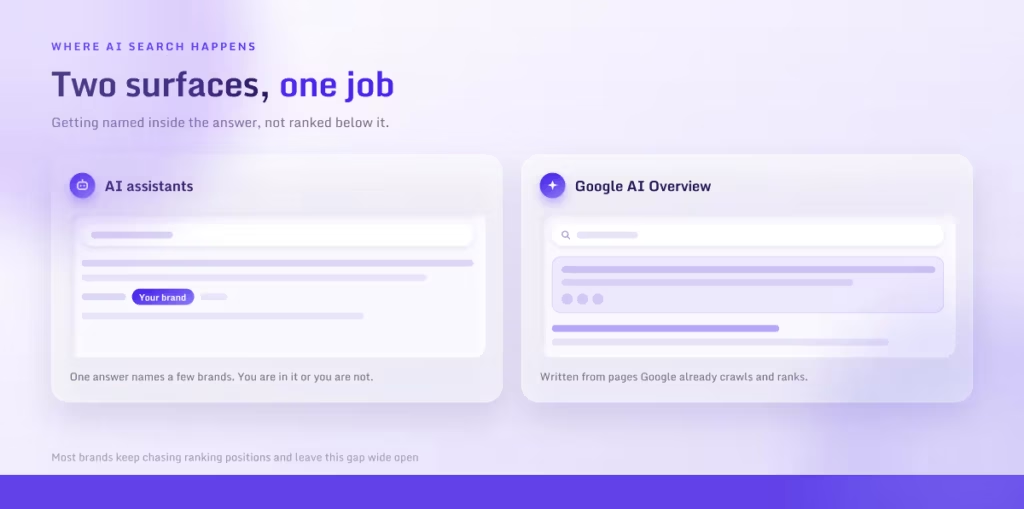
It splits across two surfaces, and they require different strategies.
AI assistants: ChatGPT, Claude, Gemini, Perplexity and Copilot address queries directly. If you ask a question these tools will generate response and a short selection of relevant brands. You’re either in the list or you’re not.
Google AI Overview: This feature sits above traditional search results. Google compiles the overview from pages it already indexed. This means your normal SEO work feeds it directly.
Most brands ignore this and continue chasing traditional ranking positions. This creates the exact gap we optimize for.
Case Study 1: Named First by All Four Major AI Tools
Our client uproas.io sells agency ad accounts to media buyers. Target buyers research thoroughly, so a lot of them now ask an AI tool: “best agency to buy an ad account.”
We have managed the site for two years since its launch. By the end of this campaign, all four major AI platforms named uproas.io as the top recommendation for that primary query, including ChatGPT, Gemini, Perplexity, and Claude.
Traffic growth followed directly. Total AI sessions reached 1,639 during the period, representing a 101% increase over the previous six months. ChatGPT generated 936 visits, Gemini sent 243, Perplexity delivered 189, and Claude added 173. These visits led to 91 contact conversions.
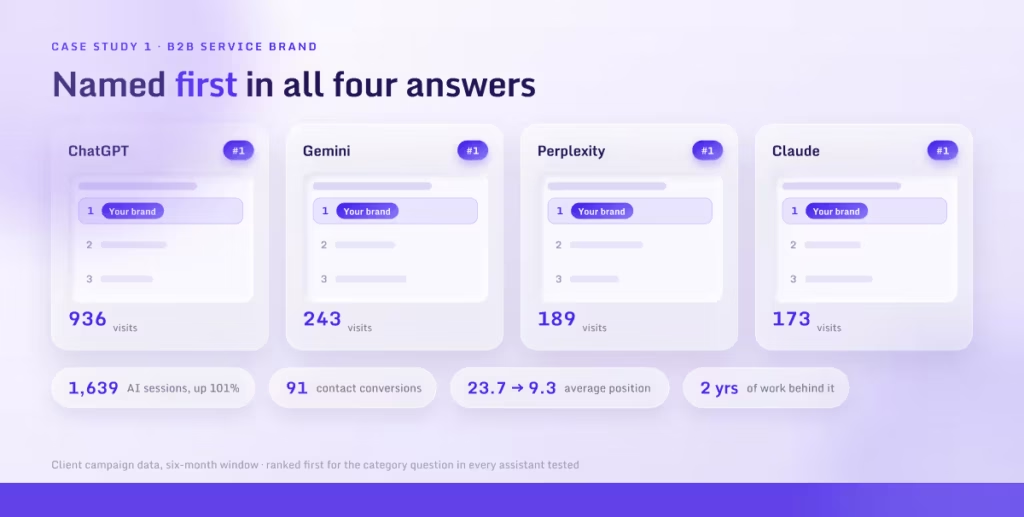
Traditional search metrics showed identical momentum. Organic search clicks rose from 1,335 to 26,295, roughly 3.3x. Impressions grew from 376,000 to 4.15 million, more than 11x. Average position improved from 23.7 to 9.3, moving the site from page three straight to page one. Organic users grew 140% year over year.
The key takeaway is that both channels responded to the exact same work. We did not run separate campaigns for traditional SEO and AI search visibility.
Case Study 2: $29K From a Channel That Made Nothing in January
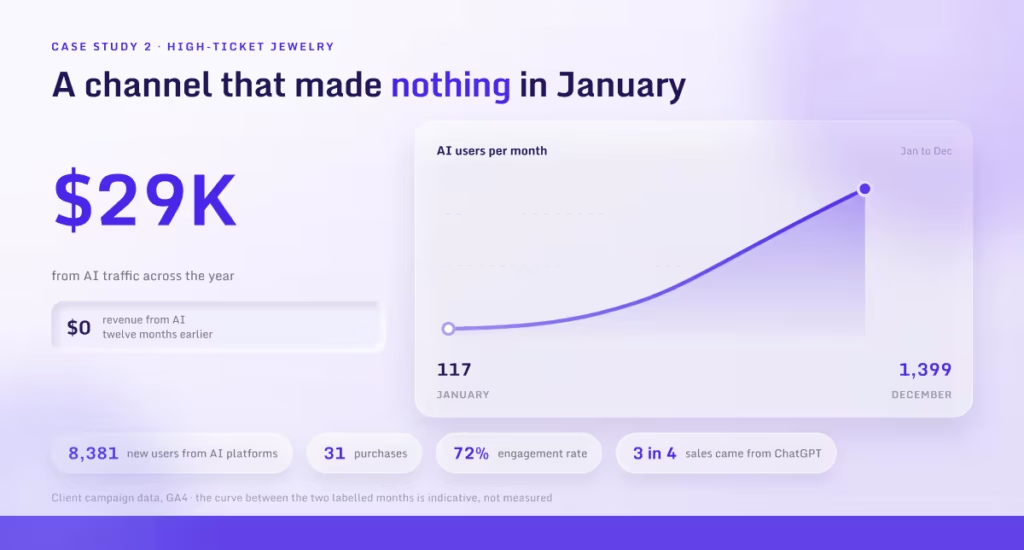
This campaign focused on a high ticket jewelry retailer. In January, the brand generated 117 monthly AI visitors and zero revenue from AI channels.
We started by asking the AI tools the questions their buyers ask, then traced where the answers came from. Most recommendations came from Reddit threads, buying guides on major publications, and expert review sites. Almost none came from the client’s own domain.
We created structured content AI engines could easily cite and place the brand across trusted external sources. Our e-commerce guest post sites handled the retail and lifestyle placements.
By December, monthly AI traffic reached 1,399 users . The year totalled 8,381 new users from AI platforms, 31 completed purchases, and approximately $29K in revenue. ChatGPT generated roughly three quarters of those sales.
The engagement rate on AI traffic reached 72%, significantly outperforming traditional Google search traffic. That makes sense. This higher engagement happened because AI recommendations pre-qualifies visitors before they land on the site.
Case Study 3: 9 Google AI Overview Spots With Zero Backlinks
Our third campaign shows how much visibility you can win from technical structures alone.
The client manufactures medical cold chain packaging. Their website lacked basic search engine optimization foundations, including proper title tags, schema markup, and internal links. The domain had zero presence in Google AI Overviews, in a niche where almost no competitor had a dedicated page.
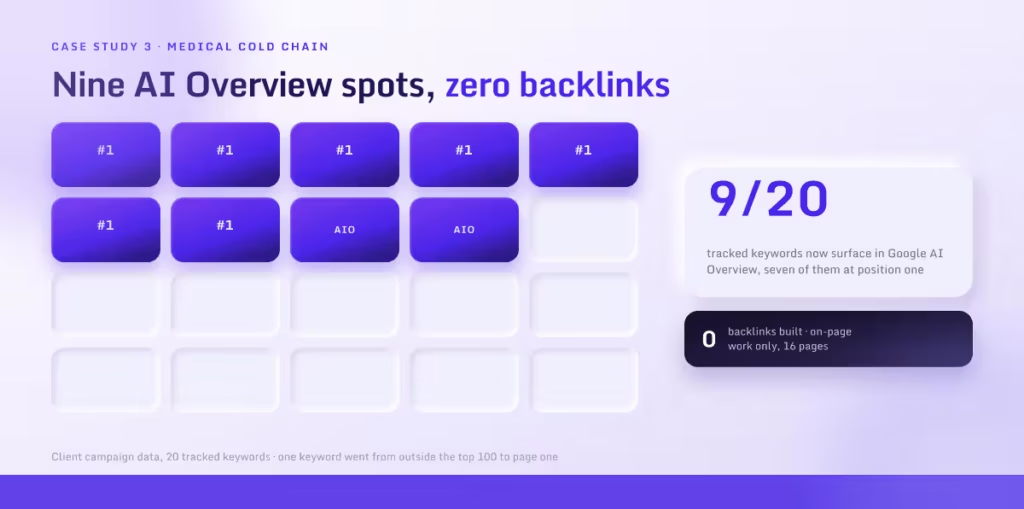
We executed on-page optimizations exclusively across 16 core pages. We created no new content, built zero backlinks, and performed no site rebuild.
We standardized each page with a single H1 and a new title tag with the primary keyword. We also added self-referencing canonical tags, descriptive alt text, manual internal links, and custom FAQ blocks. Finally, we added eight schema markup types across the site, including FAQPage, Product, ProductGroup, Service, and BreadcrumbList.
The result: 9 of 20 tracked keywords appeared in Google AI Overview. 7 keywords reached #1 position. And one keyword jumped to page one from 100. We gained this without building a single backlink.
Proper on-page structure alone can secure top AI Overview placements in low competition industries.
The Four Signals That Drive AI Visibility
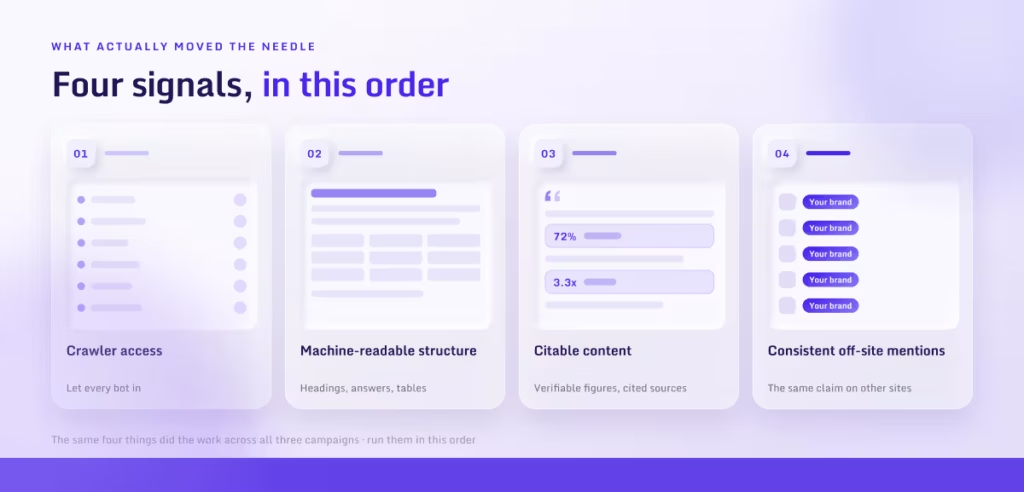
Across all three campaigns, four core pillars drove the results in this exact sequence.
1. Crawler access: Every AI platform relies on its own crawlers. OpenAI uses GPTBot and OAI-SearchBot. Anthropic uses ClaudeBot and Claude-SearchBot. Google uses Google-Extended. If your robots.txt blocks them, or your pages need JavaScript to load, AI models can’t read your content. Auditing access is the first step because technical blocks occur far more often than expected.
2. Machine-readable structure: Content requires clear headings, concise answers underneath each heading, FAQ blocks, tables, and schema markup. Structured data converts standard page text into extractable information.
3. Citable content: A page claiming “we are a leading provider” offers AI models no useful information. A page with verifiable figures and cited sources gives AI models the info to display. So, write contents to be quoted, don’t just target keywords.
4. Consistent off-site mentions: AI engines search the live web to verify information across multiple sources. A single claim on your own domain doesn’t provide enough authority. The same claim repeated on 10 independent third party websites creates a clear trust signal. That is what digital PR link building is for, and it is the step most SEO plans overlook.
Why the Same Work Wins Twice
Here’s the simple principle what most teams miss.
The pages that earn backlinks are the same pages AI tools cite. Data assets, industry benchmarks, and detailed buying guides featuring verifiable figures and structured layouts handle both jobs at once.
During the uproas.io campaign, our statistics pages did both jobs at once.They earned natural backlinks and organic search rankings in Google while serving as the primary sources cited by AI engines. Two birds, one stone!
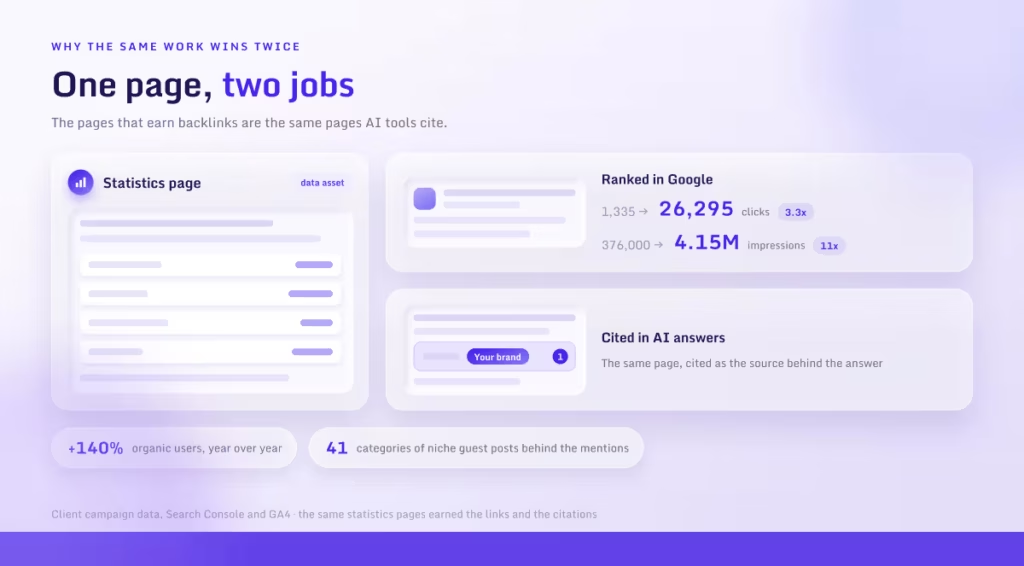
You don’t need a separate AI marketing budget. Just build standard data assets once, then secure external mentions for AI tools to recognize the brand as a trusted authority.
That second half is the slow part. Securing off-site mentions requires time and focus. Topical relevance outperforms raw Domain Rating by a wide margin. That’s why we placed them through niche guest posting across 41 categories rather than chasing DR. When campaigns require faster results, link insertions place brand mentions into existing, indexed articles to eliminate traditional indexing delays.
Our Strategy: At a Glance
Here’s the whole AI search visibility process in one table.
| Phase | What we do | Why it matters | Timeline |
|---|---|---|---|
| 1. Prompt audit | Query AI engines using actual buyer prompts, then trace the underlying data sources behind every response | Identifies exact target sites for placements, removing guesswork from publisher outreach | Week 1-2 |
| 2. Crawler check | Grant access to GPTBot, OAI SearchBot, ClaudeBot, and Google Extended, then resolve JavaScript rendering issues | Blocked pages cannot be indexed or cited by AI models regardless of content quality | Week 1-2 |
| 3. On-page pass | Standardize H1 tags, title tags, canonicals, alt text, internal links, FAQ blocks, and schema markup | Proper structure alone secured 9 AI Overview positions in our third campaign | Month 1-2 |
| 4. Citable content | Restructure key landing pages around direct answers, verifiable figures, and structured tables | AI models extract concise data points that require no hedging | Month 1-3 |
| 5. Data assets | Build statistics pages, industry benchmarks, and detailed buying guides | High value data assets capture backlinks and AI citations simultaneously | Month 2-6 |
| 6. Off-site mentions | Secure niche guest posts, digital PR features, resource page entries, and trade press mentions | Consistent mentions across independent sites convert AI hedging into direct recommendations | Month 2 on |
| 7. Entity consistency | Standardize brand descriptions across every external directory, profile, and media write up | Conflicting brand descriptions represent the primary reason AI engines refuse to cite a business | Ongoing |
| 8. Testing | Monitor AI referral traffic inside GA4 while manually testing same target prompts every month | Referral metrics miss hidden visits, making monthly prompt audits essential for measuring real visibility | Monthly |
Swipe sideways to see every column.
Consider three essential factors in mind before executing this framework.
Timelines depend on your category: Our jewelry client saw its first AI sale in month two and hit full speed in month eight. uproas.io took about two years, because its buyers are pickier and its competitors are more aggressive. Anyone promising guaranteed 90 day results in a competitive category is describing a different service.
AI answers are dynamic: Phrasing the same query in two different ways can shift brand placement. We test prompts repeatedly over time to report overall patterns rather than single snapshots.
Analytics will understate total traffic: Many AI tools hide the referrer, so some AI visits land in your reports as direct traffic. Treat the measured number as a baseline.
How to Become Visible in AI Search: Where to Start
If you have a limited budget and want the fastest return, prioritize your efforts in this order.
Start with an on-page optimization pass. It requires minimal budget, needs no outreach, and can secure AI Overview spots on its own.
Next, rewrite your primary commercial pages for easy extraction. Use real figures, concise direct answers, and FAQ blocks backed by structured schema markup.
Build brand mentions on relevant sites at a steady monthly pace. AI tools favor consistent authority signals over short spikes in activity. This gradual approach is why continuous link building packages beat buying large batches of content and stopping.
Finally, maintain uniform brand messaging across all external platforms over time.
Want the full review of performance data behind these campaigns? explore our full link building case studies. Already know which publishers you want to target? The Linkscope marketplace lets you filter 100K+ vetted sites by niche, traffic and DR to buy directly.
FAQ
How long does it take to become visible in AI search?
Google AI Overview can move in weeks if the fix is structural. Our third campaign won nine spots within weeks of deployment.
AI assistants take longer. It’s usually three to four months for a first citation in an easy category, and a year or more in a crowded one.
Is AI search optimization different from SEO?
It overlaps more than most people expect. The pages that earn links are the pages models quote, so one content plan can serve both. The extra work comes down to crawler access, schema, and making sure your brand’s described consistently on third party sites.
What is the difference between AEO and GEO?
AEO stands for answer engine optimization, while GEO stands for generative engine optimization. They’re two names for one goal, which is getting your content used inside an AI answer. The label matters less than the work, which is the exact same either way.
Do backlinks still matter for AI search visibility?
Yes, though the underlying reason has shifted. A link still passes authority, but for AI search, the mention itself does most of the work. It teaches the model that your brand belongs in the category. That’s why a relevant mention with no link still counts for something.
Can you get into Google AI Overview without backlinks?
Yes, if your niche isn’t crowded. Our third client won nine AI Overview spots with zero links built, relying on structure and page level relevance alone. In a competitive niche, you’ll still need authority behind the page.
How do I track AI search traffic in GA4?
Look for chatgpt.com, openai.com, perplexity.ai, gemini.google.com, and claude.ai in your referral report. Watch for direct traffic spikes that line up with those dates, since many AI sessions don’t carry referrer data.
You’ll also want to test the same set of prompts by hand each month, as that’s the only way to measure visibility that doesn’t send a click.