Most SaaS teams do not have a traffic problem. They have a middle-of-the-funnel problem. Signups arrive, click around for a few minutes, never reach the part of the product that actually solves their problem, and quietly disappear before the trial ends.
The best SaaS growth tools all attack some part of that gap. Some guide users inside the app. Some tell you what users did and where they stopped. Some reach people by email or push once they go quiet. Some connect all of it back to recurring revenue so you know which effort paid for itself.
This list covers seven tools worth shortlisting, with public pricing where the vendor publishes it and a note where pricing only comes through a sales call. They are grouped by job, not by size, because a product analytics platform and an onboarding tool are not really competitors.
1. Produktly
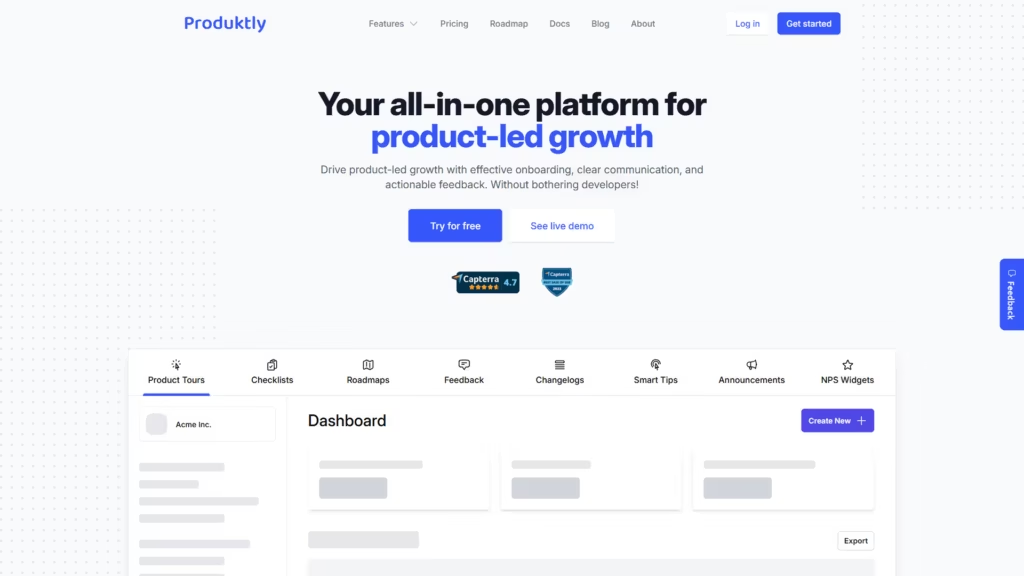
Produktly is an all-in-one product adoption platform for onboarding, in-app communication and feedback. You paste a script into your app, then build everything in a visual editor. No engineering ticket, no sprint planning, no waiting for a release window.
The platform covers interactive product tours, onboarding checklists that tick themselves off when a user completes the action, smart tips, announcements, changelogs, public roadmaps, feedback widgets, NPS surveys and micro surveys. Tours and checklists both support segmentation, so a first-time user and a returning admin do not get the same walkthrough.
Produktly reports 6.32 million users empowered, 960 million requests a month, and 2,530+ companies using the platform.
Pricing runs at 19€, 59€ and 199€ a month. The Startup tier at 59€ removes the Powered by Produktly footer, which matters if you are putting tours in front of enterprise buyers.
Best for: SaaS teams that need to fix activation now and do not have developer time to spend on it.
What stands out: the price. Most adoption platforms with this feature range start in the hundreds per month. Produktly is not a deep product analytics engine, so pair it with one of the analytics tools below if you want event-level analysis. For running the actual in-app experience, it does the whole job on its own.
2. Userpilot
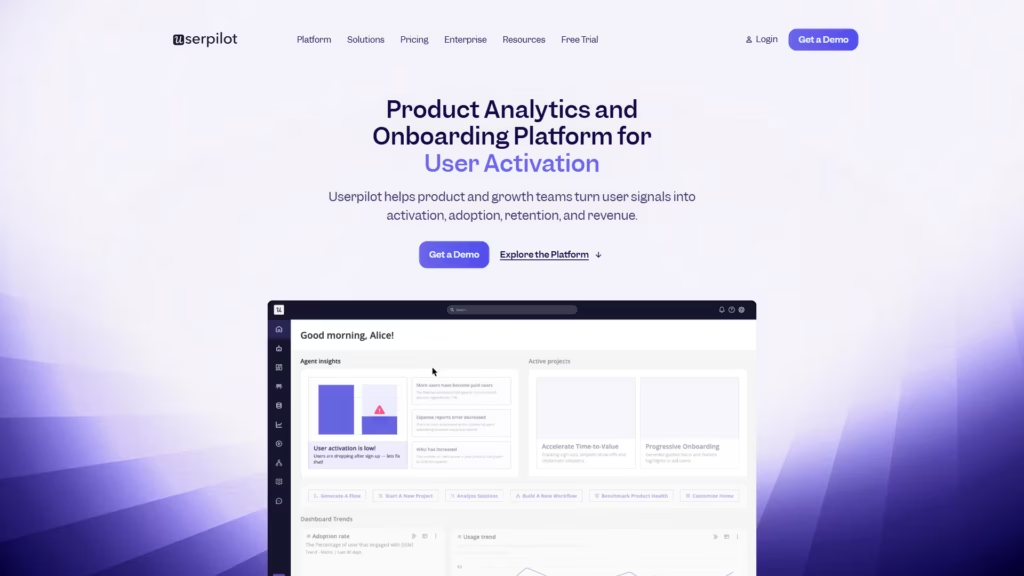
Userpilot is a product adoption platform aimed at product-led growth teams with a dedicated product function. It covers onboarding flows, tooltips, checklists, banners, a resource center, feature tagging and in-app surveys, built through a Chrome extension so non-technical staff can ship changes.
Where it goes further than most onboarding tools is analytics and experimentation. You get event tracking, funnels, user paths and cohort analysis on the higher tiers, plus A/B testing on flows themselves, so you can prove one onboarding sequence converts better than another.
Pricing is based on monthly active users. Published Starter pricing sits at a few hundred dollars a month for up to 2,000 MAUs, and the Growth and Enterprise tiers are quoted by sales.
Best for: funded SaaS companies with a product team that will actually use the experimentation layer.
What stands out: the combination of in-app experiences and analytics in one place. The trade-off is cost. Reviewers regularly flag the entry price as steep for small teams, and the bill climbs with your user count.
3. PostHog
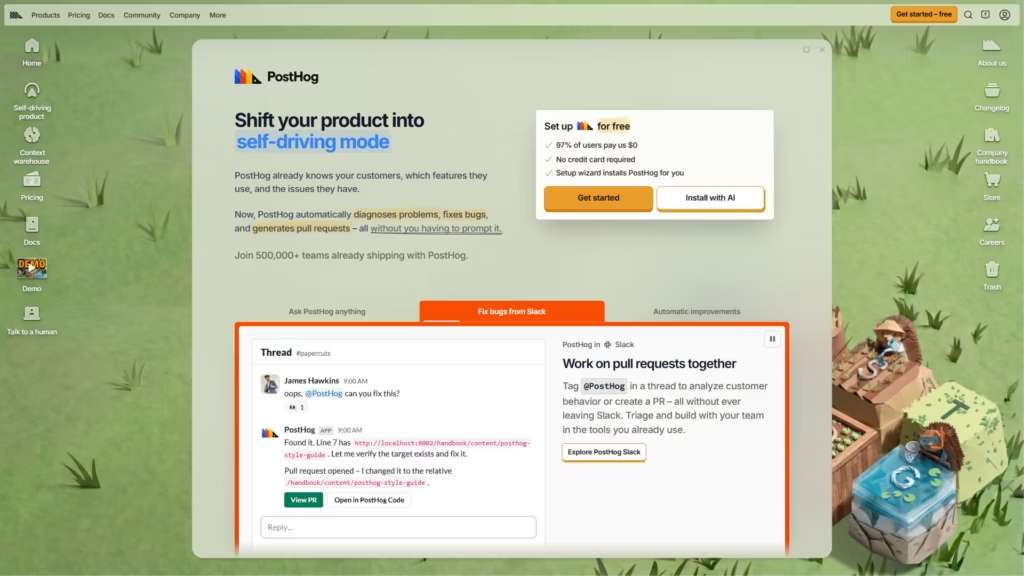
PostHog is an open-source platform that bundles product analytics, web analytics, session replay, feature flags, experiments, surveys and error tracking. Engineering-led teams like it because it replaces four or five separate subscriptions and can be self-hosted when data residency matters.
The free tier is unusually large: 1 million analytics events and 5,000 session recordings a month, with free allowances on the other products too. Past those limits you move to usage-based billing, and you can set a spending cap per product so one runaway meter does not eat the budget.
Best for: technical teams that want to own their product data stack and are comfortable managing event taxonomy themselves.
What stands out: how much you get for nothing at early stage. The honest downside is complexity. Every product has its own meter and its own settings, so costs and configuration both need attention as you scale.
A note on the layer none of these tools cover. Everything above works on people who already found you. Getting found is a separate job, and for most SaaS companies that means organic search, which means authority. If your product pages are not ranking, SaaS link building is the missing input, not another dashboard.
4. Amplitude
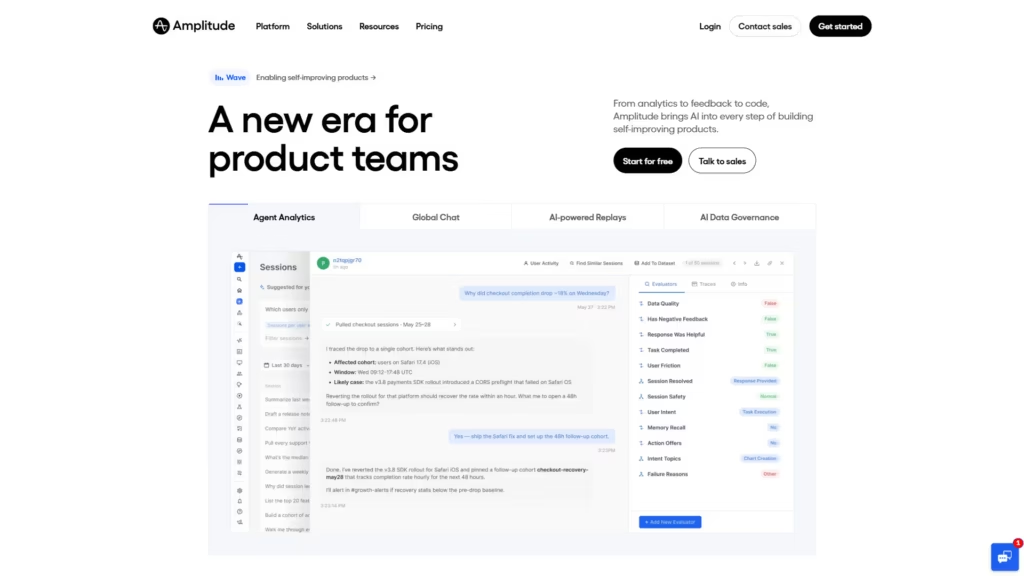
Amplitude is a product analytics platform built for behavioral analysis at scale: cohorts, funnels, retention curves, journey mapping across web and mobile, plus session replay and feature flags.
Pricing is based on monthly tracked users rather than seats, so the whole company can have access without the bill moving. There is a free Starter plan for early-stage products, a published Plus tier at $49 a month billed annually, and Growth and Enterprise tiers that require a quote.
Best for: teams that have outgrown basic dashboards and need to answer questions about behavior that a simple event tracker cannot.
What stands out: depth. Amplitude answers questions about user behavior that most tools cannot reach. It is also the one on this list where costs jump hardest once you pass the published tiers, and the advanced analysis features sit behind the quoted plans.
5. Customer.io
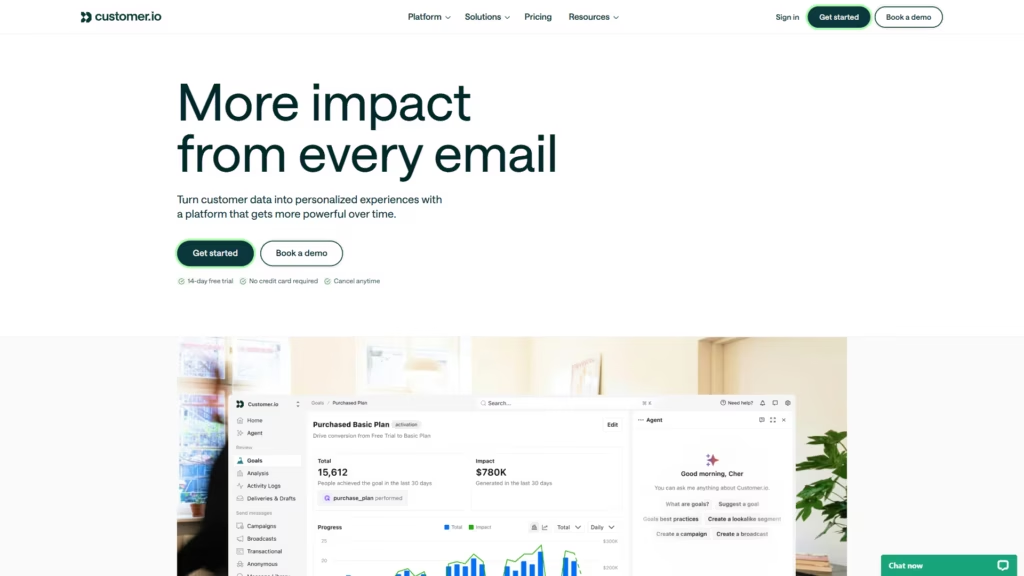
Customer.io is a lifecycle messaging platform for behavior-triggered campaigns. It runs email, push, in-app messages, SMS and WhatsApp, and all of those can sit inside a single automated workflow.
The strength is segmentation built on product events rather than list membership. A segment like “signed up in the last seven days, finished onboarding, has not used the reporting feature” is straightforward to build, and the message fires off the behavior rather than a fixed schedule.
There is no free plan. Essentials starts at $100 a month for up to 5,000 profiles, Premium starts around $1,000 a month, and Customer.io runs a startup program that is free for a year for companies that have raised under $10 million.
Best for: product-led SaaS teams with clean event data flowing in already.
What stands out: automation depth. The common complaints are also consistent: a real learning curve, developer involvement during setup, and per-profile pricing that punishes you for storing inactive users.
6. HubSpot

HubSpot is the CRM and marketing platform most SaaS companies end up on when sales enters the picture. Contact and deal management, email marketing, forms, live chat, landing pages, sequences and reporting all run off one customer record.
The free CRM is genuinely free and covers contact management, deal pipelines and meeting scheduling. Starter seats are around $20 a month each, and Professional is where the number changes character: Marketing Hub Professional starts in the high hundreds per month with a small number of seats included, plus a one-time onboarding fee.
Best for: SaaS companies running a sales motion alongside self-serve, who want marketing and pipeline in one system.
What stands out: the breadth, and the fact that so many teams already know how to use it. The gap between Starter and Professional is the thing to plan for, because most of the automation and custom reporting people actually want sits above that line.
7. ChartMogul
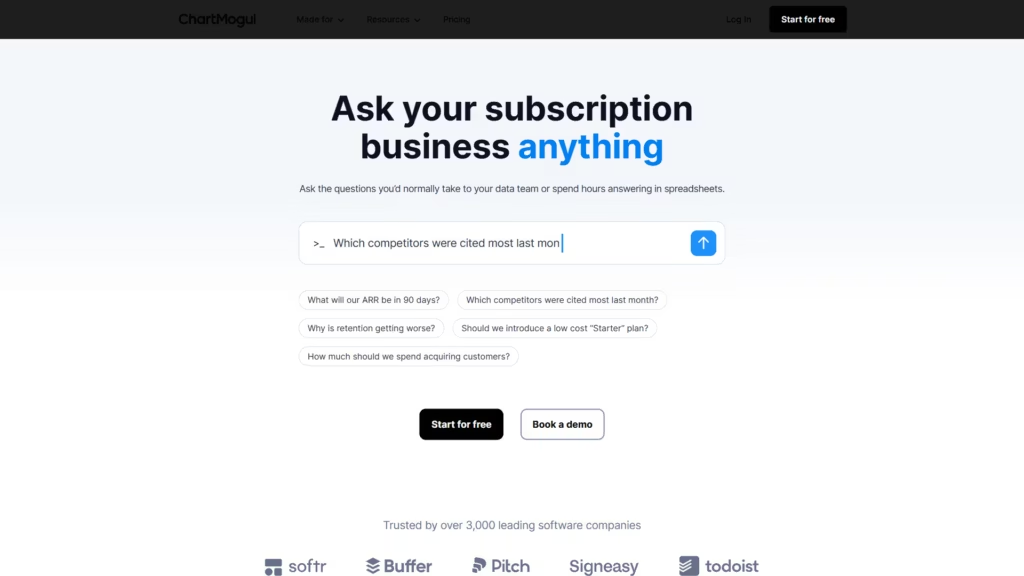
ChartMogul turns billing data into subscription metrics. Connect Stripe, Chargebee, Recurly or similar, and it calculates MRR, ARR, churn, LTV, ARPA and cohort retention, with segmentation by plan, channel or custom field.
The part that earns its place is data cleaning. Duplicate merging and subscriber matching happen before the numbers hit a dashboard, which is the difference between metrics finance will sign off on and metrics that drift between sources. There is also a built-in CRM with one Pro seat included on paid plans.
Subscription Analytics is free for companies under $10,000 MRR, and paid pricing scales with your MRR band.
Best for: founders and finance leads who need revenue numbers they can put in front of a board without rebuilding them in a spreadsheet.
What stands out: reconciled numbers and an honest free tier for early-stage companies. As revenue grows, MRR-band pricing means the bill grows with it, which some teams find fair and others find annoying.
Choosing the best SaaS growth tools for your stage
Do not buy the whole stack at once. Start with the bottleneck you can name.
If users sign up and never activate, that is an onboarding problem, and Produktly or Userpilot fixes it fastest. If you cannot say where users drop off, start with analytics: PostHog if your team is technical and budget-conscious, Amplitude if you need behavioral depth. If activation is fine but people go quiet in week two, that is lifecycle messaging, so look at Customer.io. If sales is involved, HubSpot. If you cannot answer what any of it did to revenue, ChartMogul.
One tool per layer, and give each one a metric it has to move within a quarter. Anything that cannot show you a number by then is not earning its subscription.