Skyscraper link building is most probably the simplest idea in SEO.
- ➜ You look at content that already brings in many links.
- ➜ Then create a stronger version of that content.
- ➜ Show it to the people who are linked to the older piece.
- ➜ Many of them link to you because your page helps their readers more.
This method became popular after Brian Dean introduced and explained it to the SEO world in 2015. It still makes genuine sense today because people link to content that feels clear, fresh, and useful. When you give them something better, they would love to be connected through links.
Why It’s Called a “Skyscraper”? Let’s consider a city with tall buildings, and the tallest building (read your content) stands out without trying. That is the whole point. You create a blog that stands out from the rest.
Although it was introduced a decade ago, the skyscraper technique remains effective in 2026. The internet has more content than ever.
However, many webpages look exactly the same. They have the same information, same tone, and same perspectives. Editors and site owners want links to pages that feel real, current, and most importantly, better.
If you are in a SaaS team or Agencies, or are currently working for e-commerce brands as a blogger or publisher, this is definitely for you.
How the Skyscraper Method Works? – Simple 3 Steps To Follow
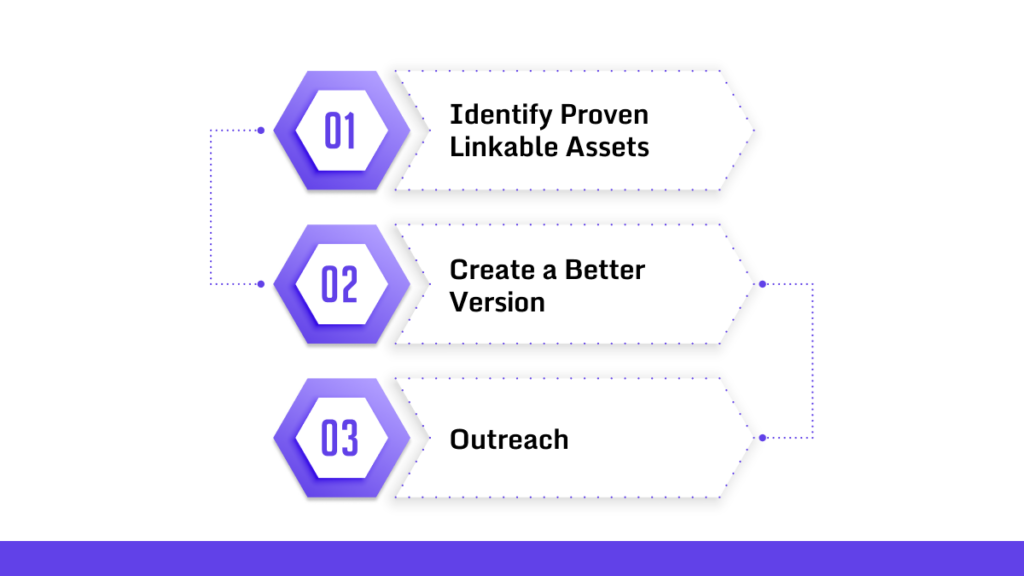
Think of it as a three-part system: You find what already pulls links and build something stronger. Then, reach out to sites that are linked to the old piece and show them a better option.
Step 1. Identify Proven Linkable Assets
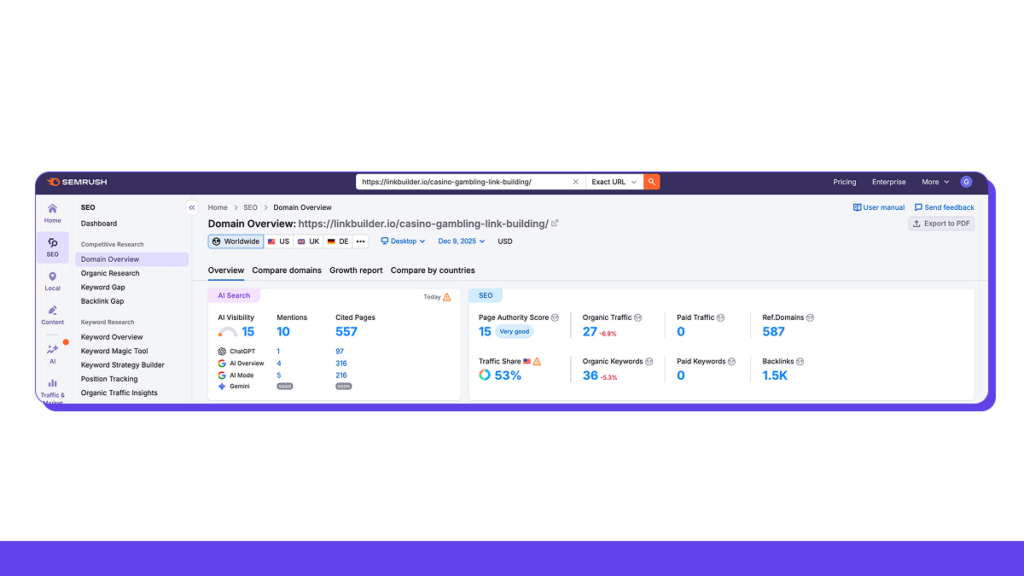
There is no guesswork here. You look at pages that pull real backlinks with authenticity.
Linkable assets come in many shapes; they can be a long guide, a stats page, or even a tool. If people linked to it once, there is a good chance they will link to an improved version too.
How to Analyze Competitor Backlinks?
Start with your top competitors and check which pages bring in most of their links. You can do this with any good backlink tool, like Ahrefs or Semrush. Sort their pages by the number of referring domains and the content that is relevant to your topic.
Check out:
- ➜ Who linked to them
- ➜ The type of sites
- ➜ The anchor text
- ➜ The context of the link.
These details help you see why people linked in the first place.
Tools to Find High-Performing Content
You can use Ahrefs, Semrush, Moz, or Content Explorer. All of them show you the top pages based on backlinks. Each tool highlights link spikes, keywords, traffic, and referring domains. You only need one tool. The process stays the same if you pick from the best ones.
Step 2. Create a Better Version
Once you know what already works, it’s time to build a piece that feels richer and more useful. You want your version to make the old one feel a bit flat.
Make It More Detailed
Add missing data, real examples, and genuine information. Add steps people can follow and context that helps the reader act faster. Depth wins when it solves a problem.
Make It More Up to Date
Use new trends, new stats, and the freshest angles. Make sure nothing on your page feels old or outdated. Editors do care a lot about freshness. We can fetch fresh data from Statista or Data.Gov .
Make It More Visually Appealing
- ➜ A page with clean visuals (such as infographics) tends to receive more links.
- ➜ Comparison tables help readers choose.
- ➜ Data visuals make hard topics feel light.
Be clear on one thing: You don’t need fancy art, you just need clarity.
Add Expert Insights
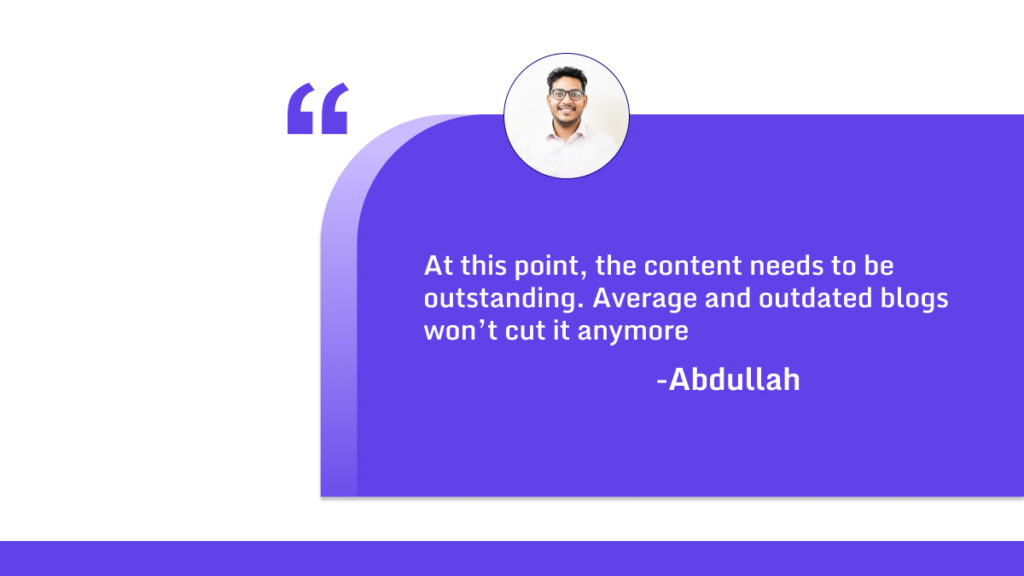
Quotes and opinions are among the most human aspects of the internet. People notice the short comments. We often bookmark the notes or advice from specialists who show authority. Even two or three insights make your content feel more grounded.
Expand Search Intent Coverage
Look at related terms your audience may search for. Add small sections that answer those extra questions or related questions. It also helps readers who want a full picture in one place.
Step 3. Outreach
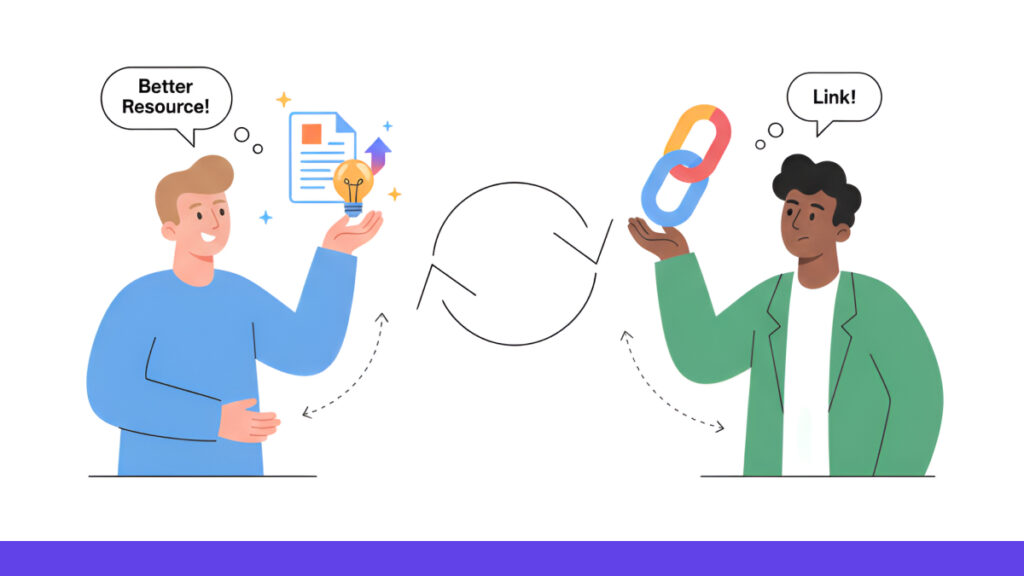
This is the step where you actually ask for the links. Reach the websites that are linked to the older pages and offer them your stronger version.
Don’t hold back the requests, as it is a very simple exchange. They get a better resource, and you get a link.
Set the Prospects
Pull the list of sites that linked to the old content. Sort them by relevance and visit their pages. You must check if the link still makes sense or not.
Group prospects into smaller sections or categories. You can group them by relevance to your topic, page type, or even domain authority.
You don’t want to throw the generic mail blast to almost every prospect. It’s the categorical prospect approach that works the best.

Keep It Simple
Please remember that a simple opener works better than a long pitch. Point out the resource they linked to and share your updated version.
Make the link easy to check and keep the message short. As your prospect might skim through their emails, they will make the initial decisions very shortly. Help them make the decision easily.
Follow Up
According to DemandAge, one single user receives around 121 emails a day. It’s very obvious that you need to be very technical about it.
One golden rule is to send one follow-up after three days. A follow-up after 24 hours is somewhat needy, and a month later follow-up won’t get you the link.
If they don’t respond, send one more email after a week.
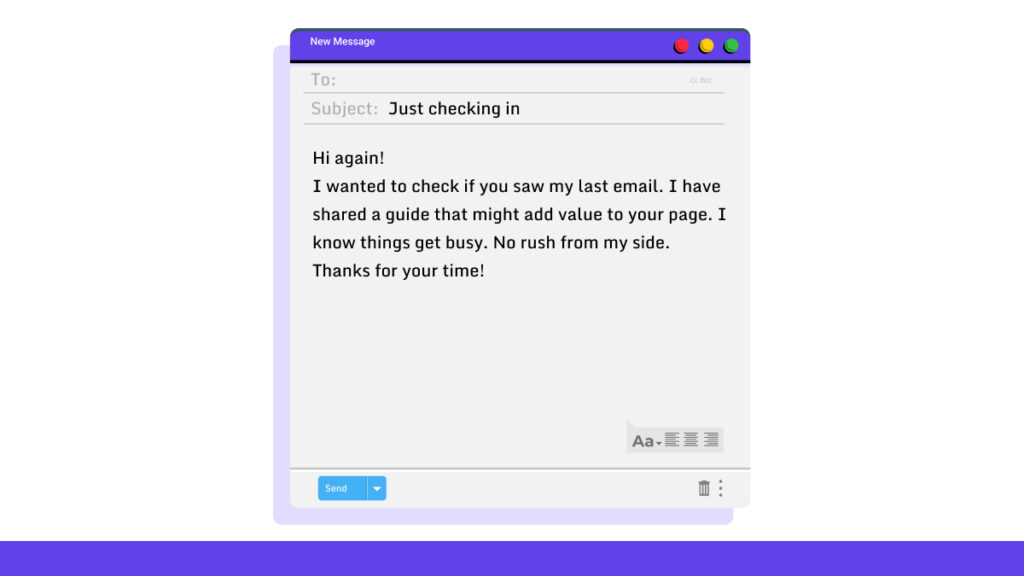
However, always keep the email short. Make it sound like a simple reminder since many people miss the first email.
Never go with a generic “Dear editor” approach. It’s old school, fake, and annoying as well. Make sure to use a name. You can find the prospect’s name from the author profile, LinkedIn, or the About section of the website. You can use other third-party tools as well. Mention one detail in the mail that shows you actually looked at their work.
Don’t make them feel like they are just another listing on your email list. A small personal touch can significantly increase reply rates.
| Generic email | Email that works |
|---|---|
|
Subject line: We have just found something on your website Hi there, I noticed you linked to a guide about this niche. It looks outdated now. I created a new version of the topic with updated stats. Here is the link [Insert Link] It might help your readers. Thanks. |
Hi [Name], I was reading your blog on [their blog topic], especially the part where you explained [specific detail you noticed]; super helpful. While going through it, I noticed you linked to a guide that used to perform well in the [niche] but hasn’t been updated in 7 months. I recently published a refreshed version of [topic] with new data and clearer steps. Here’s the link: [Insert Link] Thought it might add even more value for your readers. Thanks for your time, I really appreciate the work you do. |
Why it’s bad:
|
Why it’s good:
|
Why Skyscraper Link Building Works?
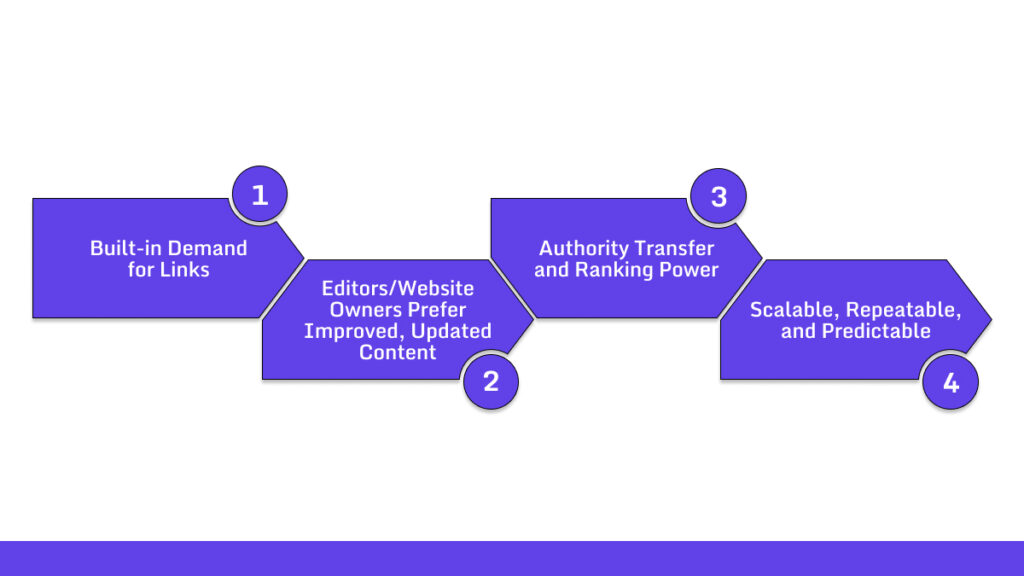
People link to blogs that they can rely on, and the skyscraper method fits exactly with that phenomenon. It turns proven demand into a steady flow of backlinks.
1. Built-in Demand for Links
Many pages on the web already have a long list of links.
Those pages have already proved that people want a resource on that topic.
You step in, create a better version of the same idea, and present it to the website owners. You keep the core value but make it clearer and easier to use.
2. Editors/Website Owners Prefer Improved, Updated Content
Editors want fresh content that solves the same old problem more precisely. When they see data from recent research, they feel safe linking to it.
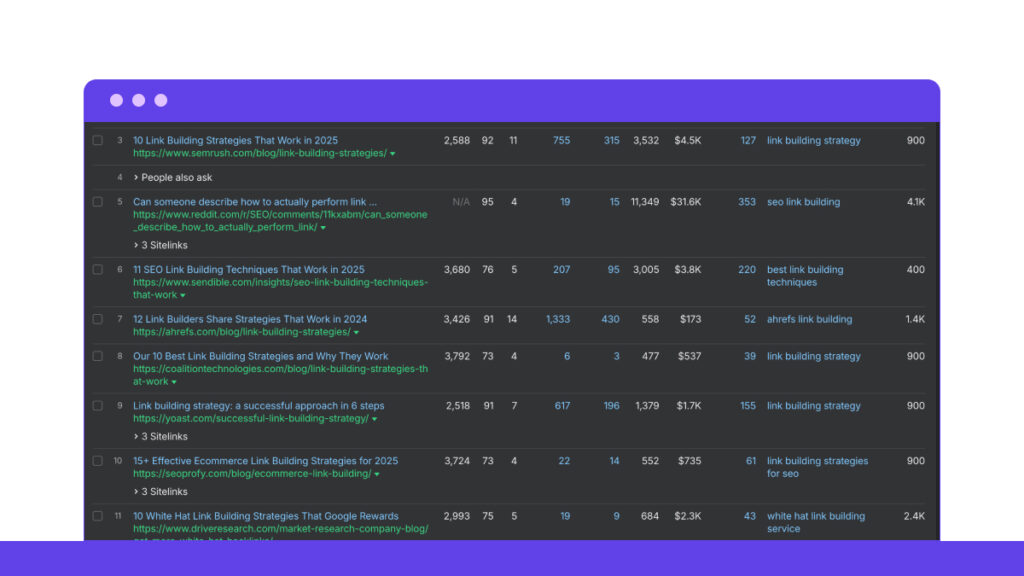
For Example, we were planning a blog for link building strategies. We mapped out the competitors who are dominating the SERP. They have covered mostly 10 to 15 strategies.
So, we make our blog exclusive with more data as 26 Proven Link Building Strategies.
New stats, clear steps, and simple writing save them time, resources, and extra hassles. More importantly, they can trust you with the data.
3. Authority Transfer and Ranking Power
When a high authority site links to you, Google starts to consider your page as a strong source. It earns better spots on the search results page, and the rise leads to more clicks and more natural links. The more helpful your page is, the stronger the cycle gets.
4. Scalable, Repeatable, and Predictable
The best part of the skyscraper method is that it works in so many niches and brings top-notch results. You can actually get the whole process and strategies online (like this one!), adjust your segmentations, and run the process again and again.
It obviously takes effort, but the steps stay the same each time. You can even train a team on it and turn it into an absolute content production system.
Get this system ready and see the SEO improvements by yourself.
4. Advanced Skyscraper Frameworks Competitors Don’t Have This
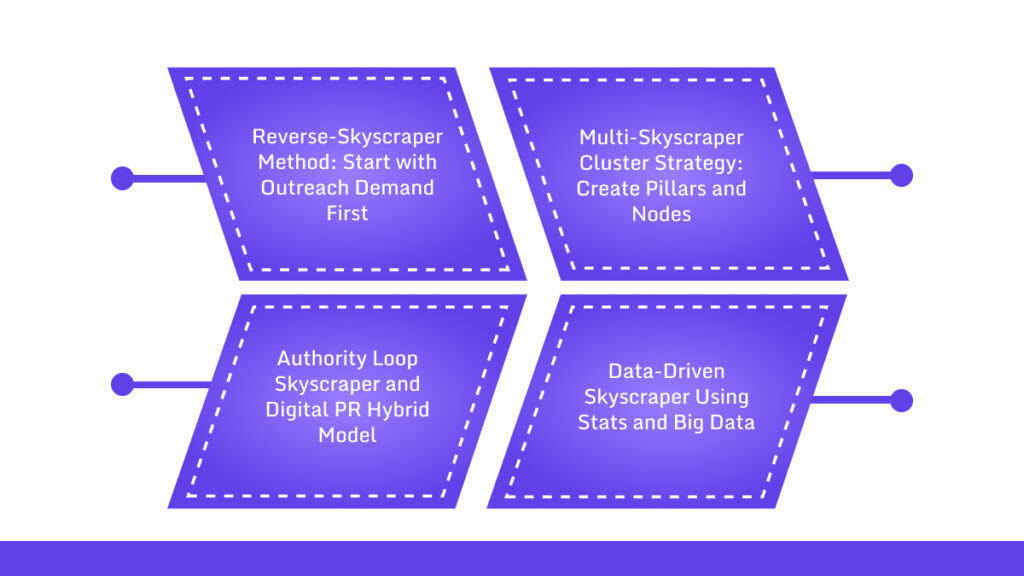
Most teams follow the same usual steps when they run the Skyscraper method.
If you want more winning links with less noise, you need better angles.
These next frameworks get you to the next level. They flip the order of the work, stack content together, and pull in authority from other channels. Also, each one is simple enough to use right away.
1. Reverse-Skyscraper Method: Start with Outreach Demand First
In most skyscraper approaches, people start with content. This one is slightly different, as this method starts with, you guessed it, the people.
Look at what editors, website owners, bloggers, or in general internet are hankering for right now.
Talk to them or check their recent links, study the pages they trust, and check gaps in their sources. Then you build content that fills that exact gap. You have all the data and the trends.
This method actually keeps you from guessing. You already know who needs your page, what data needs to be there, what should be upfront, and even how many infographics you need.
You cut down the outreach time because the demand is real and warm. It feels less like asking for a link and more like helping someone fix a missing piece.
2. Multi-Skyscraper Cluster Strategy: Create Pillars and Nodes
Some topics are too big for one page.
You may rank, but you miss intent, and on the other hand, experienced editors also like neat structures.
On this multi-solution method, you build one strong page that covers the main idea, and add smaller pages that support the main one. Each piece covers a tight angle that people search for. As different clusters solve different problems, they get connected in a very organic way.
These pages feed each other and pull in links at different speeds. Over time, they raise the strength of the whole cluster.
3. Authority Loop Skyscraper and Digital PR Hybrid Model
This model takes parts of Skyscraper and pairs them with light PR work.
You start with a strong page and add a hook that reporters and industry writers like. It can be a small study, a quote from a founder, or a simple data point.
This simple mix gives you two paths:
- ➜ Earn links from editors who want better resources.
- ➜ Earn links from writers who want a story angle.
4. Data-Driven Skyscraper Using Stats and Big Data
In this method, you turn raw numbers, data, or a massive information block into a link source.
First, you will gather data from tools, public sources, forums, or any legit data hubs. Then, you look for clear patterns or simpler formats that are more acceptable for the audience.
People love to link or share infographics, images, tables, or minimalistic data sources.
A Few Skyscraper Link Building Templates
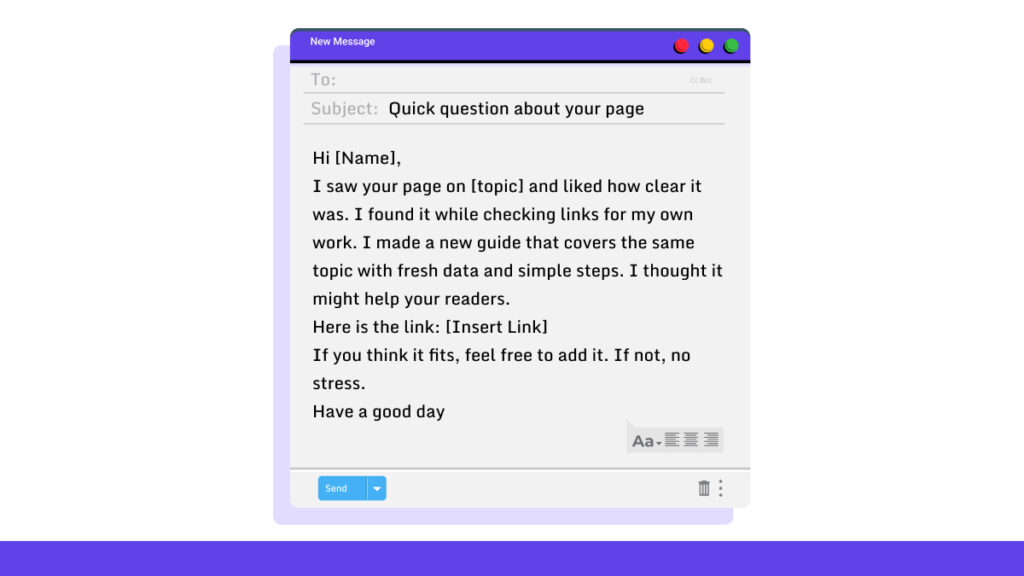
These templates work well when you want a simple message that feels human. You can just copy and tweak them, and they will work just fine. The idea is to help people feel that you respect their time.
Outreach Email Template Primary
Follow-Up Template
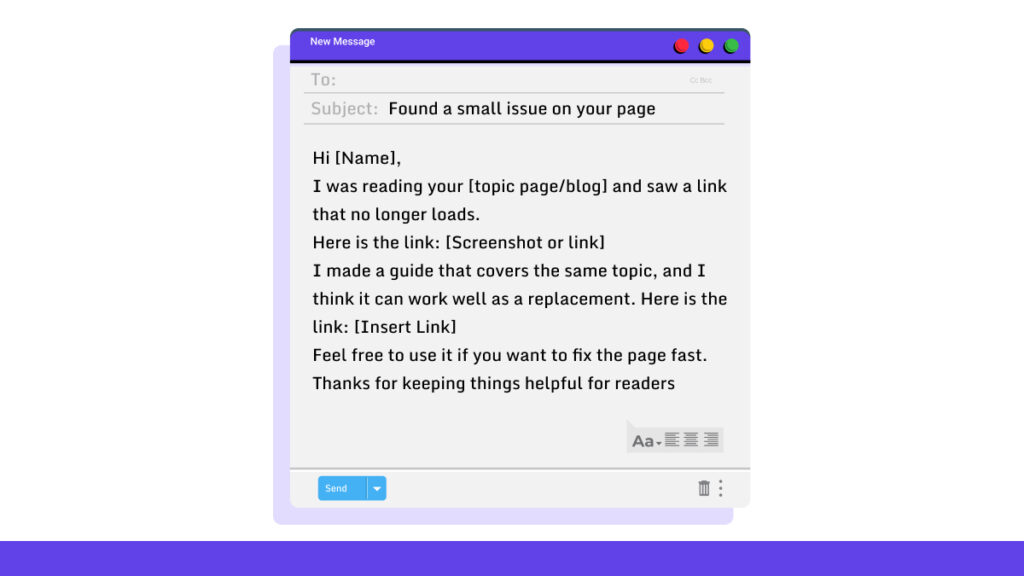
Broken Link Variation Template
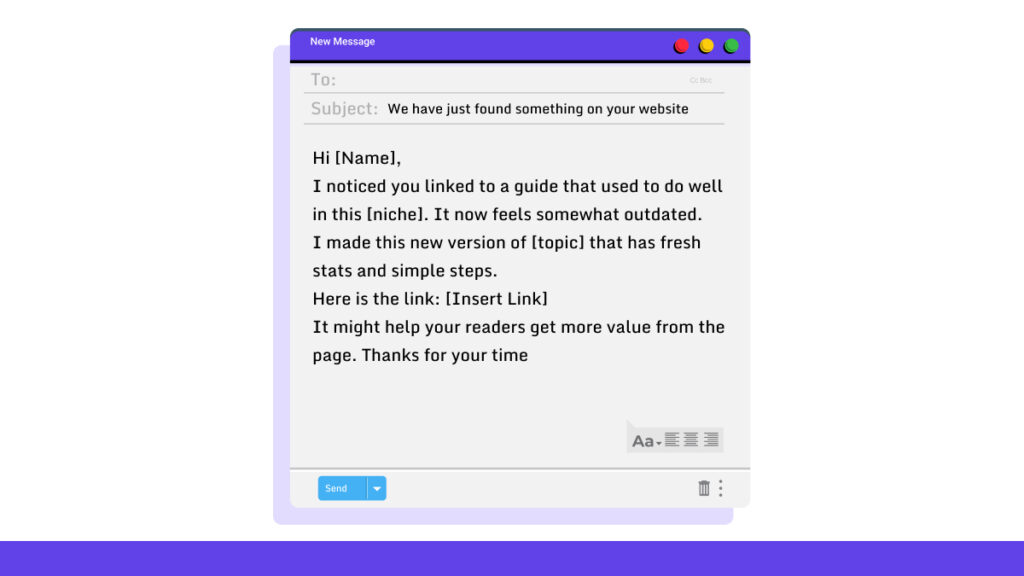
Competitor Update Variation Template
Why the Skyscraper Technique Fails? (Also the Fixes)
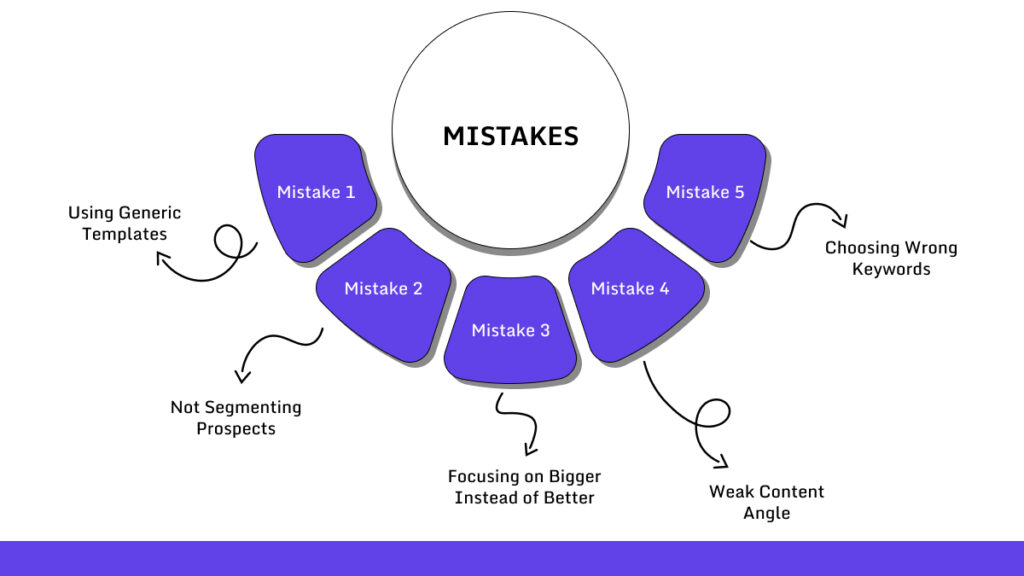
Let’s find out what can go wrong in the skyscraper technique and how you can fix each part.
Mistake 1: Using Generic Templates
Most people write one outreach email and send it to everyone. It sounds flat, bland, and feels cold for the Editors. Most likely, the emails will go to spam or be ignored.
We saw this during our work with a hip hop jewelry brand. The team sent the same pitch to style blogs, shopping sites, and music publishers. Nearly every reply was silent.
Once we changed the tone for each group, replies came a bit faster and in larger numbers.
Style blogs liked short notes that talked about visual guides, shopping sites liked proof that buyers trusted the brand, and music publishers liked real stories from artists.
The same offer landed well because we shaped the email for each person.
The fix is simple: write small changes for each group so the message feels real.
Mistake 2: Not Segmenting Prospects
Some teams collect a huge list of prospects and send all the emails in one batch.
The biggest misconception is that volume will solve the link building problem. Let us clarify you: It never does.
When we worked with a local business in Los Angeles, we noticed most prospects had nothing to do with the service area. Many were national sites that did not link to local guides.
Once we split the list into smaller groups, everything shifted quite positively.
Mistake 3: Focusing on Bigger Instead of Better
Some people try to make the longest guide on the topic. They chase length and add more words, more sections, more images, and more stuff.
They forget the point: bigger is not always better. Better is better. Try to make the blogs better.
Mistake 4: Weak Content Angle
Some content looks good but offers nothing new. People understand this very fast while reading and move on even faster.
During our hip hop jewelry study, we learned that in this niche, people wanted brand stories. They wanted proof that buyers loved the pieces and the details on how the culture shaped trends.
A fresh and solid angle on the blog helps your audience to make decisions even faster.
Mistake 5: Choosing Wrong Keywords
Some content targets terms that never bring links. It may rank. It may get traffic. But it never earns attention from editors. That is the wrong target for a skyscraper.
We learned this in an e-commerce project. The first target keyword had little search interest and zero backlink history.
Though their products were good and they had really good reviews, websites weren’t linking to them.
When we shifted to a keyword with strong past link growth, the page picked up links fast. Use keywords with proven backlink demand. This makes your outreach easier and your work lighter.
Tools Needed for Skyscraper Link Building Full Stack
You can run this method by hand, but it feels a bit like trying to cut steak with a spoon. The right tools make each step smoother. They help you spot strong pages, create better work, reach the right people, and keep track of what happens next.
Here is a simple breakdown of what you need.
Backlink Analysis Tools
You need a clear view of who links to your competitors. Good backlink tools give you that view. They pull the data and show you which pages attract links and why they attract them.
| Tools | Links |
|---|---|
| Ahrefs | Free Backlink Checker by Ahrefs |
| SEO Review Tools | Free Backlink checker |
| Semrush | Backlink Checker: Find Out Who Links to Any Website for Free |
| Backlinko | The BEST Free Backlink Checker (+ Paid Tools Compared) |
| NeilPatel | Free Backlink Checker With Historical and New/Lost Link Data |
Content Creation Tools
You want your new page to feel sharp and easy to trust, and a few tools can help with this.
- ➜ Think of tools like Grammarly for quick checks.
- ➜ Canva helps you add a clear graphic.
- ➜ Google Keyword Planner or any semantic tool helps you cover related terms.
Outreach Tools
You need tools that help you find emails, send messages, and keep track of replies. One tool can handle all of this, or you can mix a few.
- ➜ Hunter helps you find emails.
- ➜ Mailshake helps you send messages in batches.
- ➜ Instantly is fast and simple.
You only need a tool that helps you reach the right editors and keep the work moving.
Skyscraper Link Building vs Other Link Building Methods
| Method | How It Works | Strengths | Weak Spots | Best For |
|---|---|---|---|---|
| Skyscraper Technique | Create a stronger version of a page that already has many links and reach out to those linking sites. | High link potential. Clear targets. Scales well. | Needs strong content. Outreach takes time. | SaaS, ecommerce, agencies, blogs, publishers. |
| Broken Link Building | Find dead links on a site and offer your page as a replacement. | Low-friction outreach. Editors often welcome fixes. | Limited by how many broken links exist in your niche. | Sites in mature niches with old content. |
| Digital PR | Create newsworthy content and pitch to journalists. | Can get high authority links with one campaign. | Hard to predict results. Needs a strong angle. | Brands with strong stories or data. |
| Guest Posting | Write and publish an article on another site with your link in it. | Full control over content. Straightforward process. | Editors are picky. Takes time to write many posts. | New sites or brands that need early links fast. |
Is Skyscraper Link Building Worth It in 2026?
While using the Skyscraper link building method, some businesses get more value than others. SaaS companies with competitive content can attract attention quickly. E-commerce sites can turn popular product guides into link magnets. Agencies can use them to prove results to clients. Bloggers who focus on authoritative topics will benefit as well.
The best part is you don’t need a huge team to start. Anyone willing to research, improve, and reach out consistently can see results. This method rewards effort and strategy more than luck.
Frequently Asked Questions
How Long Does Skyscraper Link Building Take?
It depends on your content and outreach. Some pages get links in a week. Others take a few months. The process moves faster if your content is strong and your outreach is smart.
How Many Links Can You Expect?
There is no fixed number. It depends on the content, the niche, and how well you reach out. You could get a handful or dozens. Focus on quality over quantity.
Does Skyscraper Work for Small Sites?
Yes, small sites can benefit. The key is to create content that is clearly better than what already exists. Even a small blog can attract attention if the content solves a problem or gives fresh insights.
Should You Outsource Skyscraper Link Building?
You can, but it helps to know the process first. Outsourcing can save time. It works best if the person or agency understands your niche and can reach out with care.
What is the Purpose of Link Building?
Links show search engines that your content is valuable. They drive traffic from other sites. They also help your pages rank higher in search results.
How Much Should I Pay for Link Building?
Prices vary widely. Some outreach services charge per link. Others offer packages for multiple links. Think about the value a link brings, not just the cost.
Where Can I Buy Skyscraper Link Building Service?
Some agencies and freelancers offer it. Look for providers with proven results. You can always consider Linkscope for the best quality backlinks, backlink packages, and expert opinions.