How do you define authority?
In the SEO world, authority comes from expertise, decision-making positions, and control. Proper link building strategies in seo lead you to the path of authority.
Google notices when other sites link to yours. These connections showcase that your content has value.
Link building is simply the process of getting other websites to point to your webpages. Backlinks are the links themselves.
And, you need both. What matters is doing it the right way.
Even the backlink seller from your spam folder will get you links. However, to actually get the authority in the long term, you need ethical and natural link-building strategies.
Why does this still matter in 2026? Because Google keeps raising the bar. Updates like E-E-A-T (Experience, Expertise, Authoritativeness, Trustworthiness) and the Helpful Content system reward sites that prove their worth. You can’t fake authority anymore. You have to build it. It’s about showing up as credible and valuable.
This guide covers 26 strategies and link building examples that actually work. Some are easy wins for beginners. Others take more effort but deliver bigger results. Pick what fits your level and start building.
Your rankings will thank you.
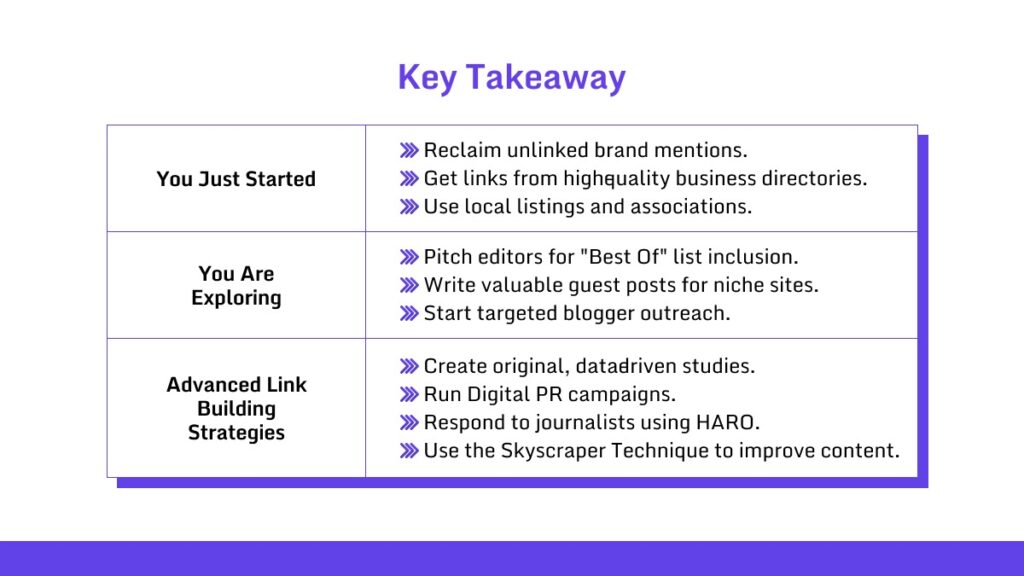
Key Takeaway: Types Of Link Building Strategies (But With Your Skill Level)
Content Led Link Building Strategies
When people talk about “earning links,” this is what they mean. You create something so useful or interesting that other sites link to it on their own. That’s content-led link building. It works because people love sharing what helps them look smart, informed, or helpful.
1. Data-Driven Studies and Original Research
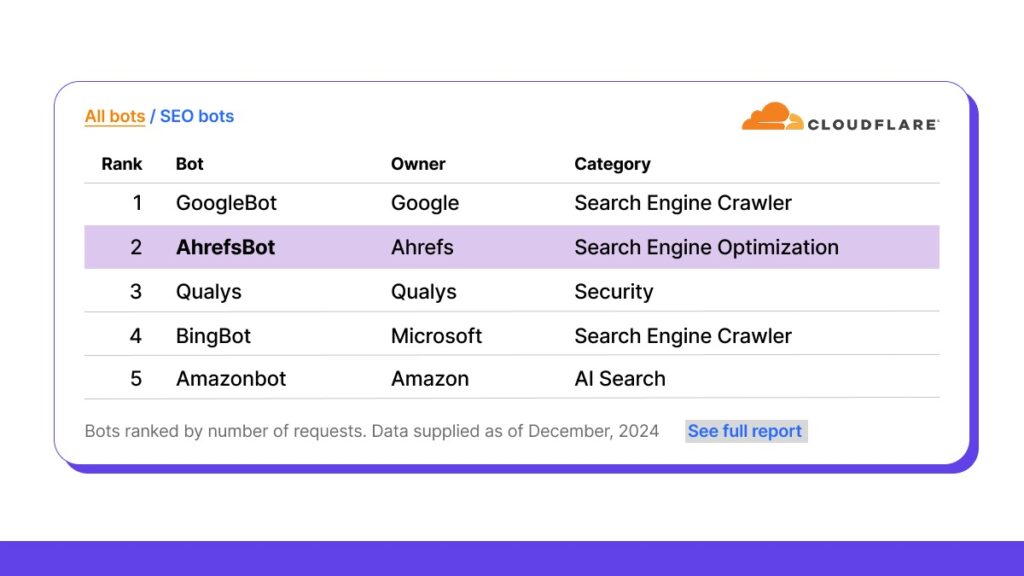
Ahrefs once took their entire database from their content explorer tool, which included 14 billion pages. If we are talking about data, this might be one of the biggest numbers.
Facts move faster than opinions. People love fresh data. They trust numbers they haven’t seen before.
And they link to the source.
Here’s how you can do it:
- > Pick a question your audience actually cares about. Example: “Do longer posts really get more backlinks?”
- > Collect data. Use surveys, scrape public stats, or pull insights from your own analytics.
- > Use APIs to gather trends.
- > Turn the numbers into charts or simple visuals so the data is easy to scan.
- > Publish your findings with a clear takeaway.
- > Keep it short and direct.
- > Reach out to journalists, bloggers, or newsletters that write about your topic.
- > Tell them what you found and why it matters.
People need to have the idea that “That’s shareable!”. That’s the kind of content reporters cite in their articles.
2. Infographics, Interactive Visuals, and Guestographics
This goes back to 2015. There is a health site called Treated.
They noticed a London Underground transport strike was coming. They quickly made an infographic map.
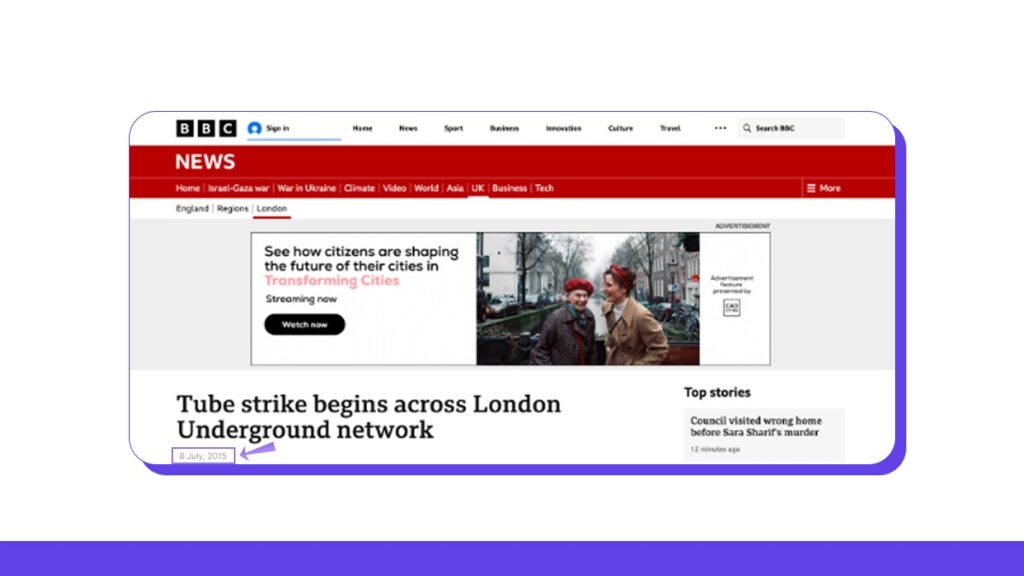
[Source: BBC]
It showed how many steps and calories you would burn if you walked each tube route instead of riding.
This was definitely unique, and it happened so much in time. It was instantly picked up by major London news sites. They linked to the graphic as a resource for commuters.
People share what they can understand at a glance. That’s why visuals get links. You make a complex idea simple and beautiful.
Here’s how you can do it:
- > Pick a topic that’s hard to explain in words.
- > Create an infographic using Canva, Venngage, or Figma. Keep text short and visuals clear.
- > Add an embed code below it so others can post it easily.
- > Search for blogs that cover your topic. Offer the infographic as a guestographic. They get free visuals, you get a link.
3. Ultimate Guides, Statistics Pages, and Case Studies
HubSpot created a guide called “How to Create Detailed Buyer Personas for Your Business.”
They made the guide a simple how-to. They also gave away a free template.
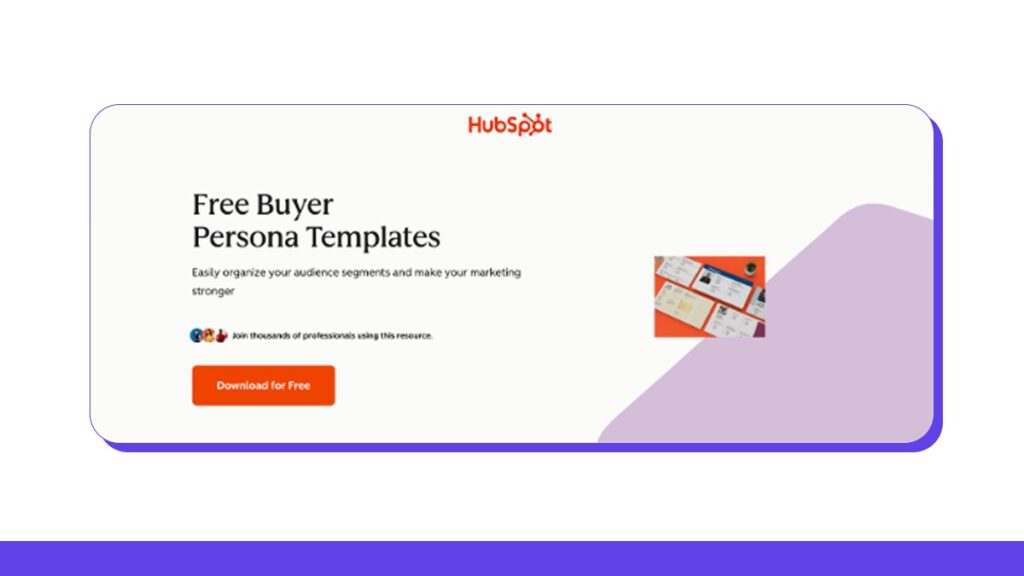
The content has earned a total of 15000+ Backlinks from 4200 reference domains, including sites like Buffer and Social Media Examiner.
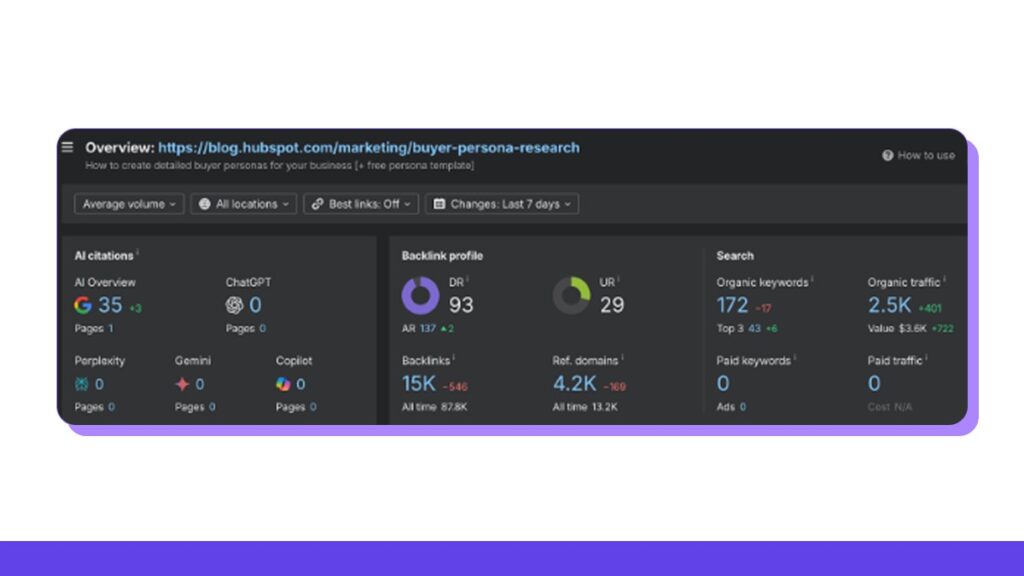
Why? The guide is thorough, and the template is a genuinely useful tool that other writers want to share with their readers.
Evergreen content earns trust and links.
Here’s how you can go for it:
- > Choose a topic that people search for every year.
- > Build a long, helpful guide around it.
- > Add examples, templates, and screenshots.
- > Link to related pages on your own site to keep readers moving.
- > Promote it with outreach and guest posts.
Outreach and Relationship Building
Automation is tempting. But real people respond to real people.
If your outreach feels robotic, it will get ignored. If it feels personal, you get replies.
4. Journalist and Blogger Outreach
Writers need sources. It’s not just google search console for them. They need content worth sharing. If you can give them that, they’ll link to you.
How to get started with it:
- > Use tools like Respona or BuzzStream to find niche journalists and bloggers.
- > Check their recent work. Find something specific you genuinely liked or found useful.
- > Write a short email mentioning that piece. Then offer something they can use; be it unique data, an expert quote, or a fresh perspective.
- > Keep it under 100 words.
- > Get to the point fast.
Example email:
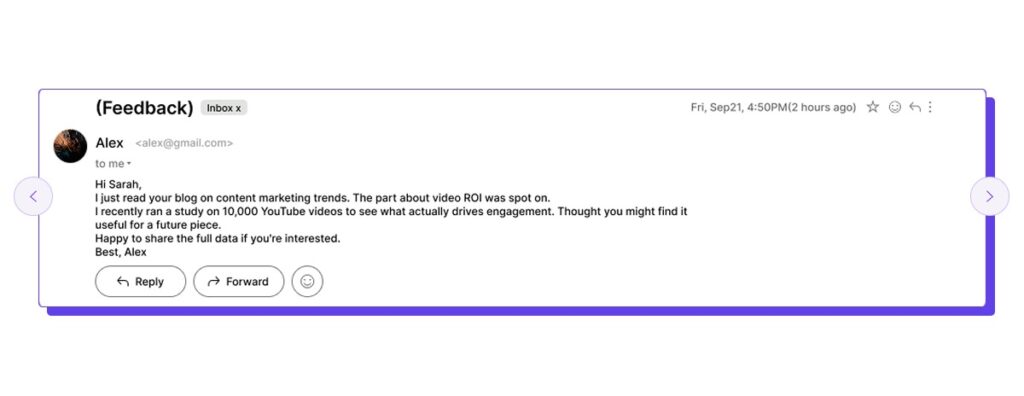
That’s it. No fluff. No pushy ask. Just value.
5. Mention-Based Link Requests
Sometimes people mention your brand without linking to you. That’s a missed opportunity.
And it’s easy to fix.
Here’s how to do it:
- > Set up Google Alerts for your brand name or product.
- > Use Ahrefs to find unlinked mentions.
- > When you spot one, send a polite email asking if they’d mind making the mention clickable.
- > Keep it friendly. Don’t demand anything.
Example email:
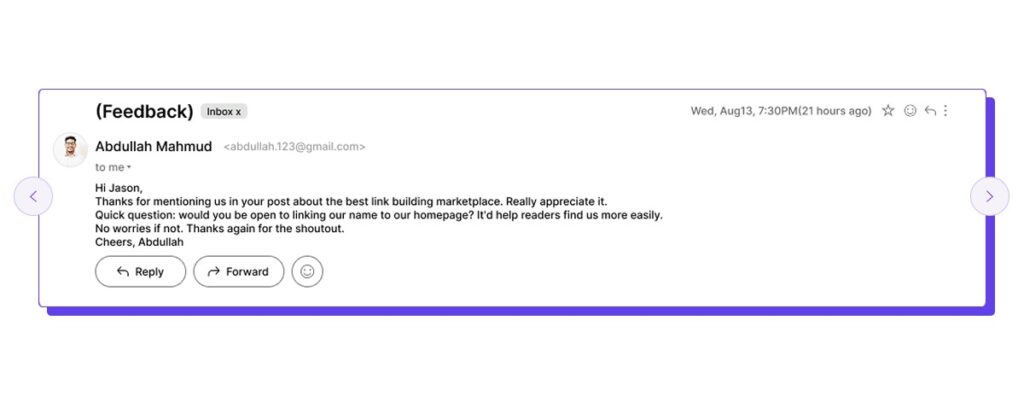
Most people will say yes. They just forgot to add the link in the first place.
6. Pitch “Best of” or Listicle Inclusion
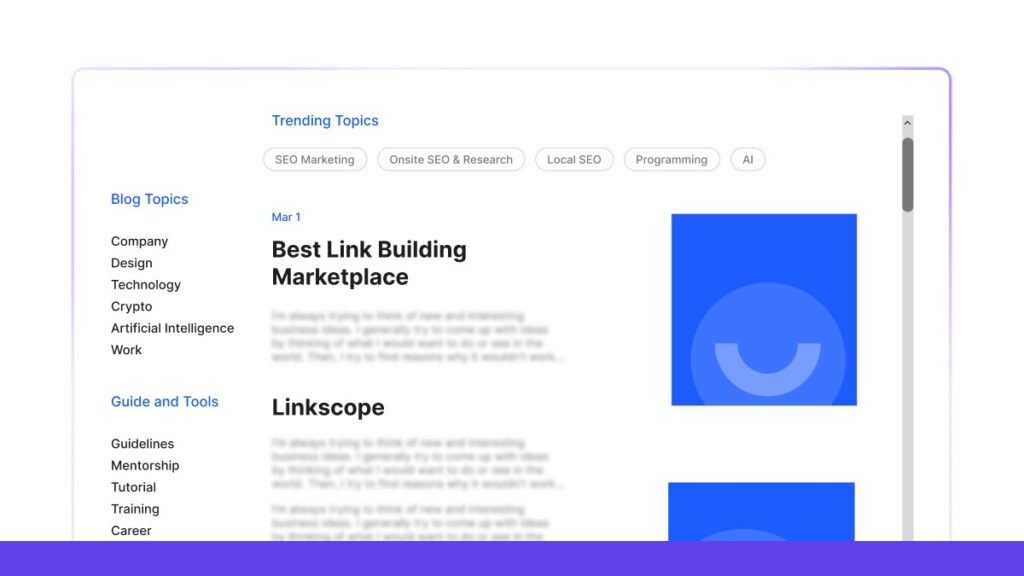
Listicles rank well. They had always ranked well. And they drive huge traffic.
If competitors are featured in a “Best Link Building Marketplace” post and you’re not, you should start working right away.
Here’s how to do it:
- > Search for listicles in your niche. Use Google search operators like “best + [your keyword]+ year.”
- > Find posts where competitors are listed but you’re missing.
- > Email the editor. Show why you belong on that list.
- > Use social proof: customer reviews, case results, or unique features.
Example email:
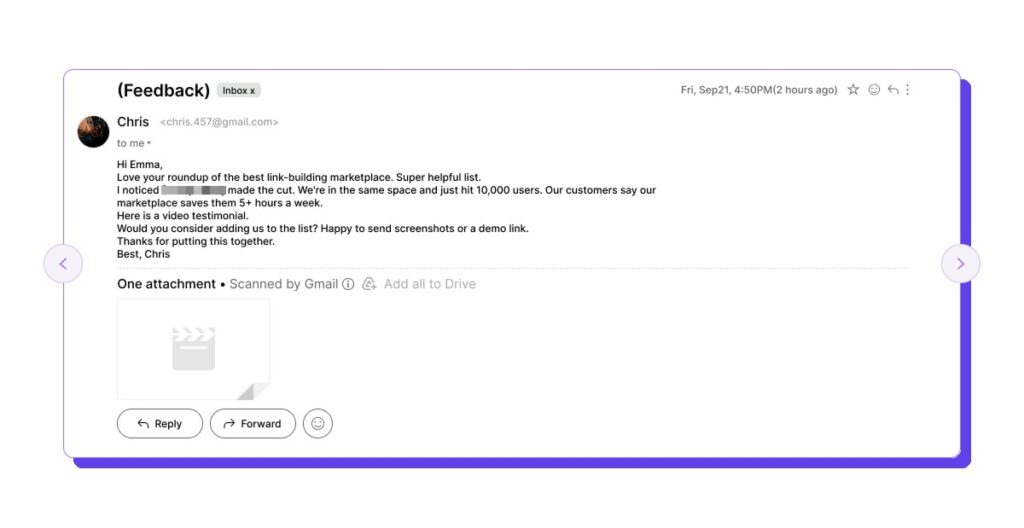
You’re not begging for links. You’re actually making their content better.
Outreach Etiquette and Follow-Up
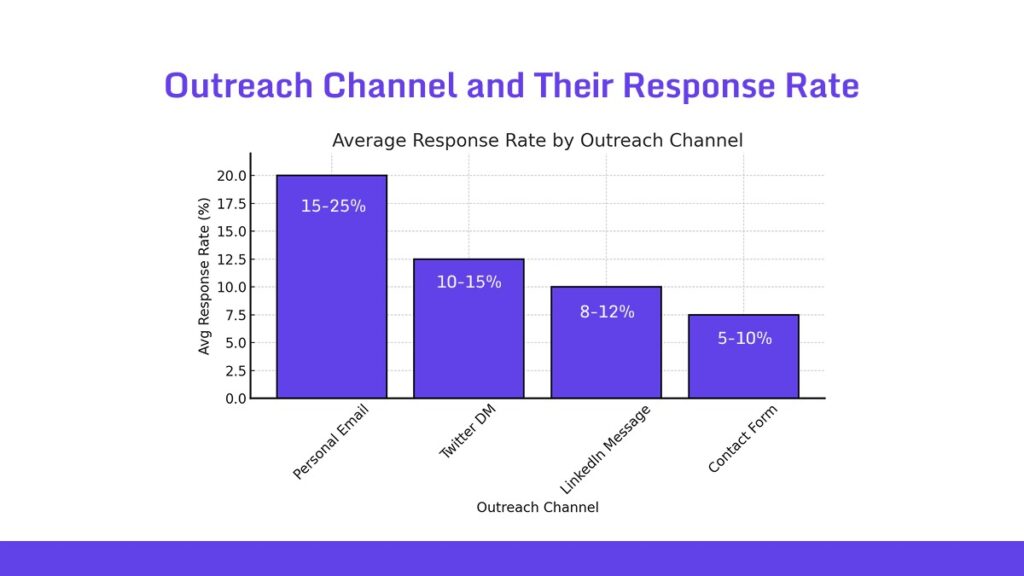
- Wait 5-7 days before sending a follow-up.
- Send one follow-up max. After that, move on.
- Track your emails. Tools like Mailtrack or HubSpot let you see who opened your message.
- Test subject lines. Short ones get opened more. Try “Quick question about your [topic] post.”
Reclaiming and Replicating Links
We all love finding new links. However, the fastest wins come from fixing what you already earned.
Do not chase new links through link building tools until you fix the old ones.
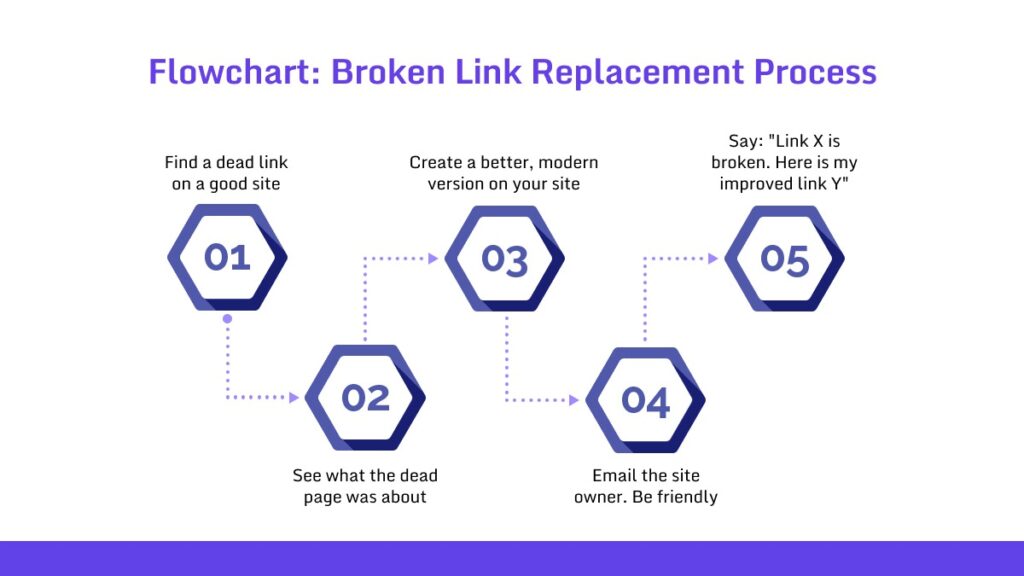
7. Broken Link Replacement (Find and Suggest)
Think of this as helping someone clean up their broken website. People appreciate the help.
How you can do It:
- > Use a tool like Ahrefs or Semrush.
- > Look for broken links on big, relevant sites in your industry.
- > When you find a dead link, create a piece of content on your site that is a perfect, modern replacement for the broken page.
- > Send an email to the editor. Say, “I saw that this page has a broken link. I have a new, better resource you can use instead.”
8. Reclaim Lost or 404 Links
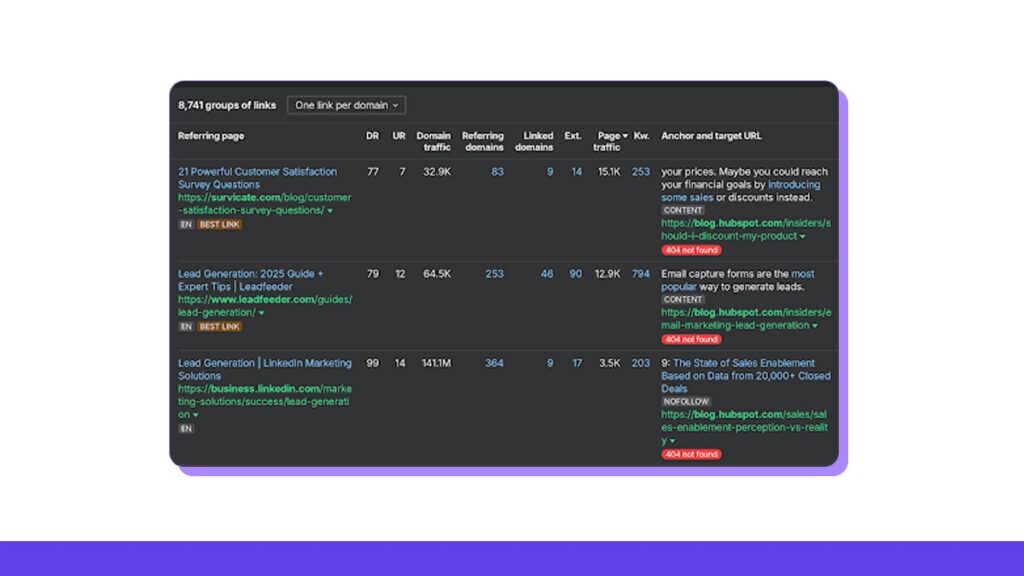
Let’s say, a company changed its product name and deleted the old product page.
That old page had ten valuable links. What can happen is that the team should find the lost links. They should put a 301 redirect from the old page to the new one.
All ten links will start passing authority to the correct page again.
Sometimes links just disappear. A linked page was deleted. A redirect broke. You need to get that equity back.
How you can do It:
- > Check your link analysis tool for “Lost Backlinks.”
- > If a page with links is now a 404 error, redirect that dead page to the most relevant, living page on your site.
- > This simple fix brings the link value (equity) back to your site instantly.
9. Reverse Engineer Competitor Backlinks
One of our clients had a small financial advice blog. He saw that a bigger competitor had links from a lot of credit union websites.
We have found that the competitor runs a free local seminar every year. The credit unions linked to the event page as a community resource.
We planned the strategy of our own free event and earned similar local links.
You can skip the line by seeing what works for others.
How you can do it:
- > Use a tool to see the backlinks of your top competitor.
- > Look for patterns. Are they getting links from a specific type of site (event sponsors, niche directories, partner testimonial pages)? Replicate that success.
- > Create better content, and then pitch those same sources.
| Reclamation Type | Link Recovery Potential |
| Unlinked Mention | High (Fastest) |
| Lost 404 Link | High (Most Important) |
| Broken Link Replacement | Medium (Needs Outreach) |
Digital PR and Brand Authority
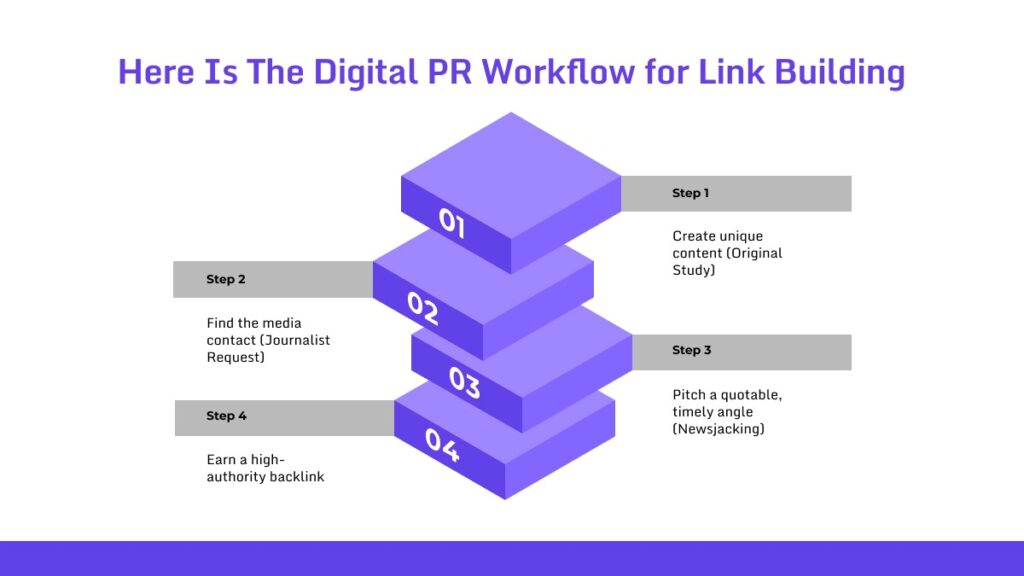
This is where you stop chasing links and start earning them. Digital PR is about making your company so authoritative that high-level media outlets want to talk to you. You build credibility, and the links just follow.
10. HARO and Journalist Requests
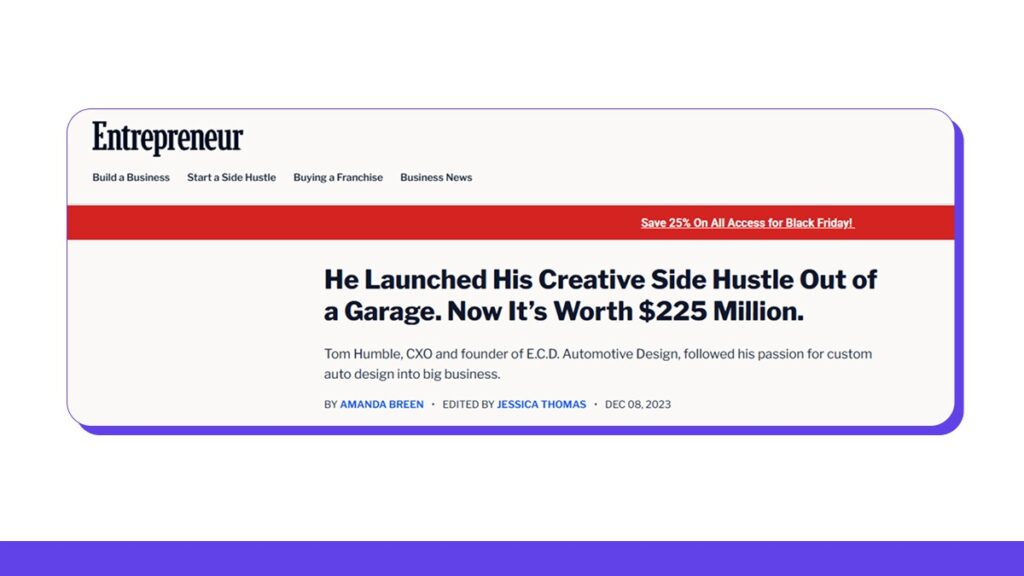
Tom Humble, one automotive design founder who started the journey from a garage and ended up with a 255 million business, is a great example here.
They managed to be visible on Entrepreneur.
Journalists are always on a deadline. They need quick, expert quotes to finish their stories. You can be the expert they turn to.
How you can do It:
- > Sign up for services like HARO, Qwoted, or SourceBottle.
- > Set your daily alerts for keywords in your niche.
- > When a reporter asks for an expert quote, answer fast.
- > Your response must be a punchy, data-backed quote they can copy and paste right away.
- > Show your experience.
11. Data-Led Campaigns That Attract Journalists
Moz publishes regular AI and SEO posts that include studies and reports. There are “2026 SEO Trends: Top Predictions from 20 Industry Experts” or “What’s New in AI Search?”.
These rankings use public data but combine it uniquely. Marketing websites, discussion boards, Industry leaders, and SEO forum sites link to these studies.
Journalists love a unique story. The best stories come from data that turns into good story patterns.
How to get started:
- > Publish an original report or survey.
- > Do not make it boring.
- > Use a fun, simple angle.
- > Give the report a strong title like: “The X Trends That Define 2025.”
- > Then, send a press release with the best finding.
12. Newsjacking and Expert Commentary
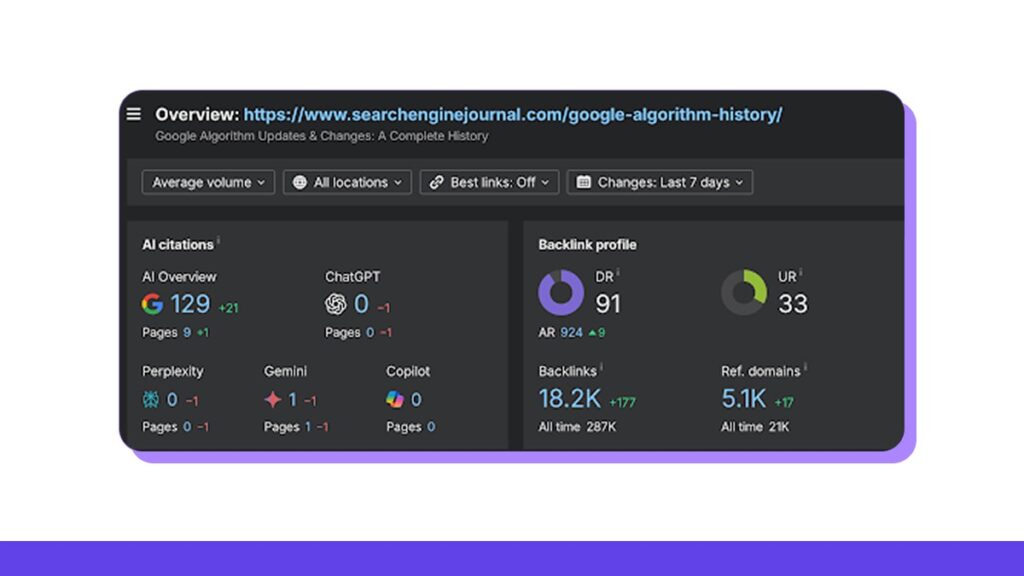
If you are into SEO, you do have Search Engine Journal bookmarked in your Chrome browser, right?
They have published this huge archive of History of Google Algorithm Updates.
Now, the SEO world dances around Google updates, and if you’re newsjacking the whole traffic with genuine authority on the industry, you have already won!
Look at the number of backlinks they got! They did win!
Jump into a really fast-paced trending topic. Become the voice of expertise right when the news breaks.
Here’s how you can do It:
- > Watch the news.
- > When a major event happens in your industry (a new government regulation or a huge tech announcement), react quickly.
- > Publish a short blog post or a case study with your expert opinion.
- > Send your opinion to reporters who are already covering the story.
These links won’t make headlines. But they built the foundation.
Directory, Local, and Community Links
They tell search engines you’re real, local, and trustworthy. And for local SEO, they’re quite non-negotiable.
13. Business Directories
One of our clients has a local bakery in Portland.
We list them on Yelp, Google Business Profile, and the Portland Food & Drink Directory. Within two months, they saw a 40% increase in foot traffic from local searches. The BBB listing alone brought in three high-ticket catering inquiries.
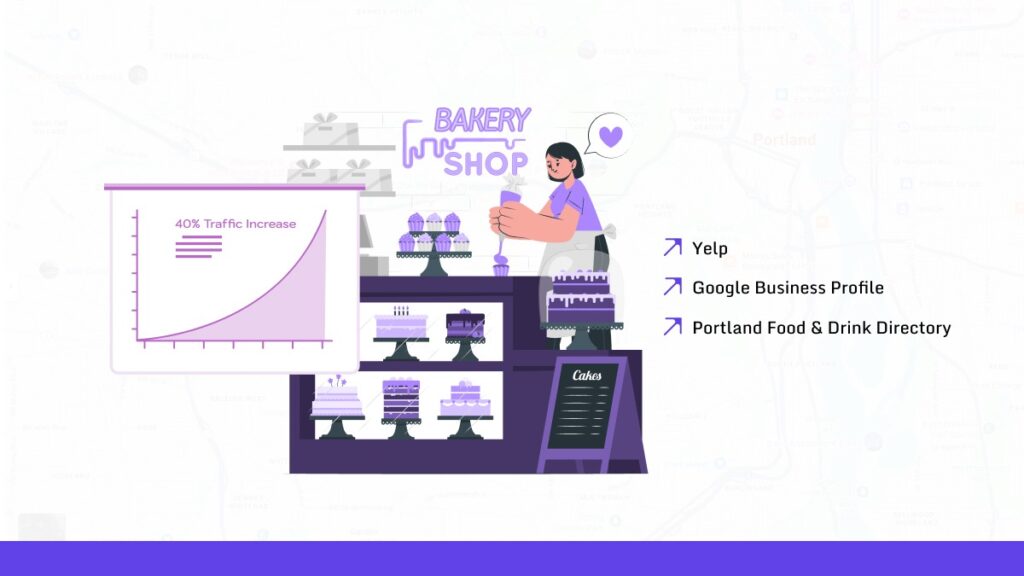
Our suggestion would be to start with the big ones. Better Business Bureau (BBB), Yelp, Google Business Profile, and your local options.
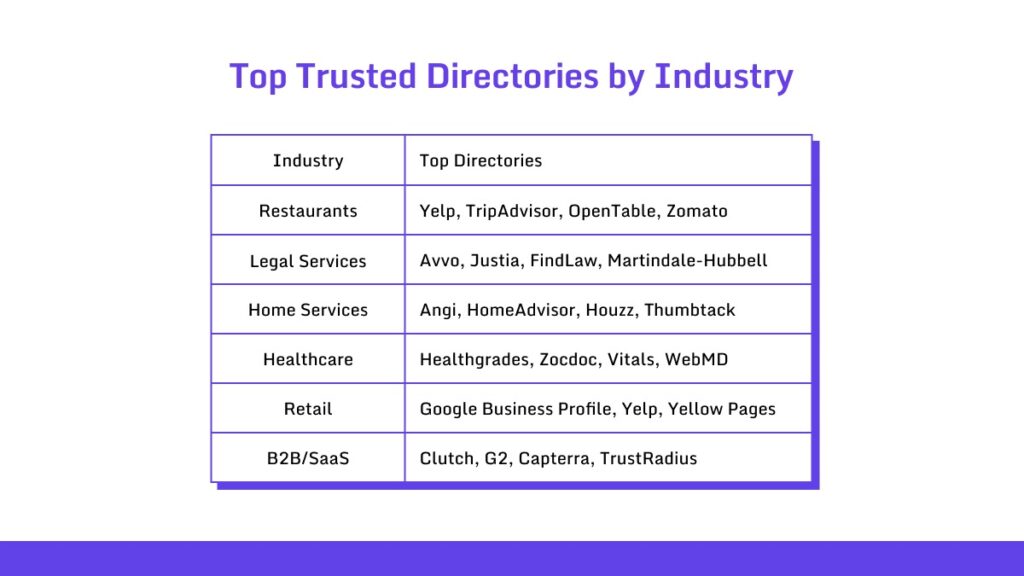
If you sell accounting software, list yourself on G2 or Capterra. If you are a law firm, use Avvo or Justia. These niche directories are worth more.
These sites have authority. They get traffic. And they pass trust signals to your site.
Here’s how you can do it:
- > Ensure your business name, address, and phone number (NAP) are consistent across all platforms.
- > Don’t stop at the general directories. Find niche-specific ones for your industry.
- > Keep your profiles updated. Add photos, hours, and accurate descriptions.
14. Alumni and Professional Associations
If you went to college or joined a professional group, use it.
Alumni networks and trade associations often have member directories with dofollow links.
Let’s say, you are a freelance web developer in Brooklyn, and you join the Freelancers Union. Make sure you get listed in their member directory. That link will help you to rank for “freelance web developer Brooklyn”
Here’s how you can do it:
- > Visit your university’s alumni page. Look for a business directory or member spotlight section.
- > Join relevant associations in your field. Examples include the American Marketing Association, the National Restaurant Association, or local business guilds.
- > Request a profile or listing. Most will add you for free or a small membership fee.
15. Local Listings and Community Hubs
This is a somewhat unique approach.
Let’s assume you have a yoga studio in Austin and you sponsored a neighborhood 5K run.
What can happen is that the event page will be linked to your site under “Community Sponsors.” That single link might bring you new class sign-ups and improve your local pack ranking for “yoga studio near me.”
Get genuinely involved in where your customers are. Local business pages, neighborhood forums, and community event sites all offer link opportunities.
In a word, be a good neighbor online.
Here’s how you can do it:
- > Sponsor, involve, or just be a part of local events that your customers are interested in.
- > Post on community forums like Nextdoor or local Facebook groups (some allow website links in bios).
- > Partner with other local businesses for cross-promotion and link exchanges.
Guest Posting and Collaboration
Shared audiences create shared backlinks. When you write for someone else’s site, their readers discover you. When they write for yours, you borrow their credibility. Both sides win.
This is a classic for a reason. It’s about real collaboration. You bring value. They give you a platform. The link is just a bonus.
16. Guest Blogging
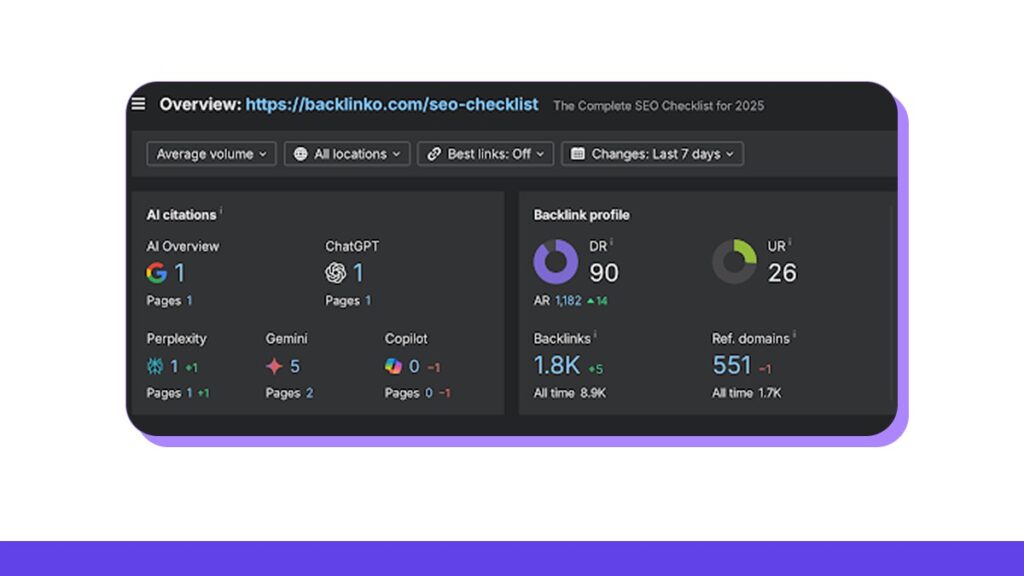
Back in 2021, Brian Dean from Backlinko wrote a guest post for Moz titled “How to Rank in 2021: The SEO Checklist.”
The post brought him thousands of new readers and a high-authority backlink. It worked because the content was genuinely helpful and fit perfectly with Moz’s audience.
Also, Neil Patel guest posted on Entrepreneur, Forbes, and Inc. early in his career. Those posts built his reputation and drove traffic back to his site.
Now he’s one of the most recognized names in digital marketing.
Guest posting still works if you do it right. The trick is finding blogs that actually matter to your audience.
Here’s how you can do it:
- > Search Google with operators like “write for us + [keyword]” or “guest post guidelines + [keyword]”
- > Look for sites with engaged readers, not just high traffic.
- > Read their existing content. Find the gaps. What haven’t they covered yet?
- > Pitch a specific topic idea that solves a problem for their audience.
- > Write something better than what’s already on their site.
- > Include a natural link back to your site in the author bio or within the content where it fits.
17. Reverse Guest Posting
Flip the script. Instead of pitching others, invite experts to write for you.
When they publish on your site, they’ll share it with their audience. You get their followers. They get exposure. Everyone walks away happy.
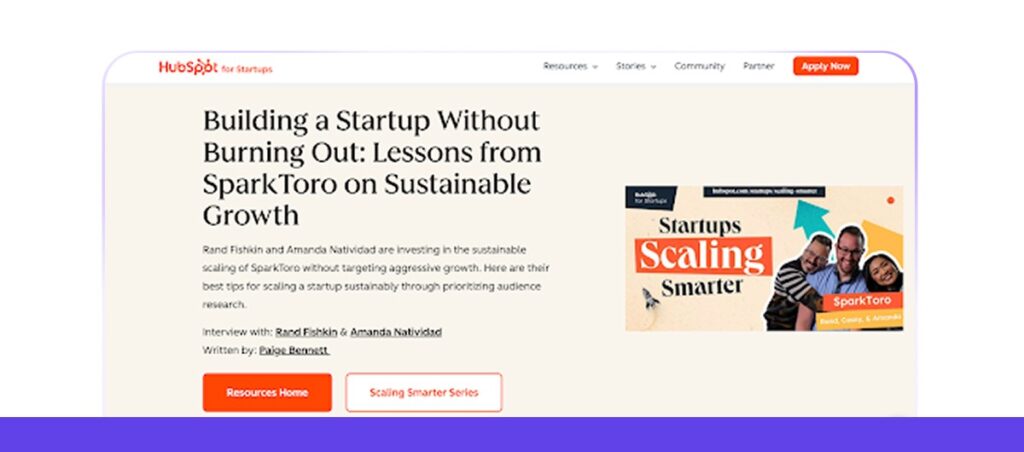
HubSpot regularly invites marketing experts to contribute to its blog.
When someone like Ann Handley or Rand Fishkin writes for them, those contributors share the post with their massive audiences.
HubSpot gets fresh content and a wider reach. The contributors get brand visibility and a link from a high-authority site.
Buffer invited startup founders to share growth stories on their blog. Each founder promoted their post to their network. Buffer gained backlinks from the founders’ sites and got exposed to new audiences.
Here’s how you can do it:
- > Find thought leaders or influencers in your niche.
- > Reach out with a simple invite. Make it easy for them.
- > Let them write about what they know best.
- > Promote their posts on your social channels and newsletter.
- > They’ll likely share it with their followers and link back to it from their own site.
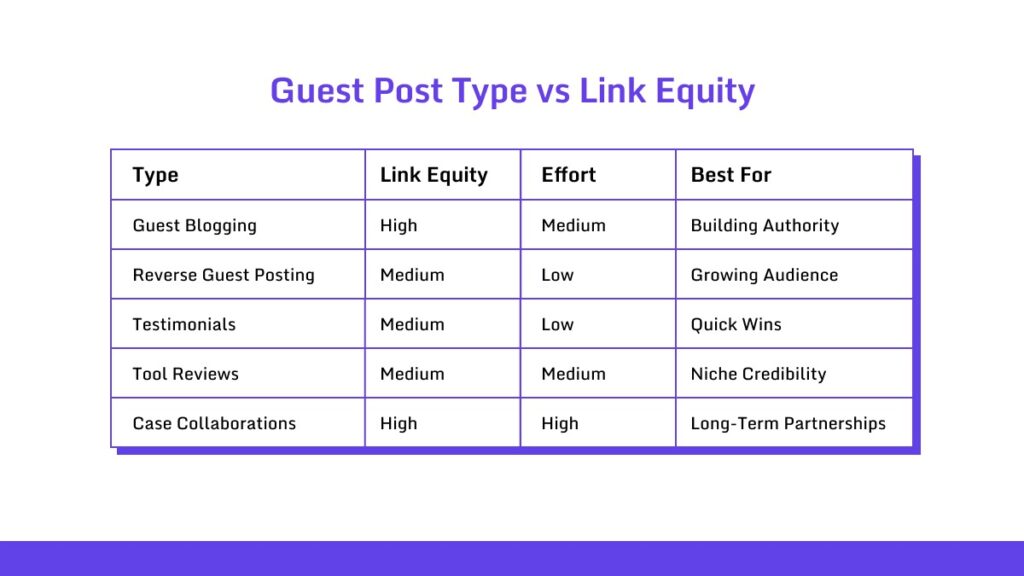
18. Testimonials, Tool Reviews, and Case Collaborations
ConversionXL partnered with Hotjar on a case study about improving user experience.
Hotjar published the case study on their blog with multiple links back to ConversionXL. Both brands benefited from the credibility boost.
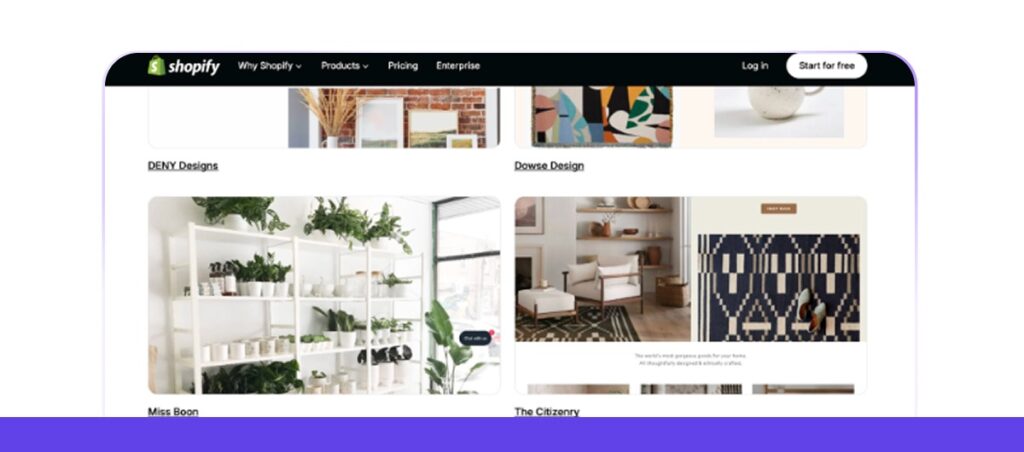
Shopify features merchant success stories on its site. Every featured store gets a backlink. If you’re using Shopify, reach out and pitch your story.
This one’s sneaky good. You’re already using tools and services. Why not get a backlink for saying so?
Here’s how you can do it:
- > Write a testimonial for a tool you actually use. Be specific about how it helped you.
- > Reach out to the company and offer it. Most will feature it on their testimonials page with a link to your site.
- > Offer to write a detailed review or case study. Tools love social proof.
- > Partner with brands on case studies. You show how their product worked for you. They publish it and link back to your site.
Technical & Strategic Enhancements
Good link building isn’t just about outreach. Sometimes the smartest moves happen on your own site or through clever technical tactics.
Mix creativity with precision and you’ll find links in places most people miss.
19. Internal Linking Optimization
Your website is a house. Internal links are the hallways. You want to make it easy for Google and your readers to move between rooms.
Backlinko uses internal linking to connect all its SEO guides. Each post links to related topics using clear anchor text.
This keeps visitors reading longer and boosts the authority of their cornerstone content.
Their “Link Building Guide” links to specific tactics like the Skyscraper Technique, which links back to the main guide.
Here’s how to do it:
- > Group related pages into topic clusters (called silos). For example, all your link-building posts should link to each other.
- > Use descriptive anchor text that tells readers what to expect. “Check out our guide on broken link building” beats “click here.”
- > Balance your link depth. Important pages should be no more than three clicks from your homepage.
- > Audit your internal links regularly. Find orphan pages (pages with no internal links) and connect them.
20. Reverse Image Search for Credit Recovery
Neil Patel’s team found that one of their infographics on SEO statistics was being used on 80+ sites. Only 12 had linked back. They reached out to the others with a simple request. Within two weeks, they recovered 40+ backlinks just by asking nicely.
Your images might be all over the web without you knowing. And most sites forgot to link back to you. That’s free links just waiting to be claimed.
Here’s how to do it:
- > Take your best infographics, charts, or custom images.
- > Upload them to Google Images or TinEye reverse search.
- > Find sites using your visuals without credit.
- > Send a polite email asking them to add a source link. Most will do it right away.
21. Skyscraper and Moving Man Methods
Old content gets outdated. Broken links pile up. That’s your opening.
Skyscraper Technique:
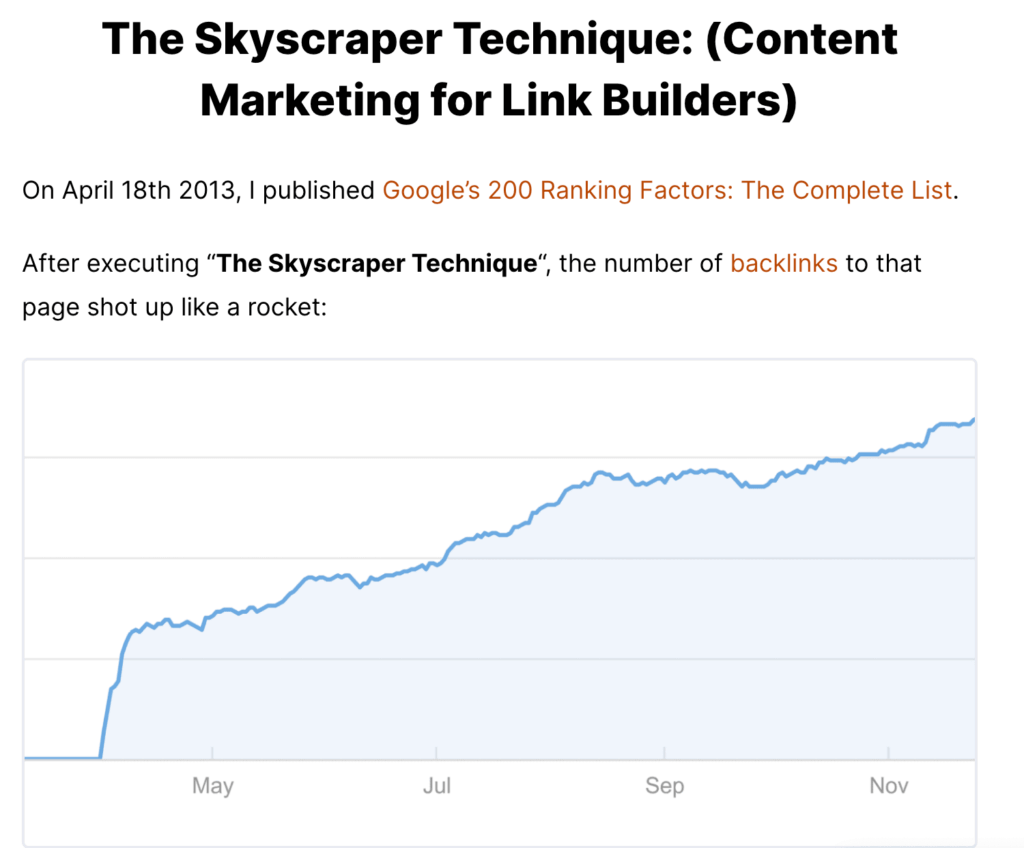
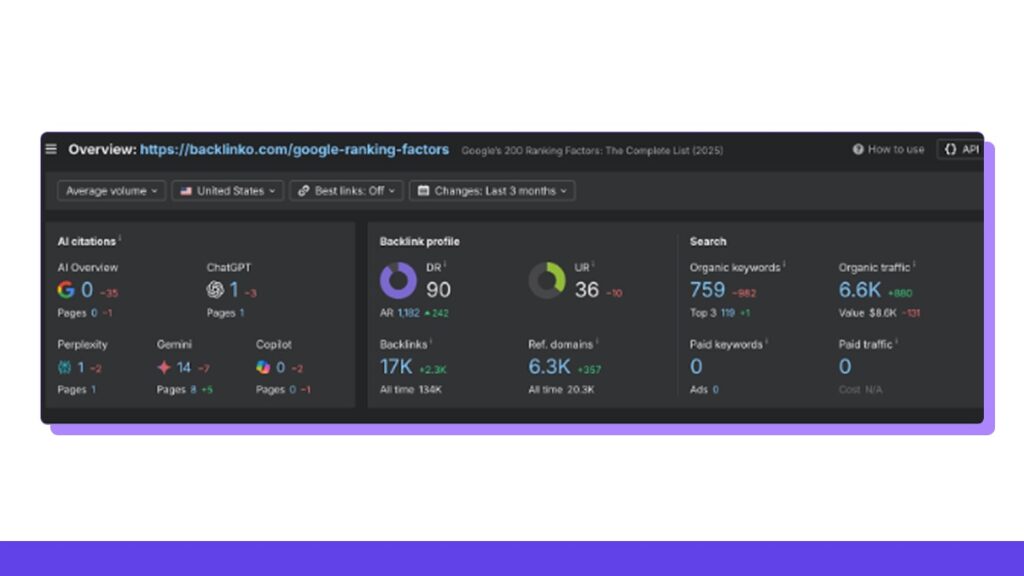
Brian Dean (Backlinko) famously used the Skyscraper Technique on a “200 Ranking Factors” post. He found an outdated list that had 160 backlinks. He created a better version with updated info and better formatting. He reached out to sites linking to the old one.
Result? His post earned 600+ backlinks in the first few weeks, and currently, the number has reached 17K+!
- > Find a piece of content in your niche that has tons of backlinks.
- > Make yours better. Add fresh data, more examples, better visuals, or clearer explanations.
- > Reach out to everyone who is linked to the original. Show them your improved version.
Moving Man Method:
Let’s say you have an SEO tool. You have found that a popular SEO tool has shut down.
You can reach out to sites still linking to it and offer your own tool as an alternative.
You are basically solving an instant problem.
- > Find pages that moved, rebranded, or shut down but still have backlinks pointing to them.
- > Create content that fills the gap.
- > Contact the sites linking to the dead page. Suggest your content as a replacement.
22. Data Visualization Assets
Numbers are boring until you make them beautiful. Interactive charts and graphs get shared and linked to way more than plain text.
The New York Times uses Flourish for interactive election maps and COVID-19 trackers. Smaller sites like Visual Capitalist built their entire brand on data visualizations. Their charts on wealth inequality and global trends get linked by Forbes, Business Insider, and hundreds of blogs.
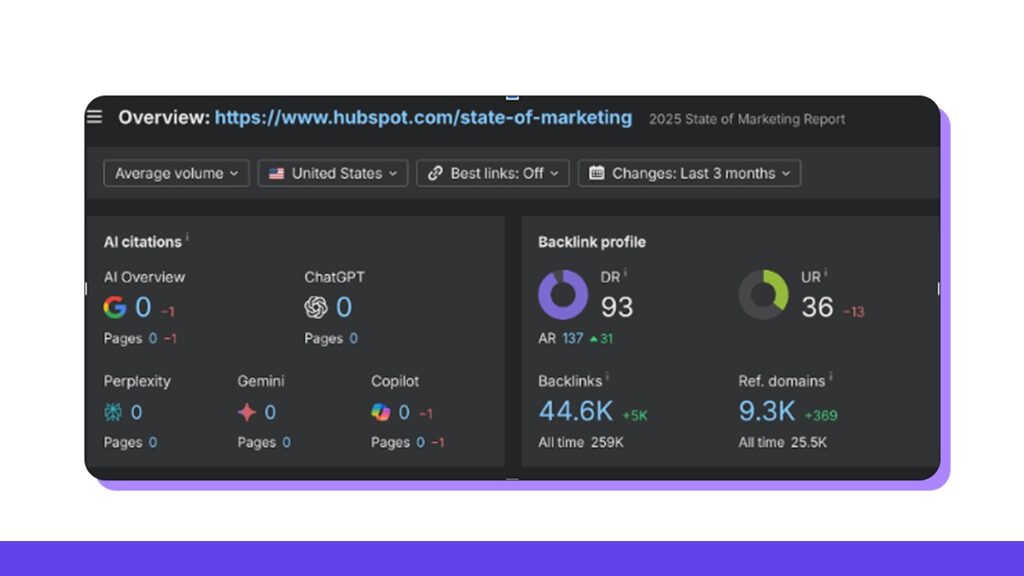
A smaller example is HubSpot’s “State of Marketing” report. They turned survey data into colorful, interactive charts.
The visualizations were embedded on partner sites, each linking back to HubSpot’s original report. It earned over 4700 backlinks in the first few months.
As of November 2025, it has a total of 44600 backlinks from 9300 Ref Domains.
Here’s how to do it:
- > Pull interesting data from your business, industry reports, or public databases.
- > Use tools like Datawrapper, Flourish, or Tableau to create interactive visuals.
- > Embed them on your site with share buttons.
- > Pitch them to data journalists and industry blogs.
23. Contests, Scholarships, and Awards
EDU and community sites love linking to scholarships and awards. It’s useful content for their audience. And it’s an easy way to earn high authority backlinks.
Scholarships.com lists thousands of small scholarships from businesses. Each gets a backlink from an EDU site with high authority.
Shopify runs an annual “Build a Business” competition. Winners get featured on Shopify’s site, and dozens of blogs and news sites link to the competition page when covering the results.
Another example is the “Moz Top 10” SEO blog award. Sites that win or get nominated link back to Moz and share the recognition. It creates a natural link loop that brings in dozens of backlinks every year.
Here’s how to do it:
- > Launch a niche scholarship. It doesn’t have to be huge. Even $500-$1,000 works.
- > Create a dedicated landing page with application details.
- > Reach out to college financial aid offices and education blogs. Ask them to list your scholarship.
- > Run annual awards in your industry. “Best Marketing Campaign of 2025” or “Top SaaS Innovator.”
- > Promote winners on social media and ask them to share. Most will link back.
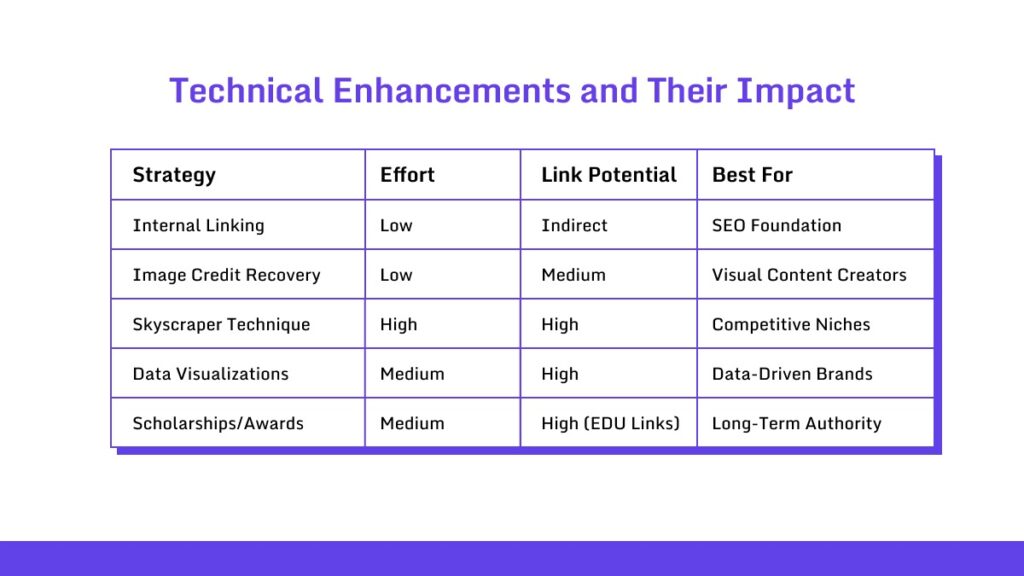
Use creative and technical synergy. The best link builders do both.
Core Link Building Philosophy
Link building isn’t a hack. This whole guide is built on one simple truth: Links are a reflection of trust.
You are not trying to fool Google. You are trying to show Google you deserve to rank. This means we focus on links that are ethical, sustainable, and relevance-first.
Here’s what separates the winners from the ones who get penalized.
24. Quality Over Quantity
One link from The New York Times beats 100 links from random blogs nobody reads. Search engines care about where your links come from, not just how many you have.
In 2019, a health startup called Noom earned a single feature in Forbes. That one backlink brought more traffic and credibility than six months of directory submissions combined. The Forbes link carried weight. The directories didn’t.
Focus on sites that matter in your industry. A link from a trusted source changes the game.
25. Relevance Over Volume
A link from a site in your niche is worth more than ten links from unrelated sites. Google looks at context. If you sell running shoes, a link from a fitness blog makes sense. A link from a recipe site doesn’t.
You don’t just get links, you always get 100% relevant links from the Fastest Backlink Marketplace by yourself.
Backlinko built its domain authority by earning links from marketing blogs, SEO forums, and tech publishers. Brian Dean went after relevance. That focus helped him rank for competitive keywords faster than competitors with more backlinks but less focus.
Stay in your lane. Build links where your audience already hangs out.
26. Ethical Over Manipulative
Black hat tactics might work for a month. Then Google catches on, and your site disappears. Paid links, private blog networks (PBNs), and link schemes all violate Google’s guidelines. When you get caught, the penalty is brutal.
In 2014, Rap Genius (now Genius) got hit with a manual penalty for running a link scheme. They asked bloggers to embed lyrics in exchange for tweets. Google found out and tanked their rankings overnight.
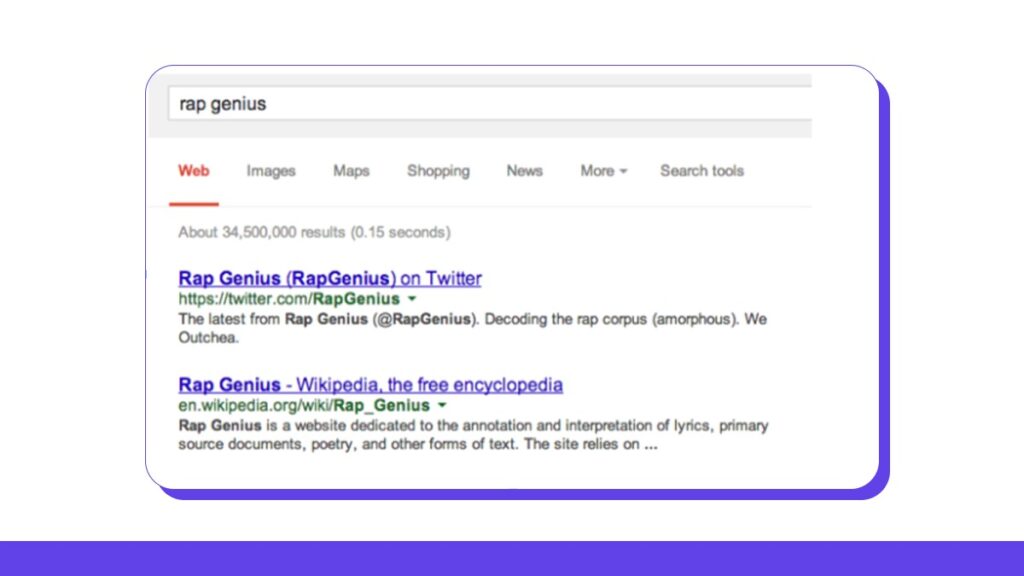
Rap Genius learned their lesson after this, and they changed their way, and after that, they came back within 10 days. [Source: Search Engine Journal]
White hat strategies take longer. But they last. Natural outreach, guest posts on real sites, and earning mentions through good content won’t get you penalized.
Bonus: Relationships Over Transactions
People link to people they trust. If you treat outreach like a cold sales pitch, you’ll get ignored. If you build real relationships, links follow naturally.
Ahrefs didn’t just create tools. They built friendships with bloggers and SEO influencers by sharing data, collaborating on studies, and promoting other people’s work. Those relationships turned into backlinks when those same bloggers referenced Ahrefs in their content. No money changed hands. Just mutual respect.
Stop thinking of link building as a transaction. Start thinking of it as networking.
FAQ About Link Building Strategies
What is the most effective link building strategy in 2026?
There’s no single “best” strategy. It depends on your niche and resources. But if you want one that works across the board, go with creating original research or data studies. Fresh data gets cited everywhere.
How long does link building take to show results?
Most people see movement in 3 to 6 months. Some links boost rankings faster than others. A link from a high-authority news site might show impact in weeks. A directory link takes longer to register.
Are directory links still worth it?
Yes, but only the good ones. Generic spam directories hurt more than they help. Stick to trusted business directories like Better Business Bureau, Yelp, or niche-specific listings.
How can small businesses compete with big brands?
You can’t outspend them. But you can out-niche them. Go hyper-local or hyper-specific. Target long-tail keywords big brands ignore. Build relationships in tight communities where they don’t bother showing up.
What tools are best for link tracking and management?
For tracking backlinks, use Ahrefs or SEMrush. Both show you who’s linking to you, what anchor text they use, and if links disappear.
For outreach and relationship management, try Pitchbox, BuzzStream, or Respona. They help you find contacts, send personalized emails, and track replies.