Link building confuses most marketers because the rules keep changing. A tactic that ranks your site today might penalize it tomorrow. Google updates its algorithm regularly, making old strategies useless or even harmful.
The journey of link building began in the late 1990s after the introduction of the PageRank algorithm, which made links powerful for rankings in Google. As marketers realized backlinks influenced visibility, link acquisition became a strong SEO strategy. Beyond all Google updates, today, links still matter, but quality, trust, and real expertise are more important than just link quantity.
This guide walks through every major change from 1991 to 2026. You’ll learn which strategies worked and why they eventually failed. More importantly, you’ll understand what actually works now.
Want to know more about link building? Check our latest guide on Link Building Statistics.
The Evolution of Link Building: A Quick Timeline
| Era | Years | Primary Strategy | Key Characteristic |
|---|---|---|---|
| Discovery Era | 1991–1997 | Submitted to Yahoo, DMOZ, WebRings | Human editors controlled visibility |
| PageRank Era | 1998–2003 | Built volume through link farms | More links = higher rankings |
| Automation Era | 2004–2011 | Used software for mass linking | Bots created thousands of links daily |
| Penguin Shake-Up | 2012–2013 | Removed bad links or faced penalties | Google punished manipulation permanently |
| Content Era | 2014–2017 | Created superior content worth linking to | Quality content earned editorial links |
| Authority Era | 2018–2021 | Earned mentions from trusted publications | Source credibility mattered more than volume |
| Trust Era | 2022–2024 | Demonstrated real-world experience | First-hand expertise became mandatory |
| AI Era | 2025–Present | Build topical authority networks | AI evaluates entity relationships |
The Pre-Google Era (Mid-1990s): Directories & Manual Listings
The pre-Google era established very fundamental link-building thoughts. Instead of the ranking signals, Links were discovery tools. And getting listed in directories means websites were driving actual human traffic.
At a glance, here’s how links operated in the pre-Google era:
| Year | Platform | How Links Worked |
|---|---|---|
| 1991 | Tim Berners-Lee Directory | Manually curated web directory organized by volunteers. |
| 1994 | Yahoo! | Editors reviewed and approved submissions within category-based listings |
| 1995 | WebRing | Related websites are linked directly to each other in topic-based “rings.” |
| 1996 | Reciprocal Link Exchanges | Websites added each other on “Links” pages through software and email outreach |
1991: Tim Berners-Lee launched the first web directory, known as the World Wide Web Virtual Library, at CERN. It was a simple, manually maintained index of websites organized by subject. Instead of automated crawling, links were added and curated by volunteers and subject experts.
1994: Jerry Yang and David Filo launched “Jerry and David’s Guide to the World Wide Web,” which was later named Yahoo!. The directory used hierarchical categories like a digital phonebook. Editors reviewed every submission, and A link from Yahoo! was the gold standard for visibility.
1995: Sage Weil developed WebRing in June 1995. It was brilliant in its simplicity. WebRings worked differently from directories. Sites linked directly to each other, not through intermediaries. This created the earliest form of peer-to-peer link building.
1996: In this year, Tony Hsieh came up with a new technique, which is link exchange or reciprocal links. The concept was straightforward:
“You link to me, I link to you.”
Websites often had dedicated “Links” pages just to list partners. Owners would submit their site, prove they’d linked back, then wait for approval. Tony Hsieh sold LinkExchange to Microsoft in 1998 for $265 million.
1998–2003: PageRank & The Introduction of Modern Link Building
This was the era when link building became a serious business. Check the table below to see how strategies evolved between 1998 and 2003.
| Year | Event | What Happened |
|---|---|---|
| 1998 | Google Launch | The introduction of PageRank ranks sites using backlinks |
| 1999 | Link Farms | Sites exchange links to boost rankings |
| 2000 | Google Toolbar | PR scores visible; high-value links chased |
| 2000–2001 | Outreach & Directories | Mass email requests; directory submissions grow |
| 2001–2002 | Reciprocal Linking | Three-way link swaps; “Links” pages track partners |
| 2003 | Blog Spam & Updates | Comment spam rises; Google starts penalties |
In 1998, the SEO world changed when Google launched. Larry Page and Sergey Brin introduced PageRank, an algorithm that ranked sites based on the number and quality of backlinks.
Links were no longer just for navigation.
This was likely votes of confidence that showed which sites were important and trustworthy. By 1999, SEOs realized that acquiring more links directly improved rankings. This gave rise to the first link manipulation strategies, including early link farms. This is the network of sites created solely to exchange links.
In 2000, the release of Google Toolbar made PageRank scores visible, from 0 to 10. This public metric created an obsession with “link juice.” Everyone wanted a “PR7” link to boost their own score. It turned link building into a visible competition.
Between 2001 and 2002, reciprocal and three-way link exchanges became common. SEOs were creating “three-way” or reciprocal link setups to try to trick Google’s algorithm.
Example: Site A links to Site B → Site B links to Site C → Site C links back to Site A.
Webmasters kept large spreadsheets to track hundreds of sites they linked to and received links from.
By 2003, blogging platforms offered new link opportunities. SEOs used these comment sections to insert links back to their own sites, often with keyword-rich anchor text.
Google released updates (Florida in 2003 and Cassandra soon after) to penalize sites using manipulative linking tactics. This included spammy comment links, hidden links, or networks of sites created just to boost rankings.
2003–2010: The Industrial Automation Era
As the value of a link became clear, the industry found ways to manufacture them. This was the era of “Black Hat” dominance. Check the table below to see the key developments from 2004 to 2010.
| Year | Event | Key Tactic |
|---|---|---|
| 2004 | Blog Comment Spam | Bots post links on thousands of blogs |
| 2005 | Nofollow Introduced | Stops passing authority to spam links |
| 2007 | Private Blog Networks (PBNs) | Expired domains used for private link networks |
| 2010 | Automated Linking Tools | Mass forum/profile links; anchor text stuffing |
2004: Blog Comment Spamming became a massive problem, with 50,000 hits a day being reported by some users. SEOs used bots to leave links on thousands of random blogs. This automated the process of getting “backlinks” without any human interaction. It cluttered the web with useless, repetitive comments.
2005: Google introduced the Nofollow attribute. This tag told search engines not to pass authority to specific links. It was a direct response to the “Comment Spam” epidemic.
2007: Private Blog Networks (PBNs) became the tool of choice. Professional SEOs bought expired domains with existing authority. They then turned these sites into a private network of link sources. This allowed for total control over “link juice.”
2010: Automated Linking Software like GSA and ScrapeBox peaked in popularity. These tools could blast thousands of forum and profile links in minutes. “Anchor text stuffing” became the standard.
2012-2013: The Penguin Update (The Turning Point)
Google launched the Penguin update to catch sites “gaming” the system. It ended the era of easy manipulation through low-quality links.
| Update | Date | Scope / Impact | What It Targeted |
|---|---|---|---|
| Penguin 1.0 | April 24, 2012 | ~3.1% of English queries | Over-optimized anchor text, link farms, and manipulative link schemes |
| Penguin 1.1 | May 25, 2012 | Data refresh | Recalculated affected sites after initial rollout |
| Penguin 1.2 | October 5, 2012 | ~0.3% English, ~0.4% non-English queries | Global link spam across multiple languages |
| Penguin 2.0 | May 22, 2013 | ~2.3% of U.S. English queries | Deeper link profile analysis beyond the homepage level |
| Payday Loan Update | June 11, 2013 | ~0.3% U.S. queries (higher in spam-heavy regions) | Extremely spam-prone niches (e.g., payday loans, gambling, pharmaceuticals, some porn-related queries) |
| Penguin 2.1 | October 4, 2013 | ~1% of queries affected | Deeper spam detection, including lower-level pages |
| Penguin 3.0 | October 17, 2014 | Global data refresh | Reprocessing of link profiles for recovery and enforcement |
| Penguin 4.0 | September 23, 2016 | Integrated into core algorithm | Real-time link evaluation and more granular handling |
Penguin 1.0 – April 24, 2012
This first release hit over 3% of all English search queries. It targeted “over-optimized” sites that used too many keyword-rich links. Many sites vanished overnight because they relied on link farms. All this made the “natural” link patterns super important.
Penguin 1.1 – May 25, 2012
This update was mainly a data refresh, just one month after the original Penguin launch. Sites that fixed their link issues could recover, while some new sites with problematic links were also affected. It showed that Google was actively monitoring links and enforcing quality rules.
Penguin 1.2 – October 5, 2012
This update went global, affecting about 0.3 percent of English queries and 0.4 percent of non-English queries.
Impact on Link Building
- ➜ International link schemes were targeted
- ➜ Spammy tactics in other languages faced penalties
- ➜ Cross-border link networks were disrupted
Even sites that had survived earlier updates could be affected because Google monitored links across all regions.
Penguin 2.0 – May 22, 2013
This update was highly anticipated after the original Penguin rollout. Many expected major changes, but the actual impact was moderate. According to industry data and Mozcast reports, about 2.3 percent of English U.S. searches were noticeably affected.
Impact on Link Building
- ➜ Sites with spammy or low-quality links continued to be penalized
- ➜ The focus remained on identifying unnatural link patterns
- ➜ Most sites saw only minor changes, but problematic link profiles still carried risk
Payday Loan Update – June 11, 2013
This update targeted very “spammy” niches like high-interest loans and pornography. These industries used aggressive tactics that Penguin alone could not stop. It cleaned up results for keywords that were historically dominated by hackers. This protected users from dangerous and predatory websites.
Penguin 2.1 – October 4, 2013
This update refined the algorithm to find spam hidden in forum signatures. It also targeted “bio” links and automated comment sections more effectively. Even “nofollow” links were analyzed to see if a site was spamming. It made small-scale automation much riskier for brands.
The Later Penguin Era (2014–2016)
In 2014, Penguin 3.0 helped sites recover after a long year of waiting. Finally, in 2016, Penguin 4.0 became part of Google’s real-time core algorithm. It stopped “penalizing” whole sites and started “devaluing” individual bad links. We no longer had to wait months for a data refresh.
2013–2018: Content Marketing & Authority Era
This period marked a shift from technical manipulation to creative storytelling. Google began focusing on sites that proved they were experts in their field.
2013: In 2013, Google launched the Hummingbird update, a complete rewrite of its core algorithm. The focus shifted to understanding user intent rather than just matching keywords. As a result, link building needed to be more contextual and relevant to the topic to have any real impact.
2014: On January 20, 2014, Matt Cutts dropped a bomb. “Stick a fork in it: guest blogging is done.“
His post attacked spammy guest posting practices. People were creating terrible content just for links. “Accept guest posts” became code for “sell links.” Quality control had disappeared completely.
But legitimate guest blogging survived. Publishing genuinely valuable content on authoritative sites still worked. The difference? Intent and quality mattered now.
Moreover, the E-A-T (Expertise, Authoritativeness, Trustworthiness) guidelines were first published for human quality raters. This signaled that Google was looking for “reputable” sources. SEOs began focusing on guest posting on high-authority news sites rather than random blogs.
2015: In 2015, Brian Dean introduced a new link-building framework. He called it the Skyscraper Technique. The idea was direct and practical.
Find content that already has links. Create a stronger version. Then reach out to the same audiences with something clearly more valuable.
Dean’s original case study gained significant attention. His traffic reportedly doubled within two weeks. His article analyzing Google’s 200 ranking factors attracted thousands of backlinks and became widely referenced in the SEO community.
The approach worked because it replaced random outreach with structured improvement. Content became longer and more detailed. Visual elements such as custom graphics and formatting improved readability.
2018: The Medic Update arrived in August. It heavily impacted “Your Money or Your Life” (YMYL) sites, such as health and finance blogs. Google demanded that these sites have links from verified medical or financial experts. This made “Expert Link Building” a standard industry practice.
The Modern Era: Authority & E-E-A-T (2018 – 2024)
We have entered the “Trust Era” of search. Google no longer just counts links; it evaluates the reputation of the people behind them.
2019: Google introduced rel=”sponsored” and rel=”ugc” link attributes. These tags helped the algorithm distinguish between paid ads and user comments. Google moved to a “hint model” for all links. This meant even “nofollow” links could now help your rankings if they were relevant.
2021: The Link Spam Update launched in July. Google began using SpamBrain, an AI-based system, to find and neutralize unnatural links. Instead of just penalizing sites, it started simply “ignoring” links it didn’t trust. This made low-quality link building a complete waste of money and time.
2022: The “E” for Experience was added to create E-E-A-T. Google now rewards content creators who have actually used a product or visited a place. Links from people with “hands-on” experience became the most powerful signals in the algorithm.
2024: In March 2024, Google released a Core Update alongside a Spam Policy Update. One key focus was “site reputation abuse.”
This update addressed a specific linking pattern. Large, trusted domains were allowing third parties to publish content primarily to pass authority through outbound links. In many cases, those links pointed to commercial pages unrelated to the host site’s core expertise.
Google clarified that authority cannot be transferred through loosely controlled sections designed mainly for ranking manipulation. Hosting low-quality, third-party content for link equity became a direct risk.
2025–2026: The AI Integration & Entity Era
The current era is one of the most significant shifts in SEO history. Google no longer just “reads” links; it evaluates their quality and relevance in context.
2025 – August Spam Update
Google introduced a smarter system to spot manipulative link patterns across networks in real time. Low-quality links no longer help rankings—they effectively have no impact.
2025 – December Core Update
Sites started earning more value from links coming from experts and authoritative sources. General blogs or low-reputation sites lost influence, while links from topic-focused authorities mattered most.
2026 – Search Generative Experience (SGE)
Google’s summaries now pull information from trusted sources. To be cited, a site needs links from pages Google already considers reliable. This marks the rise of referential link building.
Additionally, Google sees brands as connected entities. Links now represent meaningful connections between topics, people, or brands.
2026 – Digital PR
As AI systems focus on expert citations and entity relationships, digital PR becomes a core authority strategy now. Unlike paid guest posts, which often deliver a single transactional placement, PR campaigns can generate coverage across multiple trusted publications.
Paid guest posts have also grown expensive.
According to Adsy, DR 11 to 40 placements average 351 to 390 dollars.
In contrast, DR 71 to 80 sites charge around 1,008 dollars per article, often delivering limited long-term brand equity. Digital PR earns multi-publication coverage, strengthens entity associations, and compounds trust across search and AI-driven results.
Is Link Building Still Ethical?
Link building remains highly ethical when you prioritize transparency and user value over deception. In 2026, the line between “manipulation” and “promotion” is clearer than ever. Ethical link building focuses on earning a digital endorsement because your content actually deserves it.
You are not “tricking” an algorithm; you are proving your authority to the web. Google explicitly encourages this when it benefits the person searching. Modern outreach is simply high-end networking that connects readers with better resources.
If your link helps a user solve a problem, it is fundamentally good for the internet. We must view links as relationships, not just technical shortcuts. Genuine value creates a “win-win” for the creator, the publisher, and the audience alike.
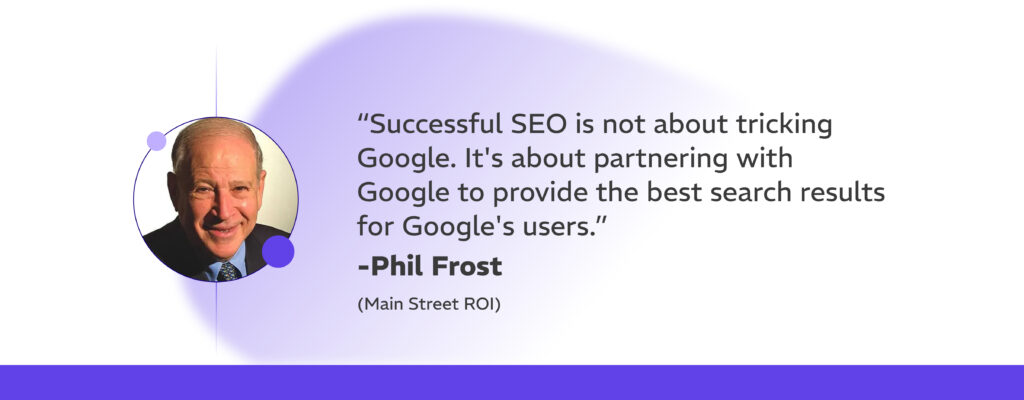
Even other Industry leaders consistently emphasize that ethical linking is about partnership and brand building, not just code.
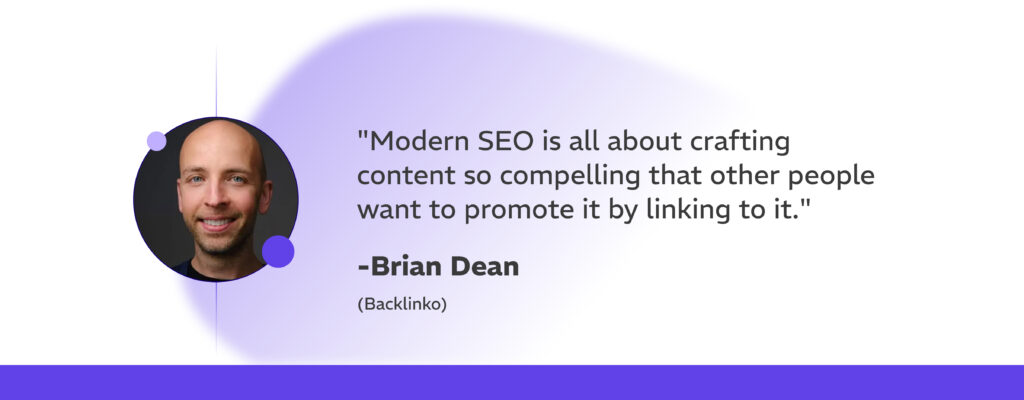
Future Trends in Link Building (2026 and Beyond)
Link building is currently undergoing its most radical transformation yet. We are moving from a world of “counting links” to a world of “calculating influence.” Here is the future trends of link building:
The Rise of Referential Link Building
In 2026, ranking in traditional search results is no longer enough. With search summaries dominating results, your brand needs to be a primary, trusted source. Content must be structured clearly so that other sites and platforms can reference your facts and data directly.
Entity-Based Linking and Topical Networks
Google now treats brands and topics as connected nodes. Links are valuable only if they logically connect related subjects. Links from irrelevant sites are ignored. To gain influence, backlinks should come from sites within your specific topic area, proving your expertise in that niche.
Experience-Led Link Earning
Google prioritizes links from real-world experts or professionals with verifiable experience. A mention from someone who has actually worked in your field carries far more weight than generic blog links. Credible endorsements now outweigh automated link-building methods.
Brand Mentions as Trust Signals
Clickable links are no longer the only way to build authority. Even unlinked brand mentions act as signals of trust. Google monitors how often your brand is mentioned near relevant topics across the web. These mentions help establish your brand as a recognized authority, sometimes more than traditional backlinks.
To know more, read the Future of Link Building.
To Conclude
The SEO link building timeline reveals one clear pattern: quality always wins eventually. Link building strategies that prioritize genuine authority and user value survive every algorithm update. Stop chasing shortcuts. Focus on earning editorial mentions from trusted sources.
Build real relationships with journalists and industry experts. Create content worth citing. That’s the only sustainable path forward in 2026 and beyond.
Linkscope is the most thriving link-building marketplace with thousands of backlink opportunities in every niche.
Book a 15-minute call with our agency team. Ask about volume discounts and your custom growth roadmap.
Frequently Asked Questions
What is the backlink history in SEO?
Backlinks started as simple navigation tools in 1991. Google’s 1998 PageRank algorithm transformed them into ranking signals. This shift created the entire link building industry we know today.
When did link manipulation in SEO become a problem?
Link manipulation emerged immediately after Google launched in 1998. By 1999, link farms appeared to exploit PageRank. Google has fought manipulative tactics ever since with regular algorithm updates.
What was the most damaging Google update for link builders?
Penguin 1.0 in April 2012 was catastrophic. It penalized over 3% of all English queries overnight. Sites relying on link farms and automated schemes lost rankings permanently.
Are reciprocal links still effective in 2026?
No. Reciprocal link exchanges stopped working after Penguin updates. Google now ignores obvious link trades. Focus on earning one-way editorial links from authoritative sources instead.
How has the history of backlinks shaped modern SEO?
Each era taught Google to detect manipulation better. Modern algorithms evaluate link context, source authority, and topical relevance. Today’s successful link building requires genuine expertise and editorial relationships, not volume.