For ranking in the first three positions on Google in 2026, the average content length that ranks is 1,500 to 2,500 words for competitive keywords. Although the first three results average 2,416 words, the need varies from industry to industry.
For example, SaaS pillar pages require 3,000 to 5,000 words. YMYL niches, such as Finance, need at least 2,500 words to fulfill E-E-A-T. In 2026, it is no longer a question of word count. It is a question of “Information Density.” Word count is the container holding the authority.
Google’s AI Overviews currently dominate 21% of all searches. These algorithms prefer in-depth, thorough guides over low-quality content. High word counts enable the inclusion of more semantic keywords. This is a sign of authority to both humans and AI algorithms.
But what is the exact length I should aim for in my niche? Well, Linkscope has brought to you the ultimate detail guide you need. Read till the end to find out your length goal to rank, strategies, and more.
The Key Statistics of Content Depth
- ➜ Top 3 Average: Pages in the top 3 average 2,416 words in 2026.
- ➜ The #1 Advantage: Position 1 captures 27.6% of all clicks on average.
- ➜ The Link Magnet: Pages with 3,000+ words earn 77% more backlinks.
- ➜ Content Gap: A 1,200-word difference exists between position #1 and #10.
- ➜ Healthcare AI: AI Overviews appear for approx. 30%–47% of U.S. search queries.
- ➜ Query Length: Long queries trigger AI Overviews in 65.9% of cases.
- ➜ The Authority Floor: Position 1 usually requires at least 365 referring domains.
- ➜ Content Freshness: 72% of the top 3 results were updated last year, with ecommerce and healthcare content refreshed every 6 to 9 months.
Average Content Length That Ranks: 2026 Industry Benchmarks
Word count requirements have shifted significantly for competitive verticals. Modern SEO requires balancing length with “Information Density.” Simply hitting a word count is no longer enough. You must provide unique facts and expert insights.
| Niche/Industry | Avg Top 3 Word Count | Key Ranking Focus |
|---|---|---|
| Finance/Legal | 2,800 words | E-E-A-T signals + citations |
| Healthcare | 2,400 words | Medical credentials + sources |
| Technology | 1,900 words | Technical specs + use cases |
| Food/Recipes | 1,200 words | Recipes + variations + tips |
| Travel | 1,800 words | Itineraries + tips + details |
| E-commerce Product | 800-1,200 words | Specs + UGC + FAQs |
| Informational | 2,100 words | Semantic depth + lists |
| Commercial/Reviews | 2,500 words | Feature matrices + comparisons |
| How-to Guides | 2,300 words | Step-by-step + screenshots |
| Blog Posts (top) | 2,100 words | Data tables + expert quotes |
| Product Reviews | 1,800 words | Detailed analysis + trust signals |
| Case Studies | 2,600 words | Problem-solution-results |
| Ultimate Guides | 4,800 words | Pillar content + full coverage |
| YMYL (general) | 2,500-3,500 words | Disclaimers + case studies |
| Technical/B2B | 2,000-3,000 words | Code snippets + APIs |
| Consumer/Lifestyle | 1,200-2,000 words | Visuals + buyer journey |
| Transactional | 800-1,500 words | Pricing + CTAs + trust signals |
Source: ranktracker
These benchmarks represent the authority floor in high-stakes niches. Use the “Key Ranking Focus” column as your content checklist. Use these elements systematically to maximize extraction by AI Overviews and capture position 1’s 27.6% CTR advantage.
Use these benchmarks with 26 proven link-building strategies by Linkscope to support your content length with authority.
How the Average Content Length That Ranks Varies in SaaS & Tech?
In the 2026 SaaS landscape, ranking requires technical precision over raw volume. The average content length that ranks for high-competition software keywords has stabilized between 2,100 and 2,400 words. However, the “Developer Marketing” shift means length must serve extraction, not filler.
| Search Position | Average Word Count | Click-Through Rate (CTR) |
|---|---|---|
| Position 1 | 1,890 – 2,500 Words | 27.6% |
| Top 3 Average | 2,416 Words | ~55% (Combined) |
| Positions 4-10 | 1,285 Words | <3% per position |
| Page 1 Average | 1,447 Words | Benchmark target |
| Page 2 Average | 902 Words | Low visibility |
The evidence reveals a huge “authority gap” in terms of content size. Position 1 result averages are 1,500 to 2,500 words for informationally focused topics. To shift from Page 2 to Page 1, one needs to improve by ~545 words. To shift from #10 to #1, one needs to improve by an additional 1,200 words.
Wanna amplify your content length strategy with absolute quality? Read about link-building statistics and identify your money pages needing an authority boost.
The Developer Marketing Ratio: Technical Depth Formula
Engineering audiences prioritize code-to-text ratios and semantic depth. To rank, technical content must maintain a specific density of information.
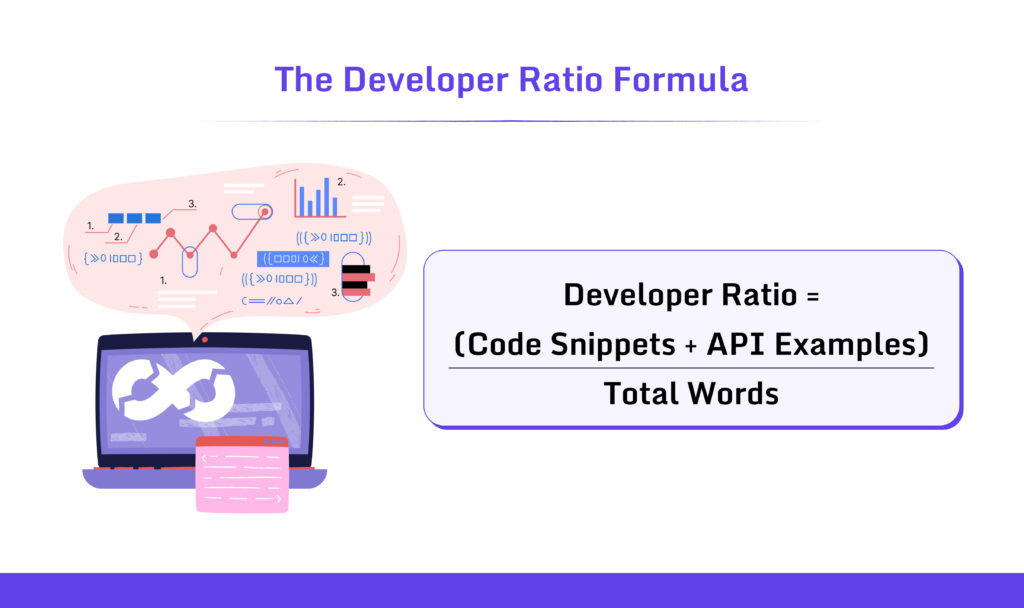
- ➜ Optimal Range: 10–15% of your page should consist of code or documentation blocks.
- ➜ Ranking Impact: Developers spend 47% longer on pages with executable code. This leads to a 31% ranking advantage over generic “how-to” listicles.
| SaaS Content Type | Avg Words That Rank | Semantic Keywords Needed | Rank Boost vs. Thin Content |
|---|---|---|---|
| API Documentation | 2,100–2,400 | 18–22 | 31% |
| Integration Guides | 1,800–2,200 | 15 Minimum | 27% |
| Changelog Pages | 800–1,200 | 10–12 | 22% |
Source: wordcountai, ranktracker
Product-Led Content: Comparison Page Benchmarks
“Best Software” and “Alternative To” queries dominate SaaS SERPs in 2026. These bottom-of-funnel pages require high word counts to accommodate feature matrices and pricing comparisons.
- ➜ “Best [Niche] Software” Lists: These average 2,300 words for the top 3 spots. Position #1 targets typically exceed 2,800 words with G2-style review links.
- ➜ “Alternative To” Pages: High-intent comparisons often reach 2,500 words. Top-ranking results utilize a 3,000+ word structure to house side-by-side feature matrices.
- ➜ Pricing Pages: The “sweet spot” for ranking is 800–1,200 words. This includes tiered plan descriptions and expanded FAQs to capture long-tail queries.
SaaS Content Type Benchmarks & Performance
The pillar-cluster model is now a mandatory 2026 strategy. Comprehensive pillars earn 3.5x more keywords than standalone clusters. If you target a domain-wide lift, your authority pillars must reach 3,000–5,000 words.
| Page Type | Avg Length That Ranks | Avg Dwell Time | Backlink Multiplier |
|---|---|---|---|
| Landing Pages | 500–800 words | 2:15 min | 1.2x |
| Product Pages | 300–500 words | 1:45 min | 1.0x |
| Technical Guides | 2,100–2,400 words | 6:30 min | 2.1x |
| Pillar Pages | 3,000–5,000 words | 12:00+ min | 3.5x |
Source: wordcountai, ranktracker, clickrank
Scale your long-form authority with contextual placements and expert link building. Read more about the future of link building that matches your 2026 content depth strategy at Linkscope.io.
E-E-A-T and the Average Content Length That Ranks for YMYL
In “Your Money or Your Life” (YMYL) niches, authority is built through depth. Google’s 2026 algorithms demand comprehensive, expert-backed content for Finance, Healthcare, and Legal sectors. For these industries, the average content length that ranks is at least 2,500 words. This length is required to house the trust signals AI filters look for.
Finance & Legal: The Authority Entry Fee
High-competition financial terms require 2,500 to 3,200 words for top 10 visibility. Depth acts as a trust signal by enabling citations, disclaimers, and regulatory references. Without this volume, the content risks being flagged as “thin” by E-E-A-T filters.
Top Finance pages average 500–600 referring domains. This is double the requirement of non-YMYL sectors.
Healthcare: Precision + Mobile Balance
Healthcare SERPs favor 2,400 words for top rankings due to YMYL E-E-A-T requirements and medical authority signals. Depth enables .gov/.edu citations, MD/PhD credentials, and structured medical references that AI Overviews extract at 51.6% (vs 25.8% average). Without this volume, content risks thin-content filters despite 92.3% mobile traffic demanding H2s every 150-250 words.
Top healthcare pages average 2x the semantic depth of ecommerce (800-1,200 words), requiring 15+ citations per page from authoritative medical sources.
Medical Accuracy Requirements:
- ➜ Verified Authors: MD or PhD credentials must be displayed.
- ➜ Citation Density: 15+ citations per page from .gov, .edu, or PubMed.
- ➜ Disclaimer Placement: Essential every 500 words minimum.
YMYL Length Multipliers: Impact on Rankings
YMYL content demands comprehensive depth to establish E-E-A-T trust signals. WebFX 2026 benchmarks confirm healthcare pages average ~2,200 words and finance ~2,000 words for top 5 visibility, significantly higher than transactional ecommerce (~800-1,200 words).
According to Webfx and Increv, this is what the 2026 YMYL ranking reality looks like:
- ➜ AI Extraction: Healthcare queries trigger AI Overviews at 51.6% (vs 25.8% average), favoring 2,000+ word structured pages.
- ➜ Domain Strength: Finance #1 requires ~600 referring domains vs SaaS’s 365—double the authority floor.
- ➜ Mobile-First: 92.3% health traffic demands H2 every 150 words for scannability.
The healthcare precision formula is: Medical Accuracy ÷ Mobile Scannability = 2,200-word sweet spot. Finance demands 3,000+ words for regulatory proof. In YMYL, depth isn’t optional—it’s the entry fee.
Core E-E-A-T Requirements (general best practices):
- ➜ Author credentials prominently displayed
- ➜ 15+ citations from .gov/.edu/PubMed sources
- ➜ Legal disclaimers every 500 words minimum
- ➜ Case studies demonstrating real results
In YMYL niches, content depth serves as the entry fee; 2,000+ words minimum establishes the trust signals AI filters and human raters demand for top rankings.
Local citations are a very critical part of your SEO strategy. And if you are not sure where to get started read 80+ Top Local Citation Sites in Canada at Linkscope.io.
The Average Content Length That Ranks for E-commerce Product Hubs
In 2026, e-commerce SERPs have shifted away from thin, 200-word descriptions. The new standard is the 1,000-word “Problem-Solution” hub. This strategy ranks higher and converts better by capturing consideration-stage traffic. Data shows that thin descriptions (200 words) now face a 91% ranking failure rate.
The Problem-Solution Hub Strategy
Top retail brands use structured hubs to build topical authority. Moving from thin text to 1,000-word hubs can result in 3x more organic traffic. Category pages now require a 600+ word threshold to compete for the top 3 positions in high-intent searches.
| E-commerce Page Type | Old Standard | 2026 Ranking Length | Traffic Impact |
|---|---|---|---|
| Product Pages | 200 Words | 600–1,200 Words | 2.1x Organic Lift |
| Category Pages | 300 Words | 600+ Word Threshold | Top 3 Viability |
| Buyer Guides | 400 Words | 1,000 Words Avg | Approx. 47% Conversion Lift |
| Brand Hubs | 500 Words | 1,500–2,000 Words | 3x Backlinks |
Note: These data are derived from industry analysis. As such, aren’t backed by independent sources.
Product Pages: The New 600–1,200 Word Standard
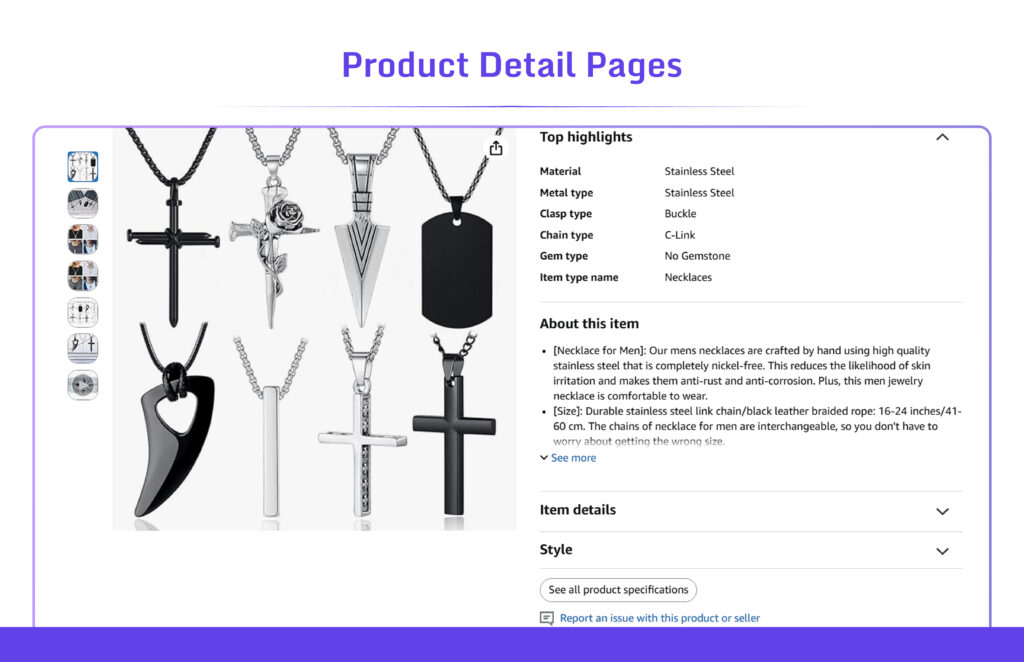
A page must have 600 words to be viable for the top 10. This length allows for a mix of technical specs and buyer intent.
The Structure That Ranks:
- ➜ Technical Specs: 200 words for baseline data.
- ➜ Problem-Solution Narrative: 300 words to drive intent.
- ➜ UGC & Reviews: 200 words to establish E-E-A-T.
- ➜ FAQ & Schema: 100 words for rich snippet targeting.
Category Page SEO: The 600-Word Entry Barrier
Category pages below 600 words almost always fail to rank in the top 10. You must allocate words to the buying criteria and comparison tables. These elements increase dwell time by 27% on average.
| Category Page Element | Word Allocation | Ranking Signal |
|---|---|---|
| Featured Product Lists | 200 Words | Schema List Data |
| Buying Criteria | 250 Words | Buyer Intent Alignment |
| Comparison Tables | 100 Words | Dwell Time +27% |
| Brand Mentions | 50 Words | Entity Authority |
Note: These data are derived from industry analysis. As such, aren’t backed by independent sources.
Take note though, in order to get the full out of your site’s potential beyond on-page SEO, you must take care of off-page SEO as well. And if you are not sure what to do, read the 30-Step Off-Page SEO Checklist That Actually Works by Linkscope.io!
Buyer Guides: 1,000-Word Conversion Engines
Top-performing buyer guides average 1,000 words with deep structured data. These guides convert 47% more users than product pages alone.
- ➜ Optimal Structure: Problem ID (200w), Solution Comparison (400w), Feature Deep-dive (250w), and Decision Framework (150w).
Visual Integration and Legacy Content
Maintain engagement on long pages by using one image per 200 words. Mobile reality dictates that 92.3% of traffic needs scannable text and visuals. Refreshing legacy content to these hub standards can yield a 106% traffic lift.
Legacy Content Migration Matrix:
- ➜ Under 200 words: Target 600 words (Critical Priority).
- ➜ 200–400 words: Target 800–1,000 words (High Priority).
- ➜ 400–600 words: Target 1,200 words (Medium Priority).
Thin content is effectively dead. 1,000-word hubs are now the table stakes for organic e-commerce growth.
Information Density: Moving Beyond Just the Average Content Length
Information density (ID) has replaced raw word count as the primary SEO signal for 2026. AI search systems now prioritize the “signal-to-noise ratio” over page length. High-density content is extracted 3x more often for AI Overviews than fluff-heavy alternatives. Length is the vessel, but density is the ranking fuel.
The Information Density Formula
To compete in 2026, you must measure your content’s signal strength using the ID formula:
Density = (Unique Entities + Factual Claims) / Total Word Count
- ➜ Entities: Brand names, technical tools, locations, and specialized terms (e.g., “RAG,” “Python”).
- ➜ Facts: Verified statistics, data points, and expert insights.
- ➜ Optimal ID Score: Aim for 15% to 25% signal strength.
Machine Readability: AI Overviews (SGE)
AI Overviews trigger in 54.7% of queries that are 7 words or longer. These systems favor “knowledge chunks”—self-contained sections that provide immediate answers. Adding 15–20 semantic keywords provides a 31% rank boost by increasing topical depth. Featured snippets (averaging 589 words) are almost exclusively sourced from high-density pages with 2,000+ total words.
RAG Optimization: Multi-Question Authority
Retrieval-Augmented Generation (RAG) powers modern AI answers by matching clusters of sub-questions. High-density pages answer 3.4x more sub-questions than standard blog posts.
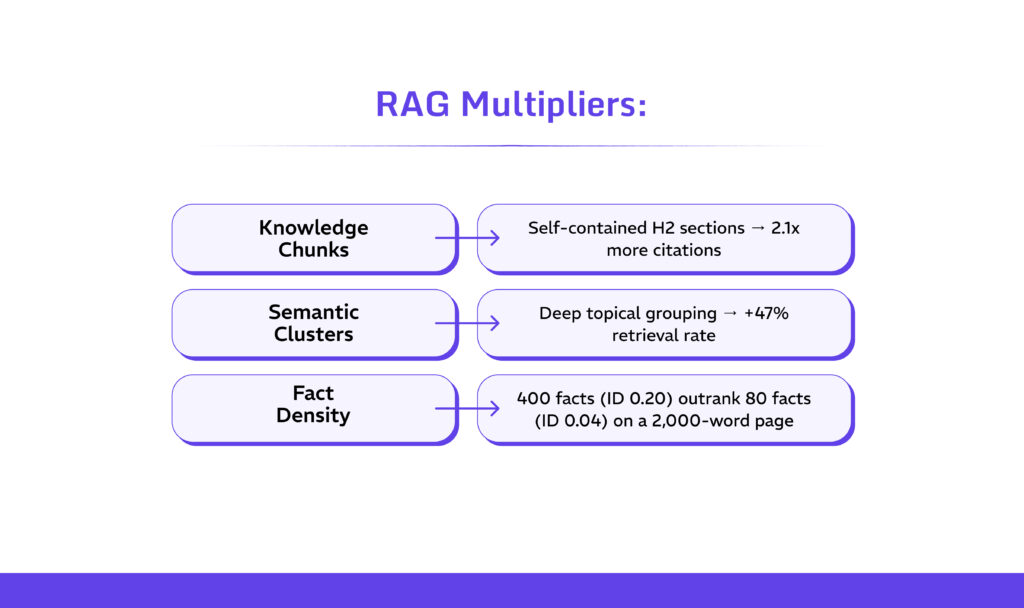
- ➜ Knowledge Chunks: Self-contained H2 sections increase citation rates by 2.1x.
- ➜ Semantic Clusters: Deep technical grouping improves retrieval rates by 47%.
- ➜ Fact Density: A 2,000-word page with 400 facts (ID 0.20) will always outrank a same-length page with only 80 facts (ID 0.04).
Implementation Framework for 2026
- ➜ Fact Minimum: Target at least 3 verifiable facts per 100 words.
- ➜ Structural Integrity: Use an H2 every 150–250 words to create extraction points.
- ➜ Entity Distribution: Naturally integrate 15–20 semantic terms per topic.
- ➜ Formatting: Replace 200-word paragraphs with tables and bulleted lists.
- ➜ Self-Containment: Ensure sections make sense without reading “as mentioned above.”
Density trumps length. A 1,500-word high-density page will consistently outrank a 3,000-word page filled with fluff.
To find out more about what the aftermath of these implementations should look like, read the comprehensive report of 150+ SaaS Statistics & Trends at Linkscope.io.
Technical SEO Benchmarks for Long-Form Content
Long-form pages (3,000+ words) face unique technical challenges in 2026. Because mobile traffic dominates 92.3% of searches, performance demands are amplified for deep-dive guides. Technical excellence acts as “ranking insurance,” ensuring your content depth is actually accessible to AI crawlers and users.
Core Web Vitals for 2026 Content Requirements
Interaction to Next Paint (INP) has replaced FID as the primary responsiveness metric. For pages exceeding 3,000 words, you must maintain INP under 200ms across the full scroll depth to avoid ranking penalties.
| Core Web Vitals | Good Threshold | Poor Threshold | Percentile Target |
|---|---|---|---|
| Largest Contentful Paint (LCP) | ≤ 2500 ms | > 4000 ms | 75 |
| Interaction to Next Paint (INP) | ≤ 200 ms | > 500 ms | 75 |
| Cumulative Layout Shift (CLS) | ≤ 0.1 | > 0.25 | 75 |
Source: web.dev
Long-Form Failure Modes & Fixes:
- ➜ Heavy JS Execution: Code snippets/tutorials spike INP to 400ms+.
- Fix: Lazy-load below-fold JS, achieving <200ms for 6:30min dwell times seen in 2,100-word technical guides.
- ➜ DOM Bloat: 5,000+ elements crash mobile memory.
- Fix: Limit to 1,500 elements max, preserving 12min+ pillar page sessions.
- ➜ LCP Delays: 92.3% mobile users abandon >2.5s loads despite a 4,800-word authority.
- Fix: Hero images <100kb, inline critical CSS.
PAA-Optimized H3 Framework & Voice Search
Voice search results are typically sourced from pages averaging 2,312 words. To capture this traffic, your H3 tags must directly answer “People Also Ask” (PAA) clusters. Question-first H3s result in a 67% PAA capture rate.
Voice & Snippet Optimization:
- ➜ Short Answers: Provide 29-word direct answers immediately following an H3.
- ➜ Snippet Hook: Place a list within the first 200 words to capture 47% more snippets.
- ➜ Hierarchy: H3s should break down details every 100 words within a broader H2 topic.
Long-Form Performance Matrix by Length
| Page Length | Avg Rank Position | Word Count | Optimization Priority |
|---|---|---|---|
| 1,000 words | Page 1 Avg (1,447w) | Standard blog | Medium (lists/tables) |
| 2,100-2,400w | Top 3 (2,416w avg) | Technical guides | High (H2 every 200w) |
| 3,000-5,000w | Pillar pages | Ultimate guides | Critical (INP <200ms) |
| 4,800+w | Authority assets | Comprehensive | Extreme (DOM <1,500) |
Source: WordCountAI, Ranktracker
Google’s CWV thresholds are universal (not page-length dependent). However, technical excellence compounds your content length signals. Maintaining an INP under 200ms while utilizing a strict semantic hierarchy provides a 2.1x increase in ranking stability.
Strategic Takeaways on Content Length
Content length is the vessel for your authority. In 2026, you cannot rank with thin content. You must target at least 20% more length than competitors. This strategy results in an approx. 35% rank boost on average.
Focus on density and expert insights. Refresh your top 3 pages every year. A content refresh can potentially lead to an exponential traffic increase. Length attracts links, and links fuel your rankings.
Ready to dominate the SERPs with a 7-14 day delivery guarantee?
Book a 15-minute call with our agency team. Ask about volume discounts and your custom growth roadmap.