The future of Link building will shape search results as it did previously. However, the rules have changed fundamentally.
Links once worked like votes. More links meant more trust. That idea no longer holds. Google now looks at meaning, context, and intent. It reads pages as people do.
This shift leaves many sites stuck with old tactics that no longer move rankings. Others adapt and grow.
This guide explains what works in 2026 and beyond. It covers strategy, real tactics, trusted services, and honest insights from the SEO crowd.
Understanding Link Building Strategy in 2026
A link building strategy is a plan for earning trust from other sites. That trust helps search engines decide who deserves visibility. How you earn links matters more than how many you collect.
A strong strategy starts with relevance and focuses on people who care about your topic. It avoids shortcuts. It builds authority over time.
Traditional Link Building vs Future Link Building
Older link building chased numbers. More links felt safer back in there. However, this approach is fading fast.
Currently, link building values context first. One strong mention can beat dozens of weak links. Search engines read pages as full stories now. They care where the link sits and why it exists.
How Google Evaluates Links Today
Google looks beyond the link itself. It checks the page around it, the topics, the depth, and the subtle intent.
A link inside a relevant paragraph carries weight, but a random link actually doesn’t bring any value.
Check out Joy Hawkins talking about the changes in their link building process for Local SEO.
E-E-A-T plays a huge role here:
- ➜ Experience shows real use.
- ➜ Expertise shows depth.
- ➜ Authority comes from recognition.
- ➜ Trust comes from consistency.
Also, the Entities help connect the dots. Google understands brands as real things, and the links help confirm those connections.
From Links to Brand Signals
Links no longer work alone at this point. Mentions support them, co-citations add context, and branded anchors show intent.
A brand can gain authority without a clickable link, and Search engines will still notice the signal. That shift changes how we plan backlink strategies now.
The goal moves from chasing links to building presence. When people talk about your brand, rankings follow.
How Link Building Will Work in the Future?
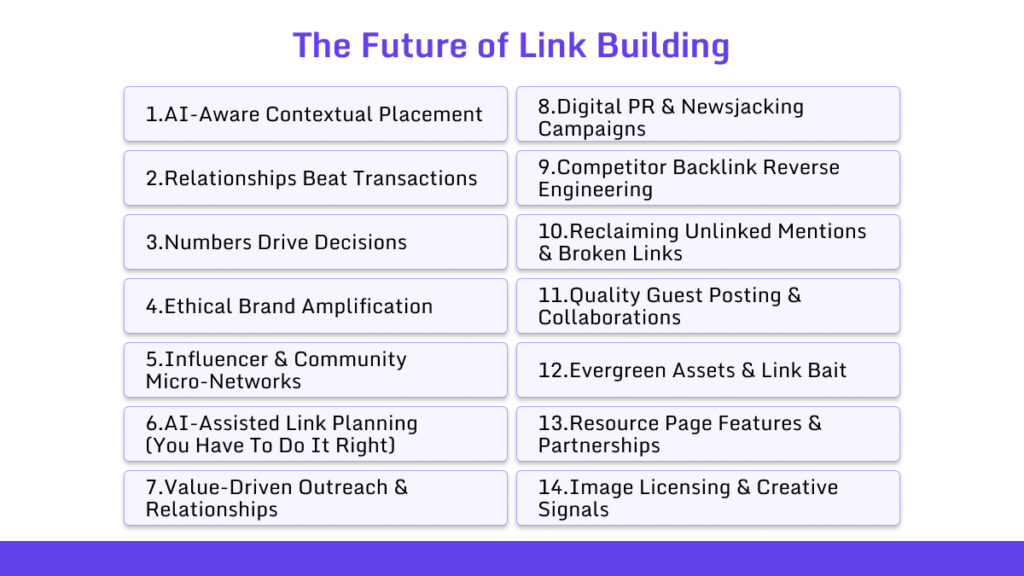
Link building got smarter. Yes, the skyscraper method works; however, it cares more about real people. And AI is running the show behind the scenes, from Google’s new search features to how we find and earn links.
What matters now is context, not volume. You need links that actually fit your content. Links that make sense to readers. Links that search engines trust because they serve a purpose.
1. AI-Aware Contextual Placement
Google isn’t just counting your links anymore. It’s reading them and really taking the time to read them.
The search engine wants to know if your link fits the story. Does it add value? Does it make sense where it sits?
Say you run a site about eco-friendly textiles. A link from a niche sustainable fashion blog? Gold. A link from any random high-DA fashion site? Not so much.
Why? Because Google’s AI looks at meaning. It checks if your topics connect. It sees if you’re building real expertise in your space. When your links align with your content theme, you signal authority.
But it gets more specific. Google now judges where your link sits on the page.
Those footer links? Sidebar links? They’re losing power. What works now is links inside your actual paragraphs. Mid-sentence. Right where they support your point.
If you mention a study, link to it right there. If you reference a tool, link it in context. This means you need to pitch for real editorial placements. Your content has to fit naturally into someone else’s story.
2. Relationships Beat Transactions
One-off guest posts are no longer effective nowadays. What’s replacing them? Real partnerships.
Google’s AI summaries are changing how people search. Fewer clicks. More answers are served directly. So getting a link isn’t enough anymore. You need relationships that create ongoing value.
The brands winning today work with the same publishers over time. They co-create content. They share exclusive data. They build something bigger together.
Think less “can I get a link?” and more “how can we help each other?”
3. Numbers Drive Decisions
Link building runs on data now.
Predictive analytics show you which opportunities matter before you spend time or money chasing them.
You can now model what a link will do for you over the next 12-24 months.
Some teams use Monte Carlo simulations. They run thousands of scenarios to test if a campaign will work. It’s like stress-testing your link strategy before launch.
In Google Analytics, build custom tracking. Every link you earn should tie back to business goals. No more “we got 50 links this month” without knowing what they actually did.
4. Ethical Brand Amplification
It’s about building real authority that people and search engines trust. When you do this right, you boost your E-E-A-T signals. People share your content naturally.
Build Authority the Right Way
Forget black-hat shortcuts. Private blog networks and link farms will get you de-indexed under Google’s 2026 rules very quickly.
Expert contributions, Data-backed studies, and transparent work nowadays. Try collaborating on industry reports, hosting an AMA session, and position yourself as someone who actually knows their stuff. High-trust domains will link to you naturally.
5. Influencer & Community Micro-Networks
Surprisingly, big celebrity influencers are losing ground. Micro-networks are taking over slowly.
Think niche creators with 1,000 to 10,000 followers on Discord, Reddit, and newsletters. These small, tight communities offer something huge brands can’t fake: authenticity.
At this point, the game is Go Niche or Go Home.
Find micro-influencers in your space. A vegan chef with 5,000 Discord followers is perfect for a plant-based brand. These endorsements feel real and drive four times higher engagement than mega-influencers.
Tools like BuzzSumo help you find these pockets. One shoutout can generate 10+ referral links.
6. AI-Assisted Link Planning (You Have To Do It Right)
AI can transform link planning from guesswork to precision. But you have to use it ethically.
Google’s Helpful Content Update flags automation spam through pattern recognition. Use AI to augment your work, not replace it.
Vet Prospects Smarter
- ➜ Use AI tools like ChatGPT or custom ML models to scan thousands of domains.
- ➜ Check relevance, traffic quality, and spam risks.
- ➜ Score prospects on a 1-to-10 ethical fit scale.
This filters out low-value sites automatically. You can focus on domains with genuine audience overlap.
Match Content Without Being Spammy
AI is great at pairing your assets with content gaps. It can suggest where your case study fits someone’s “resources needed” section.
Use it for ideation. Try entity mapping to spot co-citation opportunities. Then craft personalised integrations.
7. Value-Driven Outreach & Relationships
Outreach is a long game. Personalised, trust-focused pitches outperform generic templates by a few times in response rates.
Inboxes are drowning in AI-generated noise. Stand out by offering exclusive insights or mutual wins.
Generic templates scream spam.
Reference specific pain points instead. Say something like, “Your recent post on X inspired this data set.” This sparks real dialogue.
Trust compounds over time. A contact you nurture today might link to you now and co-author something tomorrow. These “amplification loops” signal authentic authority to AI.
Track relationships with CRM integrations. Stay consistent and avoid being sales-y. Share free audits or trend alerts that actually help.
8. Digital PR & Newsjacking Campaigns
Digital PR seems like the top link magnet for the future. Blend storytelling with timely newsjacking. You’ll secure authority mentions from publications like Forbes or TechCrunch without ever asking for a link directly.
These campaigns do more than earn backlinks. They embed your brand in AI knowledge graphs.
Jump on the breaking news. If there’s a climate report, piggyback it with your sustainability stats. Land expert quotes or data features in outlets like BBC or Wired.Tools like Meltwater monitor trends for hooks. HARO-style platforms help with placements.
9. Competitor Backlink Reverse Engineering
Check what your competitors are doing. Not to copy them, but to find what you’re missing.
Tools like Ahrefs and SEMrush show you where their links come from. You can spot patterns in their strategy. This method finds 20-50% more opportunities than just reaching out cold.
Finding the gaps
Focus on sites that link to them but not to you. Make sure those sites fit your topic. If a competitor gets links from industry roundups, pitch yours too. But bring something new to the table.
Spotting opportunities
Use filters to find the easy wins. Look for seasonal content or new trends where competitors show up.
Export your findings to a spreadsheet. Sort by traffic potential. Personalise your emails. Try something like: “I saw your post on X. My resource adds to that conversation.”
10. Reclaiming Unlinked Mentions & Broken Links
Your brand gets mentioned online, and sometimes without a link. That’s free equity you’re leaving on the table.
Fixing broken links on other sites works too. Tools like Google Alerts or Mention track these automatically.
Find mentions on high-authority sites first. Send a short, friendly email: “Thanks for mentioning us. Here’s our URL if you’d like to add a link.”For broken links, use checkers like Dead Link Checker. Find 404 errors in resource lists. Suggest your content as a replacement.
11. Quality Guest Posting & Collaborations
Google wants helpful, deep content now. Write 5-10 strong posts per year instead of dozens of weak ones. Target sites where your audience hangs out.
Skip generic topics. Write about something you actually know. Share case studies. Give contrarian views. Position yourself as someone worth listening to.
Pitch with personalization. Explain how both sides benefit. Maybe offer to promote the post together.
12. Evergreen Assets & Link Bait
Evergreen content lasts. It earns links for years, not weeks.
Link bait makes people want to share your stuff. But focus on usefulness, not hype.
Commission your own research. Think “2026 Industry Benchmarks.” Or build free tools like calculators.
Add visuals. Infographics turn stats into something shareable. Interactive charts work too. They’re easy to embed and earn attribution links.
Promote through HARO or Reddit for organic reach. Make everything mobile-friendly so AI snippets can pick it up.
13. Resource Page Features & Partnerships
Resource pages list helpful tools, guides, and experts. They offer steady, contextual links if you approach them right.
Stop chasing just high authority scores. Build actual partnerships where both sides win.
Look for resource pages in your specific area. Search for things like “keyword + inurl:resources.”
Pitch with real value. Offer exclusive updates. Land features that strengthen your topical authority.
14. Image Licensing & Creative Signals
Visuals matter more than you think. Google receives 10.1% of its total traffic from images.google.com.
License your images strategically. You’ll earn attribution links while showing Google you’re an expert in your field. Create high-quality images or infographics. Use Creative Commons with attribution required.
Share them on platforms like Unsplash or Pinterest. Add schema markup for rich results.
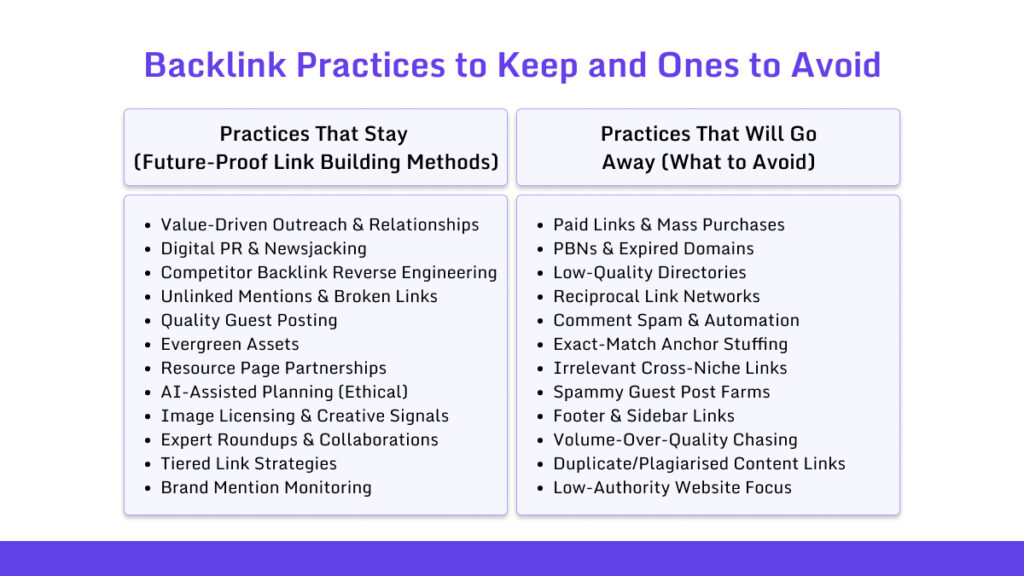
Backlink Practices That Stay and Practices That Will Go Away
What Linkscope & Top SEO Experts Say About the Future
Linkscope cares about quality over quantity. We use an “editorial audit” process. Every link must fit the host’s style.
Linkscope’s Link Building Philosophy
Expert Opinions
Your brand needs to exist as a verifiable “entity” in search’s knowledge graph.
Brian Dean’s team at Backlinko stresses “trust signals” like co-citations. They predict traditional guest posts will drop 25% in effectiveness. [Source]
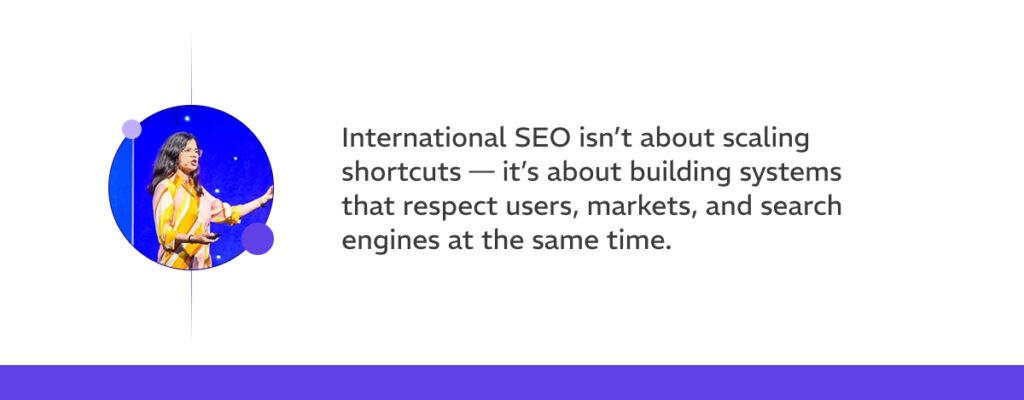
Aleyda Solis points out that Google’s Search Generative Experience (SGE) now evaluates links in “contextual clusters.” Links that support AI-summarised answers get rewarded.
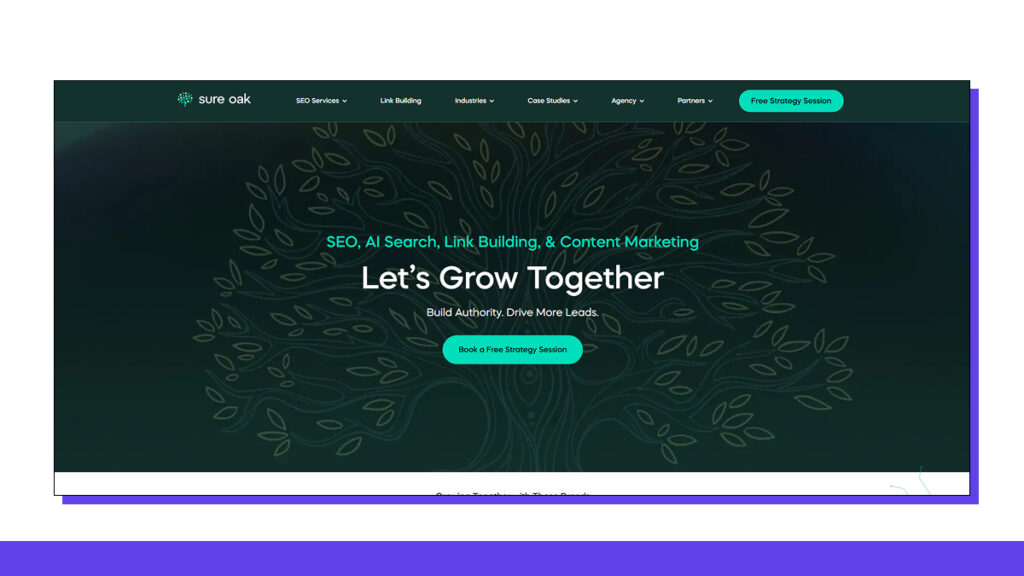
Agency Sure Oak used AI-driven sentiment analysis for outreach in 2025. They personalized 1,000 pitches. Response rates hit 28%. They secured links from Forbes contributors for a health tech client.
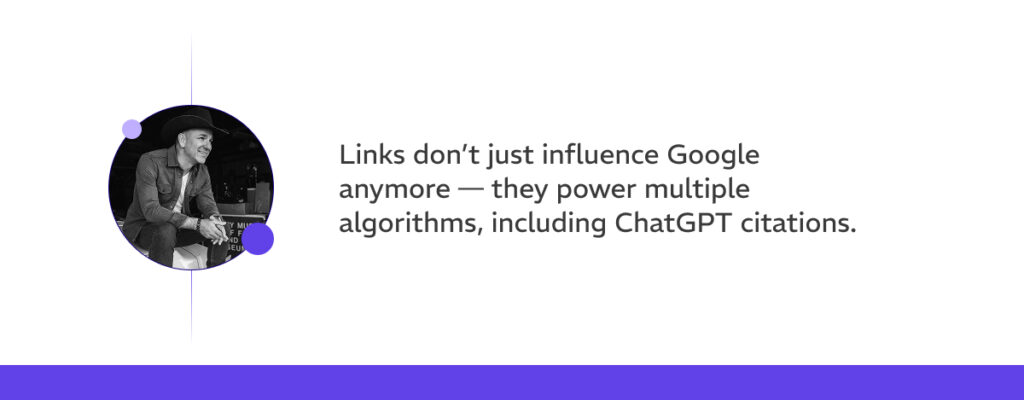
Craig Campbell notes that links now power multiple algorithms. Not just Google. ChatGPT citations, too.
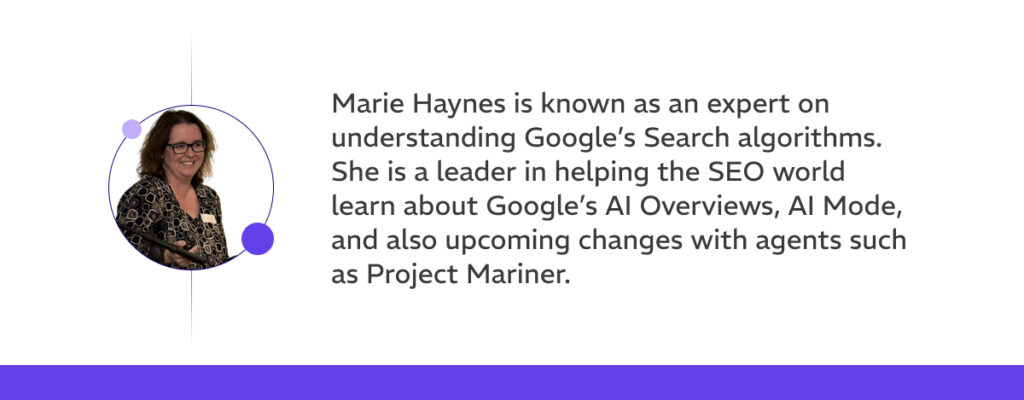
Entity SEO is now mandatory. Marie Haynes and other pros agree. You need to optimise around “who you are” using schema, mentions, and branded links. This builds topical authority in AI’s entity graphs.
What Reddit Says About the Future of Link Building
Reddit’s r/bigseo and r/bigseo communities have huge members. They don’t sugarcoat things.
In a viral r/SEO thread, u/SEOPro2025 wrote: “Backlinks are still the kingdom, but content is king. Focus on clusters that feed AI Overviews.”
A dev tool startup shared its story. They fixed foundation citations using tools like GetMoreBacklinks.
Another user in r/GenEngineOptimization said: “Strategic links dominate AI search.”
Reddit users are sceptical of paid link services. A r/bigseo post titled “Hired an agency, getting screwed?”
User u/LinkSkeptic warned: “Paid links rarely pass authority. Google’s AI sniffs them out.”
In r/SEO, a thread on “services that deliver” had mixed reviews. Some praised vetted PR plays.
Linkscope: The Best Link Building Services for Future SEO
You need links. But not just any links.
Google’s Search Generative Experience looks past old tricks. High domain authority? Doesn’t matter much anymore. What counts now is context. Trust. Real value.
That’s where Linkscope comes in.
We’re a link building agency built for what’s coming next. Our clients see maximum ROI because we don’t chase shortcuts. We earn editorial placements. We use our system to find opportunities that a regular agency misses. And we track what actually works.
What Makes a Future-Ready Link Building Agency?
Most agencies still play by 2020 rules. They spam directories. They chase metrics that don’t matter.
Future-ready agencies do three things right:
- ➜ Editorial focus: We don’t do link dumps. Our team includes ex-journalists who craft stories that publishers want. Custom op-eds. Original data visualizations. Content that gets shared.
- ➜ Transparency: You see everything. Our client portal tracks every email we send. Every placement we secure. Every dollar of ROI we project. No black boxes. No surprises.
- ➜ AI-assisted research: We use AI to scan billions of pages for opportunities. It finds unlinked mentions. It spots semantic gaps. It matches your content with editorial calendars.
KPIs That Matter in 2026-Beyond
Raw link counts mean nothing now. Track what actually impacts your business:
- ➜ Referral quality: How much traffic converts? Look for bounce rates under 40% and time on site over 2 minutes. Target a 15-25% conversion lift.
- ➜ Brand mentions: Unlinked citations count as trust signals. Google’s E-E-A-T cares about these. Tools like Brand24 track them automatically. Aim for 2x growth year over year.
- ➜ Topic authority: How deep is your content cluster? Google looks at entity co-occurrences. It checks if you show up in AI-generated results. Target the top 3 rankings in your niche.
Final Thoughts: The Real Future of Link Building
Link building isn’t dying. It’s just growing up.
AI search changes the game. Shortcuts stop working. Gaming the system gets you penalised. What wins? Real value. Trust. Relationships that last.
Don’t wait for the next algorithm update to scramble. Get ahead now.
Partner with Linkscope. We’ll audit your current links. Build your 2026 roadmap. Turn SEO into a growth engine that compounds over time.
Visit linkscope.io for a backlink strategy session. See where you stand. Figure out your first move.
Your future rankings depend on what you do today.
FAQ
What is the future of link building?
The future of link building focuses on trust and context. Search engines read links as signals of credibility, not shortcuts. A link works when it sits inside useful content and supports a clear topic.
Is link building still relevant to SEO 2026?
Yes. Link building still matters in 2026. Rankings rely on authority signals, and links remain one of them. The difference lies in how links earn value.
What are the link building statistics for 2026?
Most ranking pages still earn links from related content. Editorial links outperform paid placements by a wide margin. Branded anchors show higher trust signals than exact match anchors.
How much does link building cost in 2026?
Costs vary based on quality and effort. Ethical link building often ranges from a few hundred to several thousand dollars per month. Pricing depends on research depth, outreach quality, and publisher standards.